Dental Crowns: What to Expect, Start to Finish
Why a tooth needs a crown, how the materials compare, what happens at each of the two appointments, living with a temporary, and how long crowns last.
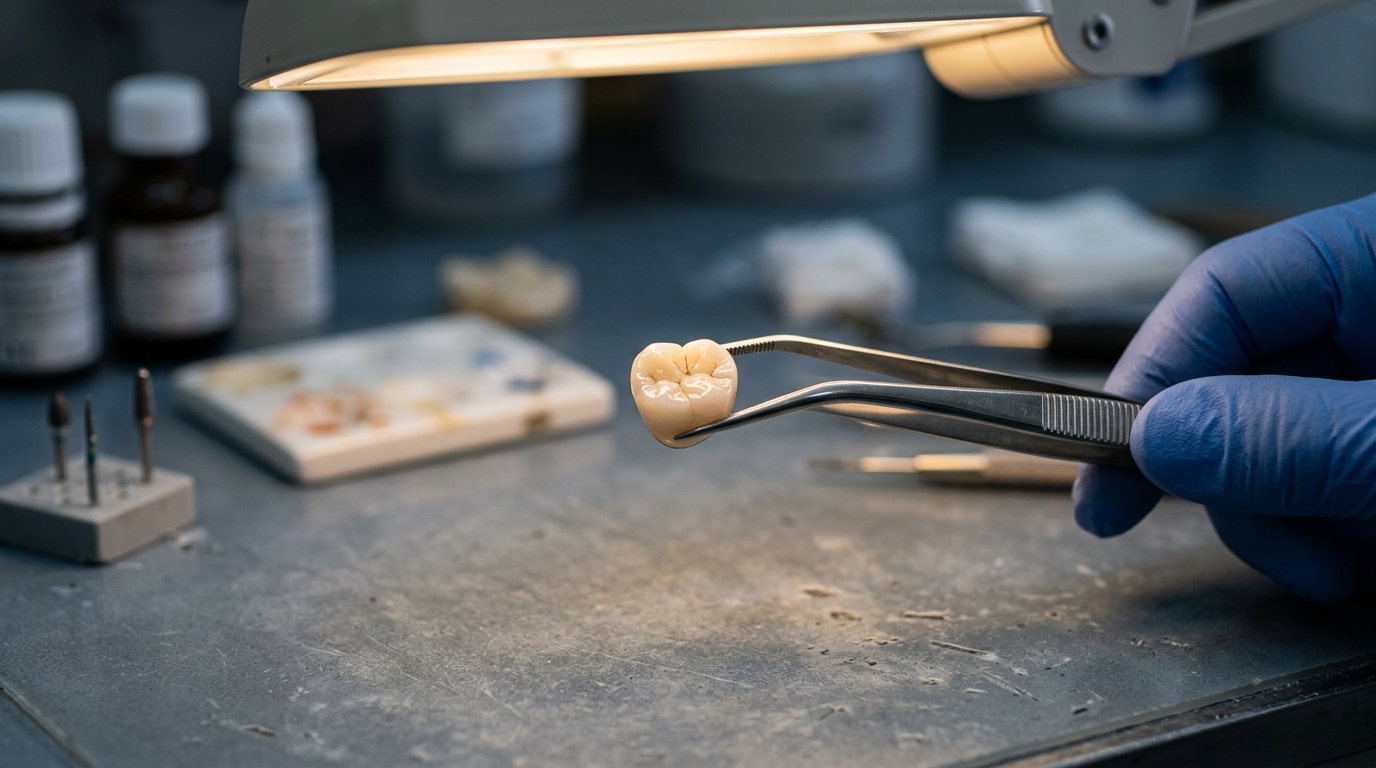
Your dentist has told you a tooth needs a crown, and you'd like to know what that actually involves before you agree to it. How many appointments. Whether it hurts. What it's made of, how long it lasts, and what it costs.
A crown is a custom-made cap that covers a tooth completely, from the biting surface down to the gum line. It's not a cosmetic add-on. It's what's used when a tooth has lost so much of its own structure that a filling would sit in it like a wedge and eventually split it apart.
Here's the whole process, in order, with the parts nobody usually explains until you're already in the chair.
Why a Tooth Needs a Crown
The common thread is structure. A filling replaces missing tooth material and relies on the surrounding walls to hold everything together. A crown does the opposite: it wraps the tooth and holds the walls together from the outside. That distinction is why the recommendation flips at a certain point.
Typical reasons:
- A large old filling that keeps failing. Once a filling occupies most of the biting surface, the remaining walls are thin, and each replacement removes a little more tooth.
- A cracked tooth. A crown holds a cracked tooth in compression so the crack can't open when you bite. This is one of the most common reasons for one.
- After a root canal on a back tooth. The tooth has been hollowed out and the roof opened, so molars and premolars almost always need covering afterward. Front teeth often don't.
- A broken cusp. A cusp is one of the raised points on the chewing surface. When one snaps off, there's usually not enough left for a filling to be reliable.
- Deep decay that has undermined the tooth. Not enough sound structure is left to bond to.
- Severe wear. Grinding can flatten teeth to the point where they need rebuilding.
- To anchor a bridge, or to finish a dental implant.
If your dentist recommends a crown and you're not sure why, ask what percentage of the tooth is being replaced. That answer usually settles it.
How Crown Materials Compare
| Material | How it looks | Strength | Usually chosen for | Typical range |
|---|---|---|---|---|
| Zirconia, solid | Good, slightly opaque | Very high | Molars, grinders, heavy bites | $1,000 to $2,000 |
| Zirconia, layered with porcelain | Excellent | High | Front teeth needing strength and looks | $1,200 to $2,500 |
| All-ceramic (lithium disilicate) | Excellent, translucent like enamel | Good to high | Front teeth and premolars | $1,000 to $2,500 |
| Porcelain fused to metal | Good, can show a dark line at the gum over time | High | A long-standing workhorse, less used now | $900 to $1,800 |
| Gold or precious alloy | Metallic, obvious | Very high, kindest to opposing teeth | Back molars where looks don't matter | $1,200 to $2,800 |
| Stainless steel, preformed | Metallic | High, temporary by design | Baby teeth, and as an interim crown | $250 to $600 |
These are ranges, not quotes. Your location, your dentist's lab, the material chosen, and how much rebuilding the tooth needs first will all move the figure, and a written treatment plan is the only number that applies to your tooth.
Two practical notes on materials. First, zirconia and ceramic have largely replaced metal-backed crowns for visible teeth because they don't develop a gray line at the gum. Second, gold has a genuine advantage that has nothing to do with fashion: it can be made very thin, so less tooth has to be removed, and it's gentle on the tooth biting against it. It just looks like gold.
The Two Appointment Process
Most crowns take two visits, two to three weeks apart.
Visit one: preparation and impression
- Numbing. Local anesthetic, the same as for a filling. If the tooth has had a root canal, you may not need it at all, though many people prefer it for the gum.
- Rebuilding first, if needed. Old filling material and decay come out, and a core build-up is packed in to replace missing structure and give the crown a solid shape to grip. If the tooth has had a root canal and very little is left, a small post may be cemented into a root for anchorage.
- Shaping the tooth. Your dentist reduces the tooth by roughly one to two millimeters on all surfaces to make room for the crown. This is the part that takes the longest and it's where the whining handpiece comes in. You feel pressure, vibration, and water spray, not pain.
- The margin. A fine edge is created at the gum line where the crown will meet the tooth. Sometimes a thin cord is tucked under the gum for a few minutes so this edge can be captured accurately. That's the least comfortable minute of the visit for most people.
- The impression or scan. Either a tray of putty held in place for a couple of minutes, or a handheld camera passed over your teeth to build a 3D model. Scanning is quicker and easier if you gag.
- Shade matching. For visible teeth, your dentist holds sample tabs against the neighboring teeth in natural light and records the shade for the lab.
- The temporary. A provisional crown is made chairside and cemented with a deliberately weak cement so it comes off easily later.
Expect 60 to 90 minutes.
Visit two: fitting
- The temporary comes off, which takes seconds and can feel odd rather than painful.
- The permanent crown is tried in and checked for fit at the margin, contact with the neighboring teeth, shade, and shape.
- You bite on colored paper so your dentist can see exactly where it touches, and high spots are polished down.
- Once it's right, the crown is cemented or bonded, and any excess cement is cleaned away, including from between the teeth.
Expect 20 to 40 minutes. Speak up here rather than being polite. Shade and bite are far easier to adjust before the crown is cemented than after.
Or one visit
Practices with an intraoral scanner and a milling unit can design and cut a ceramic crown while you wait. It's typically a single appointment of around two hours with no temporary at all. The material options are narrower than a dental lab can offer, and complex shade matching on front teeth is still often sent to a technician.
Living With a Temporary Crown
The temporary protects the prepared tooth and holds the space so neighboring teeth don't drift. It's deliberately less strong than the real thing.
For the two or three weeks you have it:
- Chew on the other side when you can
- Avoid anything sticky: caramel, chewing gum, toffee, soft bread crusts
- Go easy on very hard things: ice, nuts, hard candy
- Floss carefully by pulling the floss out sideways rather than snapping it up, which lifts temporaries off
- Expect some sensitivity to cold and sweet, because the tooth underneath has been reduced
- If it comes off, keep it and call the office. Don't leave the tooth uncovered for days, and don't glue it back with household adhesive
If the temporary feels tall or makes you bite differently, ring the office. A high temporary keeps a tooth sore for the entire wait, and adjusting it takes minutes.
What's Normal After the Crown Goes On
Mild sensitivity to cold and some tenderness in the gum for a few days is expected. The gum was handled during preparation and again at fitting.
Call your dentist if:
- The bite feels off after a day or two, or you're finding that tooth first when you close. This is common, easy to adjust, and worth fixing quickly, because a high crown causes soreness and can crack a tooth over time
- Sensitivity is getting worse rather than better after a week or two
- You get a sharp pain on biting or release
- Floss shreds or catches in one spot, which can mean a rough margin or leftover cement
- The gum around it stays sore or bleeds persistently
A small number of crowned teeth go on to need a root canal later. That isn't the crown's fault. It usually means the nerve inside was already compromised by the decay or crack that made the crown necessary.
How Long Crowns Last
A well-made crown on a well-cared-for tooth commonly lasts somewhere between ten and twenty years, and plenty last longer. What ends them is rarely the crown material itself.
The usual reasons a crown is replaced:
- Decay starting at the margin where the crown meets the tooth, which is why flossing that line matters more than anywhere else in your mouth
- The tooth underneath fracturing
- Cement washing out, letting bacteria under the crown
- Grinding, which chips ceramic and wears through material
- Gum recession exposing the margin, which is mostly a cosmetic issue on front teeth
Two habits do most of the work in making a crown last: cleaning the gum line around it every day, and wearing a night guard if you grind.
Frequently Asked Questions
Does getting a crown hurt?
The preparation appointment feels like having a large filling done: pressure and vibration under local anesthetic, not pain. The fitting appointment usually needs no numbing at all. Soreness afterward is normally mild and settles in a few days.
Can I get a crown without a root canal?
Yes, and most crowns are done without one. A root canal is only needed if the nerve inside the tooth is inflamed beyond recovery or infected. Crowning a tooth with a healthy nerve is routine.
Why does my crown cost more than my friend's?
Material, laboratory, region, and whether your tooth needed a build-up or post first. A layered ceramic crown for a front tooth involves hours of technician work that a solid zirconia molar crown does not.
Is a crown the same as a cap?
Yes. "Cap" is just the everyday word for it. If someone uses both terms with you, they mean the same restoration.
Will insurance pay for it?
Most dental plans cover crowns at a lower tier than basic fillings, often around half of the allowed fee, subject to your deductible and annual maximum. Some plans won't replace a crown within a set number of years. Ask your office to submit a pre-treatment estimate before starting.
What's the difference between a crown and a veneer?
A veneer is a thin facing bonded to the front of a tooth for appearance and needs the tooth to be largely sound underneath. A crown covers the whole tooth and is a structural repair. If a tooth is cracked or heavily filled, a crown is usually the right answer even when the concern is partly cosmetic.
Can I whiten a crown?
No. Whitening products don't change the color of ceramic or metal. If you're planning to whiten your natural teeth, do it before the crown is made so the shade can be matched to the result you want.
What to Do Next
Before you book, ask three questions: what material your dentist recommends and why, whether a build-up or post is needed on top of the crown fee, and whether the practice makes crowns in-house or sends them to a lab. The answers tell you both the real cost and the real timeline.
If you're planning to whiten, say so now. And if you know you grind your teeth at night, raise that too, because it changes both the material choice and whether you should leave with a night guard as part of the plan.
This article is for general information only and is not a substitute for professional dental advice. Always consult your dentist about your individual needs.