Night Guards: Types, Costs, and How Long They Last
Drugstore boil-and-bite, mail-order, or a custom guard from your dentist: what each one costs, how soft and hard materials differ, and how long a guard should realistically last.
There's a twenty dollar box at the drugstore and a quote for six hundred from your dentist, and both of them are called a night guard. It's a fair question why the gap is that wide.
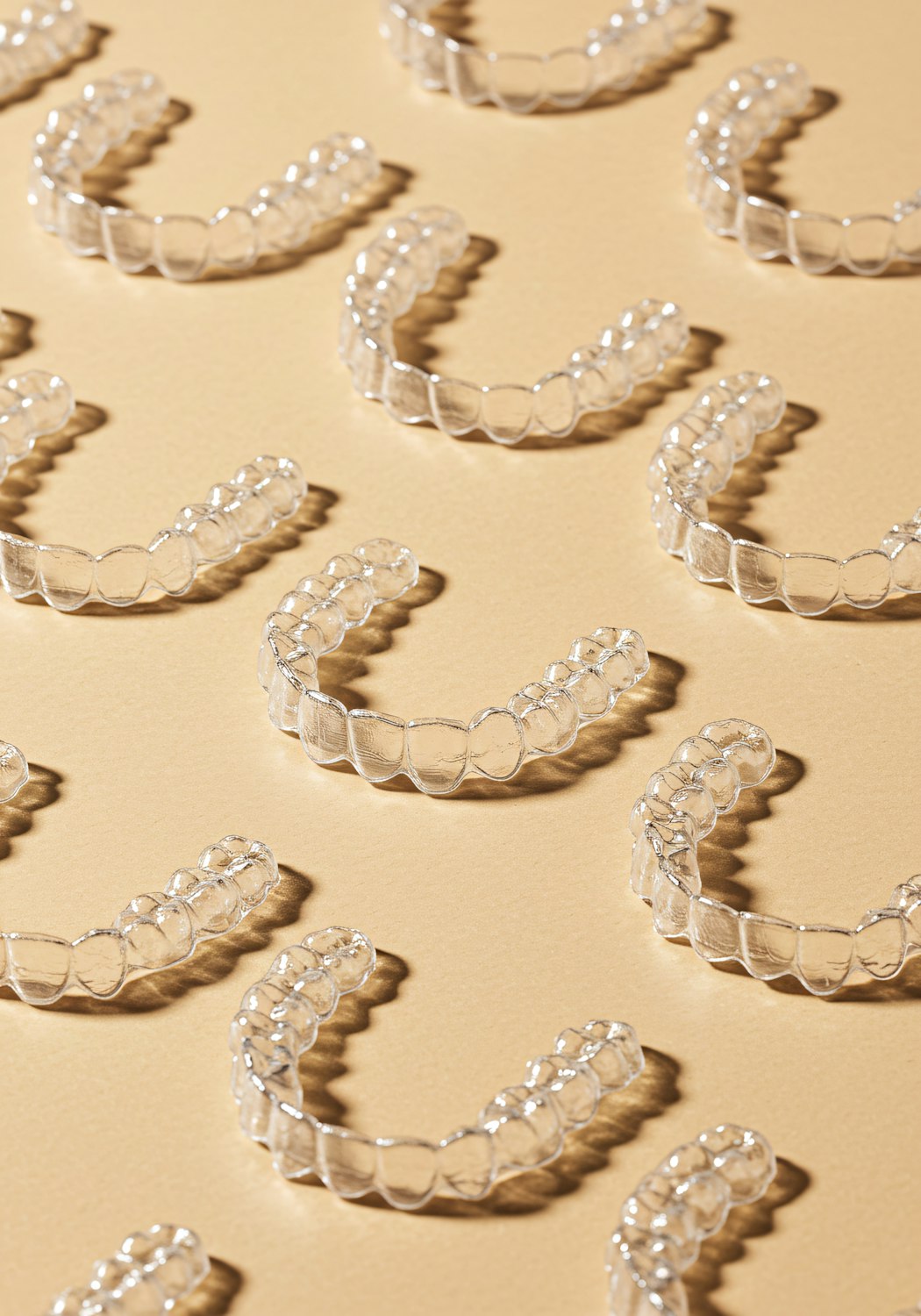
A night guard is a plastic appliance worn over your teeth during sleep so that grinding and clenching wear the plastic instead of your enamel. That's the entire job. It doesn't stop you grinding, it doesn't retrain your jaw, and it isn't a treatment for the reasons you grind in the first place, which are covered separately in our guide to bruxism.
What you're actually buying is fit, material, and thickness in the right places. Here's what separates the options, what each costs, and how long each one should survive.
Boil and Bite, Mail Order, or Custom: What's Really Different
Stock guards come preformed in one or two sizes and are the cheapest thing on the shelf. They tend to be bulky, they don't grip, and you end up holding them in place with your teeth, which is the opposite of what you want from a device meant to let your muscles rest. Skip them.
Boil-and-bite guards are softened in hot water and bitten into, so they take a rough impression of your teeth. Fit is better than stock and still loose, because a home bite records your teeth in whatever position you happened to bite in, not in a controlled position. They're thick, they cover unevenly, and a heavy grinder can chew through one quickly. As a two week stopgap while you wait for something better, they're reasonable. As a long-term answer, they aren't.
Mail-order custom guards sit in the middle. You take an impression at home with a kit, or send a scan, and a lab makes a guard from it. The material and thickness can be genuinely good. What you don't get is anyone looking in your mouth first, and no fit appointment where a dentist adjusts how the guard contacts your teeth. If your impression is distorted, the guard is distorted, and your only recourse is mailing it back.
Custom guards from a dentist start with an exam, then an impression or digital scan, then lab fabrication, then a fitting visit where the guard is adjusted so it seats fully and your teeth meet it evenly. That adjustment is most of what you're paying for beyond the plastic. It's also the route where somebody checks whether a guard is the right device for your problem at all, which matters if you have jaw joint pain or snore heavily.
Soft, Hard, or Dual Laminate
Material is a separate decision from where you buy it, and it's the one most people never get asked about.
Soft guards are made from flexible thermoplastic. They're comfortable immediately, cheap to make, and forgiving of small fit errors. The catch is that some heavy grinders chew them like a mouthpiece, and a soft guard can wear through in months. They suit light grinders and people who need something tolerable to get started with.
Hard acrylic guards are rigid and thin. They feel foreign for the first few nights and then most people stop noticing them. They're durable, they can be adjusted precisely so your teeth contact them evenly, and they're the usual choice for anyone with significant wear or expensive dental work to protect.
Dual laminate guards are soft on the inside and hard on the outside. They're a genuine compromise: more comfortable than acrylic, more durable than soft. They're also harder to adjust and repair than a hard guard, because you can only take material off the outer layer.
Two other choices come up. Guards can be made for the upper or lower arch, and for most people either works, with the lower often easier for people who gag or who talk in their sleep. And you'll see partial coverage devices, small appliances that sit on the front teeth only and stop the back teeth meeting. They can reduce clenching force, but because the back teeth are left free to drift, they can change your bite if worn without supervision. That's a device to use under a dentist's monitoring, not something to buy online and forget about.
What Night Guards Cost
| Option | Typical range | Fit quality | Realistic lifespan |
|---|---|---|---|
| Stock, one-size guard | $10 to $30 | Poor | Weeks |
| Boil-and-bite | $15 to $60 | Approximate | A few months at best |
| Mail-order custom, soft | $100 to $250 | Good if the impression is good | 1 to 3 years |
| Mail-order custom, hard or dual | $150 to $350 | Good if the impression is good | 2 to 5 years |
| Dentist custom, soft | $250 to $500 | Fitted and adjusted | 1 to 3 years |
| Dentist custom, hard acrylic | $350 to $800 | Fitted and adjusted | 3 to 5 years or more |
| Repair, reline, or adjustment | $50 to $200 | n/a | Extends an existing guard |
These are ranges, not quotes. Where you live, which lab and material your dentist uses, and how much adjustment your bite needs will all move the figure, and the only number that means anything for your mouth is a written one from your own dentist.
A few things that change the total. Dental insurance often covers part of a custom guard, frequently with a frequency limit of once every few years, and some plans exclude guards entirely, so it's worth asking for a pre-treatment estimate. Health savings and flexible spending accounts usually cover them. And if you're mid-orthodontics or about to have a crown, extraction, or implant on a tooth the guard covers, wait, because the guard will stop fitting the moment that tooth changes shape.
How to Clean a Night Guard
The routine is short and the mistakes are expensive.
- Rinse it under cool water as soon as you take it out, then brush it with a soft toothbrush and a drop of mild dish soap or hand soap. Skip toothpaste, which is abrasive and scratches the surface into something that holds bacteria.
- Let it dry completely before it goes in the case. A wet guard in a closed box grows things. A vented case exists for this reason.
- Never use hot water, a dishwasher, boiling water, or a car dashboard. Heat warps the plastic and a warped guard doesn't fit.
- Soak it occasionally, roughly weekly, in a denture cleaning tablet solution or a diluted vinegar solution, then rinse it well.
- Keep it out of reach of dogs, which is a much bigger cause of replacement than grinding.
- Bring it to every checkup so your dentist can see how it's wearing.
Cloudy film, white buildup, a persistent smell, or a taste that doesn't rinse away all mean it needs a proper clean or a replacement.
When to Replace It
Replace a guard when it's cracked, perforated, visibly thinned in one spot, no longer clicks into place, or when the dental work underneath it has changed. Beyond that, use the pattern of wear as information. Chewing through a soft guard in three months is not a failure of the guard, it's a sign you need a harder material. A guard that shows almost no wear after two years is a sign you're grinding less than someone thought.
Signs the guard isn't doing its job:
- You still wake with a sore jaw or temple headache after a few weeks of consistent wear
- Teeth are still chipping or restorations are still failing
- It hurts to wear, presses on your gums, or falls out during the night
- Your bite feels off for more than an hour after taking it out in the morning
Any of those is a reason to go back for an adjustment rather than to buy a different guard online. Small adjustments to how the guard contacts your teeth solve a lot of these complaints in one visit.
One important exception to the whole discussion. If you snore heavily, gasp in your sleep, or feel exhausted during the day, a plain night guard is not the right device and can sit uneasily with an airway problem. That's a different appliance and a different assessment, covered in our article on snoring, sleep apnea, and your dentist.
Frequently Asked Questions
Is a store-bought guard better than nothing?
For a short period, yes, it's better than sleeping unprotected while you arrange something. It's a poor long-term choice because a loose, bulky guard is easy to stop wearing, and a guard you don't wear protects nothing.
Can I use my sports mouthguard or an old whitening tray?
No. A sports guard is designed to absorb a single impact and is far too bulky for sleep. A whitening tray is thin, flexible, and will be destroyed quickly, and neither is built for hours of sustained pressure.
Upper or lower guard, which is better?
For most people, either protects the teeth equally well, so it comes down to what you tolerate. Uppers are more common. Lowers are often better if you have a strong gag reflex or find upper guards affect your speech.
Will a night guard change my bite?
A full-coverage guard, worn as directed and checked at your regular visits, is not expected to change your bite. Feeling slightly odd for the first half hour after removal is normal. A change that lasts longer than that, or a partial-coverage device worn unsupervised for a long time, is a reason to get it looked at.
Does insurance cover night guards?
Often partially, and often only once within a set number of years. Coverage varies enough between plans that the only reliable answer comes from asking your insurer or having the dental office submit a pre-treatment estimate.
How long does it take to get used to one?
Most people adapt within one to two weeks. Extra saliva at first is normal and settles. Wearing it for an hour or two in the evening before bed for the first few nights makes the adjustment noticeably easier.
What to Do Next
If you already know you grind and there's visible wear or ongoing damage, a custom guard from your dentist is the option that reliably works, and hard acrylic is the material worth asking about if the grinding is heavy. Ask for a pre-treatment estimate first so the cost isn't a surprise.
If you're not sure whether you grind enough to justify it, book a regular checkup and ask directly whether there's wear and whether it's progressing. And if snoring or daytime exhaustion is part of your picture, say that in the same conversation, because it changes which appliance is appropriate before anything gets made.
This article is for general information only and is not a substitute for professional dental advice. Always consult your dentist about your individual needs.