Snoring, Sleep Apnea, and Your Dentist: What They Can and Can't Do
Why a dentist often spots sleep apnea first, how oral appliances compare with CPAP, who each one suits, and why a diagnosis has to come from a sleep study rather than an ad.
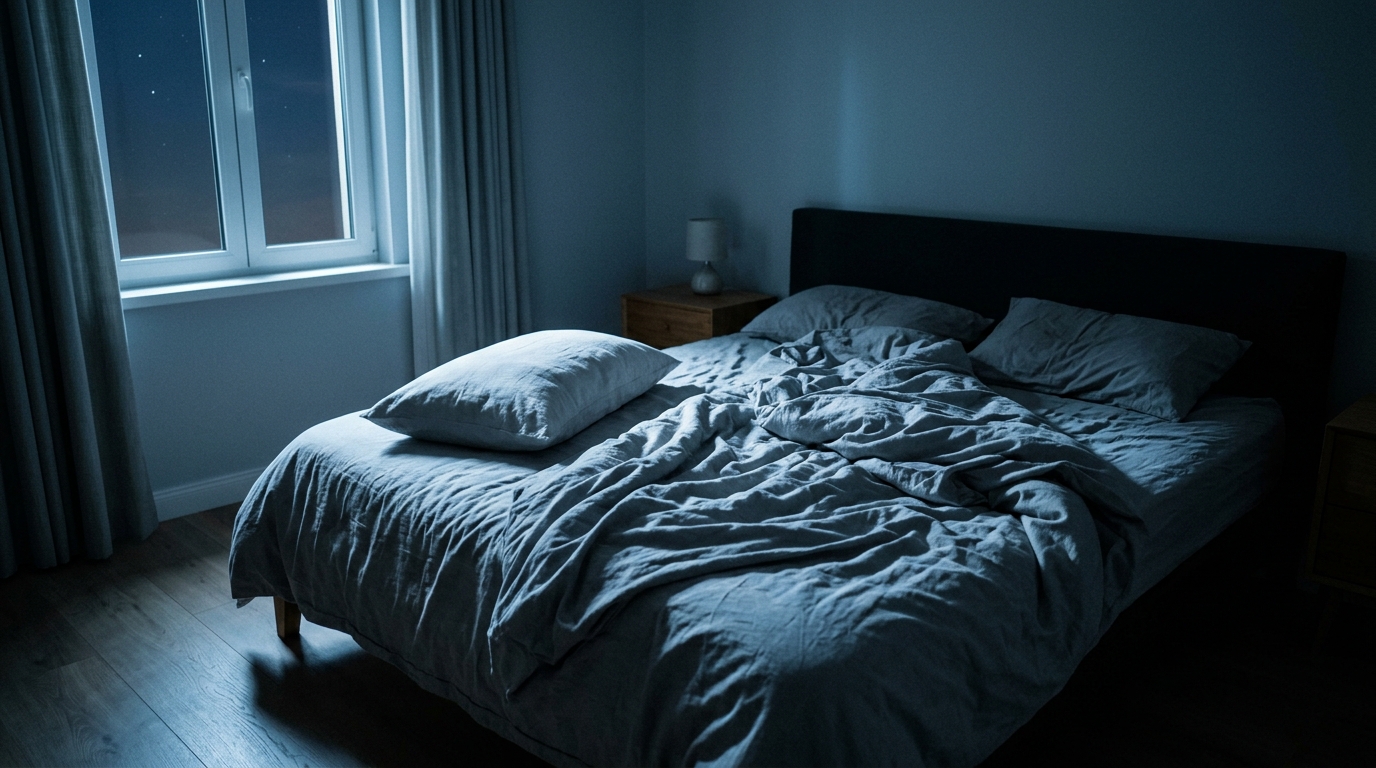
Your partner has started leaving the room at 2am. Or you sleep eight hours and wake up feeling like you slept four. Or your dentist looked at the wear on your back teeth, asked whether you snore, and the question came out of nowhere.
There's a large industry selling mouthpieces that promise to stop snoring, and some of them are genuinely useful devices. What none of them can do is tell you whether your snoring is harmless noise or a breathing problem that's affecting your health. That answer comes from a sleep study, ordered and interpreted by a physician.
Here's why a dentist is often the first person to raise it, what the real treatment options are, and how to tell which one fits your situation.
Why Your Dentist May Spot It First
You probably see your dentist more regularly than any other health professional, and they spend that time looking directly at the anatomy involved. Several findings that suggest a breathing problem during sleep show up in a routine dental exam.
- Worn or flattened teeth. Grinding during sleep is associated with sleep-disordered breathing, and heavy wear in someone who also snores is a reason to ask more questions. Grinding has its own article on this site.
- A crowded view at the back of the throat. When the tongue and soft palate leave little visible space, the airway has less room to spare when everything relaxes at night.
- Scalloped edges along the tongue, where a large tongue has been pressing against the teeth.
- Enlarged tonsils, especially relevant in children.
- A small or set-back lower jaw, or a high narrow palate, both of which reduce the space the tongue has to occupy.
- Dry mouth on waking and erosion from reflux, which often travel with mouth breathing and disturbed sleep.
None of that is a diagnosis and your dentist cannot make one. What a dentist can do is notice the pattern, ask the right questions, and refer you to a doctor. That referral is the valuable part.
Snoring and Sleep Apnea Are Not the Same Thing
Snoring is the sound of air moving past relaxed, floppy tissue in a narrowed airway. On its own, without breathing pauses or oxygen dips, it's a social problem: annoying, disruptive to whoever sleeps beside you, but not a threat to your health.
Obstructive sleep apnea, usually shortened to OSA, is what happens when that airway doesn't just narrow but closes. Breathing stops or becomes very shallow for seconds at a time, oxygen levels dip, and your brain rouses you just enough to reopen the airway. Then it happens again. This can repeat many times an hour all night, and you typically remember none of it.
The consequences are what make it worth taking seriously. Untreated sleep apnea is associated with high blood pressure, heart disease, stroke, and type 2 diabetes, and the daytime sleepiness it produces is a genuine hazard behind the wheel.
Signs that snoring may be more than snoring:
- Someone has witnessed you stop breathing, gasp, or choke in your sleep
- You wake unrefreshed no matter how long you sleep
- Morning headaches, or a very dry mouth on waking
- Falling asleep watching television, reading, or in meetings
- Waking repeatedly to use the bathroom
- Difficulty concentrating, low mood, or irritability that doesn't have another explanation
- Blood pressure that's hard to control
Diagnosis Comes From a Sleep Study
This is the part the advertising skips, so it's worth being blunt about. There is no way to diagnose sleep apnea by looking in your mouth, and no appliance can diagnose it either. You need a sleep study, a recording of your breathing while you sleep.
There are two kinds. A home sleep apnea test is a small kit you wear in your own bed, typically recording airflow, breathing effort, and blood oxygen. It's convenient and it's enough for many straightforward cases. An in-lab polysomnography is an overnight stay with fuller monitoring, including brain activity and sleep stages, and it's used when the picture is more complicated or other sleep disorders are suspected.
Either way, a physician interprets the result and makes the diagnosis. Severity is graded by counting how many breathing events happen per hour of sleep, which sorts cases into mild, moderate, and severe categories. That grade is what drives the treatment recommendation, which is exactly why you can't skip to buying a device.
If you're offered a dental appliance for snoring without anyone asking about a sleep study, that's the moment to slow down. Silencing snoring while leaving apnea untreated removes the one symptom likely to get you assessed.
Oral Appliance Therapy Compared With CPAP
Two treatments dominate. CPAP, continuous positive airway pressure, is a bedside machine that delivers gently pressurized air through a mask, holding the airway open from the inside. Oral appliance therapy usually means a mandibular advancement device, a custom appliance made of two connected trays that holds your lower jaw slightly forward, which pulls the tongue and soft tissue forward and gives the airway more room.
| CPAP | Oral appliance | |
|---|---|---|
| How it works | Pressurized air splints the airway open | Holds the lower jaw forward to enlarge the airway |
| Works for | All severities, including severe | Snoring, mild and moderate apnea, and severe apnea when CPAP isn't tolerated |
| Effectiveness when used | The most reliably effective option | Effective for many, less predictable, and confirmed by a follow-up sleep test |
| Living with it | Mask, hose, and machine every night | A device in your mouth, similar in bulk to a night guard |
| Travel | Bulky, needs power, allowed on flights | Fits in a pocket, no power needed |
| Common side effects | Dry nose, mask marks, claustrophobia, air leaks | Jaw soreness, extra saliva or dry mouth, tooth movement over years |
| Requirements | Willingness to wear it nightly | Enough healthy teeth, healthy gums, ability to move the jaw forward |
| Who provides it | Sleep physician and equipment supplier | A dentist, working from a physician's diagnosis |
| Typical cost range | $500 to $1,500 for machine and mask | $1,500 to $3,000 including fitting and follow-up |
| Usual insurance route | Medical insurance | Medical insurance, not dental |
These are ranges, not quotes. Where you live, which device is prescribed, how many follow-up visits are needed, and your specific coverage will all move the figure, and the sleep testing itself is a separate cost, roughly $150 to $500 for a home test and considerably more for an in-lab study before insurance.
Who Each One Suits
CPAP tends to be the right first choice if your apnea is moderate or severe, if your oxygen levels drop significantly, or if you want the option with the most dependable effect. Its weakness has never been whether it works. It's whether people keep using it. If you've abandoned a machine before, it's worth knowing that most of the reasons people quit, a mask that leaks, a mask that presses, dryness, pressure that feels wrong, are fixable with a different mask style, a humidifier, or a settings adjustment. Ask for help before you give up on it.
An oral appliance tends to fit if you have primary snoring or mild to moderate apnea, if you've tried CPAP properly and genuinely can't tolerate it, or if you travel or camp constantly and a machine isn't practical. It needs enough sound teeth to hold onto and healthy gums, so it's a poor fit if you wear dentures, have very few teeth, or have untreated gum disease. Active jaw joint pain is a reason for caution and a conversation rather than an automatic no, and our article on jaw pain covers that ground.
Both together is a legitimate option in some cases, as is neither. Weight loss where it's relevant, treating nasal congestion, avoiding alcohol and sedatives in the evening, and sleeping on your side rather than your back all make a measurable difference for some people. Surgical options exist, including removing enlarged tonsils, which is often the main treatment in children, and an implanted nerve stimulator is available for carefully selected adults.
What an Oral Appliance Is Like to Live With
Expect a process rather than a single appointment. Your dentist takes scans or impressions and records how far forward your jaw can comfortably move. The lab makes the appliance. Then it's adjusted forward in small increments over several weeks, because the goal is the smallest advancement that does the job, not the largest you can stand.
In the first weeks, most people notice morning jaw tightness that eases within an hour, tender teeth, and either too much saliva or a dry mouth. Those usually settle.
The long-term issue to know about before you start is tooth movement. Holding the jaw forward every night applies gentle force to your teeth, and over years that can change how your teeth meet. The change is usually small and it's often permanent, which is why regular dental checks while wearing one aren't optional. Morning exercises to reseat your bite are commonly recommended and worth doing properly.
The last step is one people skip: a follow-up sleep test while wearing the appliance, to confirm it's actually controlling the apnea. Feeling better is encouraging but it isn't proof, and an appliance that reduces snoring without controlling the breathing events leaves you worse informed than before.
What Not to Buy
An over-the-counter anti-snoring mouthpiece is not a treatment for sleep apnea. The boil-and-bite versions fit loosely, advance the jaw by an amount nobody has measured, and can move teeth without anyone monitoring it.
A night guard for grinding is also not a sleep apnea device. It protects teeth, it isn't designed to affect the airway, and some designs allow the jaw to settle back slightly, which is not what an airway needs. If you grind and you snore heavily, say both things out loud to your dentist so the right appliance is chosen. Our guide to night guards covers the protective devices in detail.
Be skeptical of any advertisement claiming a device cures sleep apnea, of clinics offering an appliance without a diagnosis, and of anything sold as a permanent fix for an airway that changes with your weight, your age, and your nasal congestion.
Frequently Asked Questions
Does snoring always mean I have sleep apnea?
No. Plenty of people snore without any breathing pauses or oxygen drops. The features that raise concern are witnessed pauses, gasping, waking unrefreshed, and daytime sleepiness, and only a sleep study can settle it.
Can my dentist diagnose sleep apnea?
No, and a good one will say so. A dentist can screen, recognize the signs, and refer you for testing, and can make and manage an oral appliance once a physician has diagnosed you. The diagnosis itself is a medical one.
Is an oral appliance as good as CPAP?
For mild to moderate apnea, an appliance can work well for many people. CPAP is more consistently effective, particularly in severe cases. The practical comparison is that a device you wear every night beats a machine you gave up on, which is why tolerance matters as much as raw effectiveness.
Will insurance cover an oral appliance?
Often, through medical insurance rather than dental, and generally only with a documented diagnosis and a prescription. Coverage rules vary considerably, so get a pre-treatment estimate before anything is made.
My child snores every night. Does that matter?
It's worth raising with your pediatrician or dentist. Habitual snoring in children, particularly with mouth breathing, restless sleep, or daytime behavior changes, can point to enlarged tonsils and adenoids, and it's assessed differently from adult apnea.
Can I just use a night guard for snoring?
No. A night guard protects teeth from grinding and isn't built to change your airway. If snoring and grinding both apply to you, that's a specific conversation to have before any appliance is made.
What to Do Next
If any of the warning signs describe you, particularly witnessed pauses in breathing or falling asleep during the day, ask your doctor about a sleep study. That's the single step that determines everything else, and a home test is usually straightforward to arrange.
At your next dental visit, mention snoring, morning headaches, dry mouth on waking, and grinding, all of them, even if they seem unrelated. And if you've already tried CPAP and quit, go back and say why. Whether the answer is a different mask or a referral for an oral appliance, both routes stay open, and neither of them starts with buying a mouthpiece online.
This article is for general information only and is not a substitute for professional dental advice. Always consult your dentist about your individual needs.