Teething: The Timeline, and What Actually Helps
When each baby tooth arrives, what teething genuinely causes and what it does not, which remedies help, and the numbing gels and necklaces safety authorities warn against.
Your baby is drooling through three shirts a day, gnawing on everything within reach, and sleeping badly. Someone has told you it's teething. Someone else has told you teething doesn't cause any of that.
Both camps are partly right, and the confusion matters because "it's just teething" is the phrase that most often delays a call to the pediatrician when a baby is actually unwell. Teething causes real discomfort. It does not cause a high fever.
Here's when each tooth tends to arrive, what teething genuinely does, what it doesn't, what helps, and the two popular remedies that public health authorities have specifically warned parents away from.
When Baby Teeth Arrive
The first tooth usually appears somewhere around six months, and the lower front two are almost always first. All twenty baby teeth are generally in place by age three.
The ranges below are wide on purpose. A baby with no teeth at ten months and a baby with six teeth at ten months are both entirely normal.
| Tooth | Usually appears | Notes |
|---|---|---|
| Lower central incisors (bottom front two) | 6 to 10 months | Nearly always the first to arrive |
| Upper central incisors (top front two) | 8 to 12 months | The classic first smile with teeth |
| Upper lateral incisors | 9 to 13 months | Either side of the top front pair |
| Lower lateral incisors | 10 to 16 months | Completes the front eight |
| Upper first molars | 13 to 19 months | Broad chewing teeth, often a rougher week |
| Lower first molars | 14 to 18 months | Arrive around the same stretch |
| Upper canines | 16 to 22 months | Pointed teeth, fill the gap left beside the incisors |
| Lower canines | 17 to 23 months | |
| Lower second molars | 23 to 31 months | The last big push, often the most uncomfortable |
| Upper second molars | 25 to 33 months | Complete the set of twenty |
Teeth usually erupt in pairs, left and right, and lower teeth generally beat their upper counterparts. Timing runs in families, so if you were late, your child may well be too. Occasionally a baby is born with a tooth already through, or gets one in the first month. Mention it to your pediatrician or a dentist, since a very loose one occasionally needs removing.
If no teeth have appeared by around eighteen months, book a look. It's usually just a slow schedule, but it's worth confirming.
What Teething Genuinely Does
The tooth doesn't cut through the gum like a knife. The body releases the tissue ahead of it, and that process makes the area sore and inflamed for a few days before and after the tooth breaks the surface. Symptoms come and go as each tooth moves rather than running continuously for a year and a half.
What's actually attributable to teething:
- Drooling, sometimes a lot of it, along with a red drool rash on the chin, neck, and chest
- Chewing and gnawing on fingers, toys, crib rails, and you
- Sore, puffy, reddened gum over the spot where a tooth is about to arrive
- Irritability and fussiness, often worse in the evening
- Disrupted sleep for a few nights around each tooth
- Reduced appetite, especially for hard foods, and sometimes more interest in nursing or the bottle for comfort
- Rubbing the cheek or pulling at the ear on the side the tooth is coming through, because the discomfort spreads
- Occasionally a slightly raised temperature, in the sense of a touch warm, not a fever
You may also see a bluish-purple bubble on the gum before a tooth appears. That's an eruption cyst, it's a small collection of fluid over the tooth, and it almost always resolves on its own as the tooth comes through. Point it out at a checkup, but it rarely needs anything done.
What Teething Does Not Cause
This is the important half, and it's the reason to be skeptical when someone waves away a sick baby.
Teething does not cause:
- A high fever. A genuine fever needs a different explanation. Call your pediatrician, and call promptly for any fever in a baby under three months.
- Diarrhea or vomiting. These are usually a stomach bug. The dehydration risk in babies is real, so they deserve a proper assessment rather than a shrug.
- A body rash. Drool rash on the chin and chest is a teething side effect. A rash anywhere else is not.
- A cough, congestion, or ear infection. Ear pulling can come from teething, but an ear infection is its own thing and often comes with fever and inconsolable crying, especially lying down.
- Refusing all fluids, unusual sleepiness, or a baby who seems floppy and not themselves. None of that is teething. Seek care.
The timing overlap is what fuels the myth. Babies start teething at about six months, which is also when the antibodies they received from their mother are waning and they're putting everything they own in their mouths. They catch more infections in that same window. The two things travel together without one causing the other.
Rule of thumb: teething makes a baby grumpy and clingy. It does not make a baby ill. If your child seems ill, treat it as illness.
What Actually Helps
Pressure and cold are the two things that reliably take the edge off.
- A clean finger. Rub the sore gum firmly for a minute or two. Counter-pressure is genuinely soothing and costs nothing.
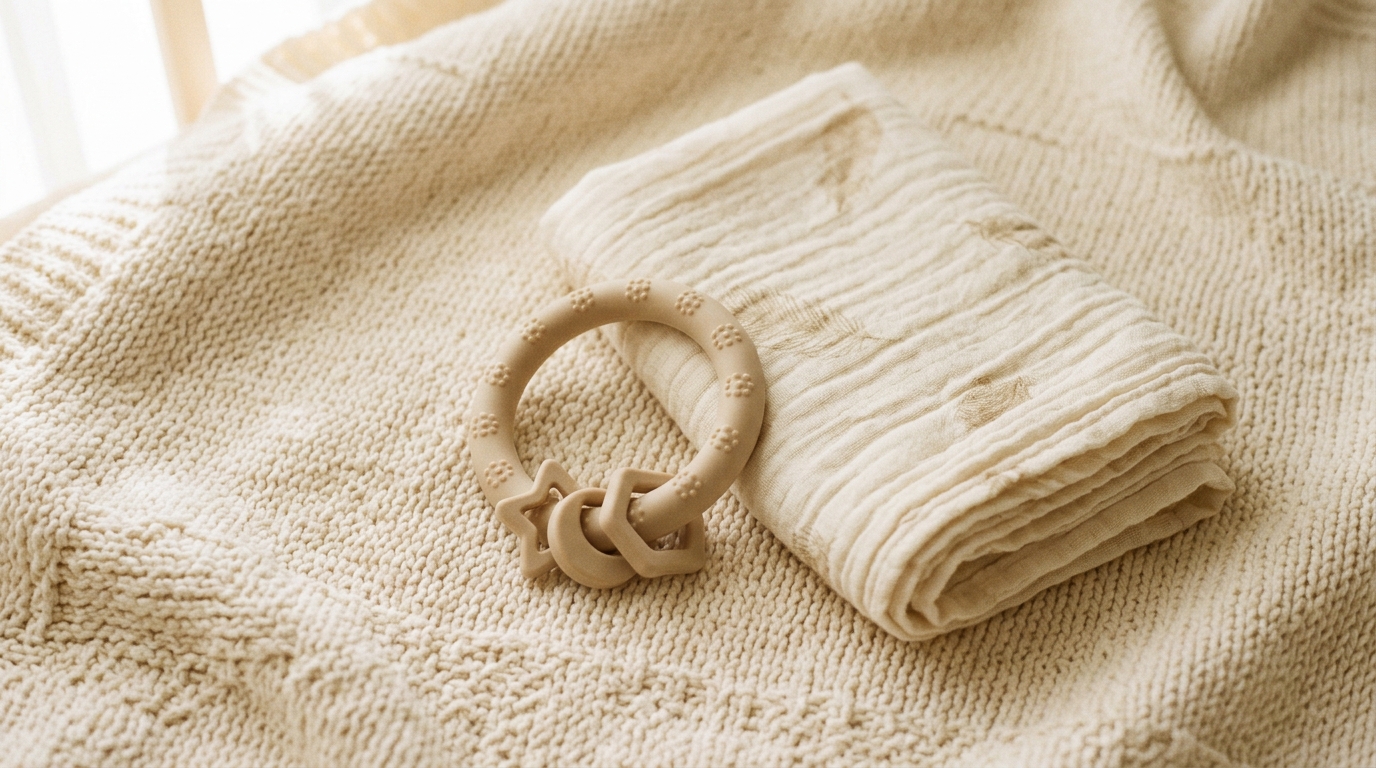
- A chilled teething ring. Refrigerator cold, never the freezer. Frozen solid is hard enough to bruise a gum. Choose a one-piece solid ring rather than a liquid-filled one that can split.
- A cold, damp washcloth. Twist one corner, chill it in the fridge, and let your baby chew. Cheap, effective, and easy to replace.
- Chilled food for babies already on solids. A cold spoon, refrigerated apple sauce, or plain yogurt. If you use a mesh or silicone feeder with cold fruit inside, stay with your baby while they use it.
- Something firm to chew. Solid silicone or rubber teethers designed for the purpose. Skip anything with small parts, cords, or beads.
- Wipe the drool. Pat the chin dry through the day and use a plain barrier ointment to prevent drool rash.
- Extra comfort. More holding, an earlier bath, a calmer bedtime. Some nights that's the whole treatment plan.
- Infant pain relief, if your pediatrician agrees. For a genuinely miserable night, an appropriate weight-based dose of infant acetaminophen, or ibuprofen for babies over six months, is reasonable. Ask your pediatrician for the dose for your child's weight and don't use it every night as routine.
What to Avoid, and Why
Two widely sold teething remedies carry real safety warnings from public health authorities. This is not internet caution. It's the reason both keep appearing in official advisories.
Benzocaine and lidocaine numbing gels. The U.S. Food and Drug Administration has warned against using over-the-counter benzocaine teething products in children under two, and has separately warned against prescription viscous lidocaine for teething infants. Benzocaine has been linked to methemoglobinemia, a condition in which the blood carries less oxygen than it should, which can be serious. Numbing gels also wash away in saliva within minutes, so the trade is a genuine risk for a very brief effect. Don't use them on a baby's gums.
Amber teething necklaces and bracelets. The FDA has warned about teething jewelry because of the risk of strangulation from anything worn around a baby's neck and choking from beads that come loose. There's no good evidence the amber does anything at all. If you've been given one, keep it as a keepsake rather than putting it on your child, and don't use it as an anklet or bracelet either, since a determined baby gets it to their mouth.
Also worth avoiding:
- Homeopathic teething tablets and gels. Regulators have warned about these products after safety concerns, including inconsistent ingredient amounts. They're not a safe default just because they're labeled natural.
- Rubbing alcohol, whiskey, or any spirit on the gums. Alcohol is dangerous for infants in very small amounts.
- Anything sweet on a pacifier or teether. Honey is unsafe under one year, and sugar on a pacifier sets up decay in teeth that have only just arrived.
- Frozen-solid teethers, hard plastic with small parts, and anything long enough to reach the back of the throat.
Caring for Teeth as They Arrive
Start cleaning the moment the first tooth is through. A soft infant brush with a smear of fluoride toothpaste the size of a grain of rice, twice a day, is the standard advice for children under three. You do the brushing, not your child.
Never put your baby down for a nap or the night with a bottle of milk or juice. Milk pooling around brand new teeth for hours is the main driver of early childhood decay, and those front teeth are needed for years yet: baby teeth hold the space for the adult teeth behind them and guide them into position.
Plan the first dental visit for around the first birthday, or within six months of the first tooth appearing.
Frequently Asked Questions
Can teething cause a fever?
Not a real one. A slight warmth can accompany teething, but a temperature that would count as a fever needs another explanation, and a fever in a baby under three months is always a same-day call to your pediatrician.
My baby is eleven months with no teeth. Should I worry?
Almost certainly not. Eruption timing varies enormously and often follows family patterns. If nothing has appeared by around eighteen months, book a check to confirm the teeth are developing normally.
How long does each tooth take?
The uncomfortable stretch around any one tooth is usually a few days before it breaks through and a couple of days after. It's not eighteen months of constant misery. If your child is genuinely unsettled for weeks, look for another cause.
Are the big back teeth worse?
Often, yes. Molars are broad and have to release more gum tissue than a narrow incisor, and the second molars arrive around age two when your child can protest more effectively. Extra patience and cold pressure are still the answer.
Is it safe to give infant pain relief for teething?
For a rough night, an appropriate dose of infant acetaminophen, or ibuprofen if your baby is over six months, is generally reasonable. Confirm the dose with your pediatrician based on current weight, and keep it for bad nights rather than every night.
What about teething necklaces made from silicone instead of amber?
Anything worn around a baby's neck carries a strangulation risk regardless of what it's made of. If you want to wear a silicone teether yourself as a nursing necklace, keep it on you and supervise every use, and never leave it on your child.
What to Do Next
Put a chilled washcloth and a solid silicone teether in the fridge tonight so you have something ready at three in the morning. Those two items, plus a clean finger, handle most teething evenings.
Then use the one rule that matters most: teething makes babies grumpy, not sick. A fever, vomiting, diarrhea, a rash beyond the drool area, or a baby who simply isn't themselves is a reason to call your pediatrician rather than reach for a teether. And book that first dental visit around the first birthday, so someone is watching those new teeth from the start.
This article is for general information only and is not a substitute for professional dental advice. Always consult your dentist about your individual needs.