Clear Aligners vs. Braces: Which Is Right for You?
Invisible aligners promise convenience, but they're not a universal replacement for braces. Here's how the two actually compare on results, cost, and discipline.
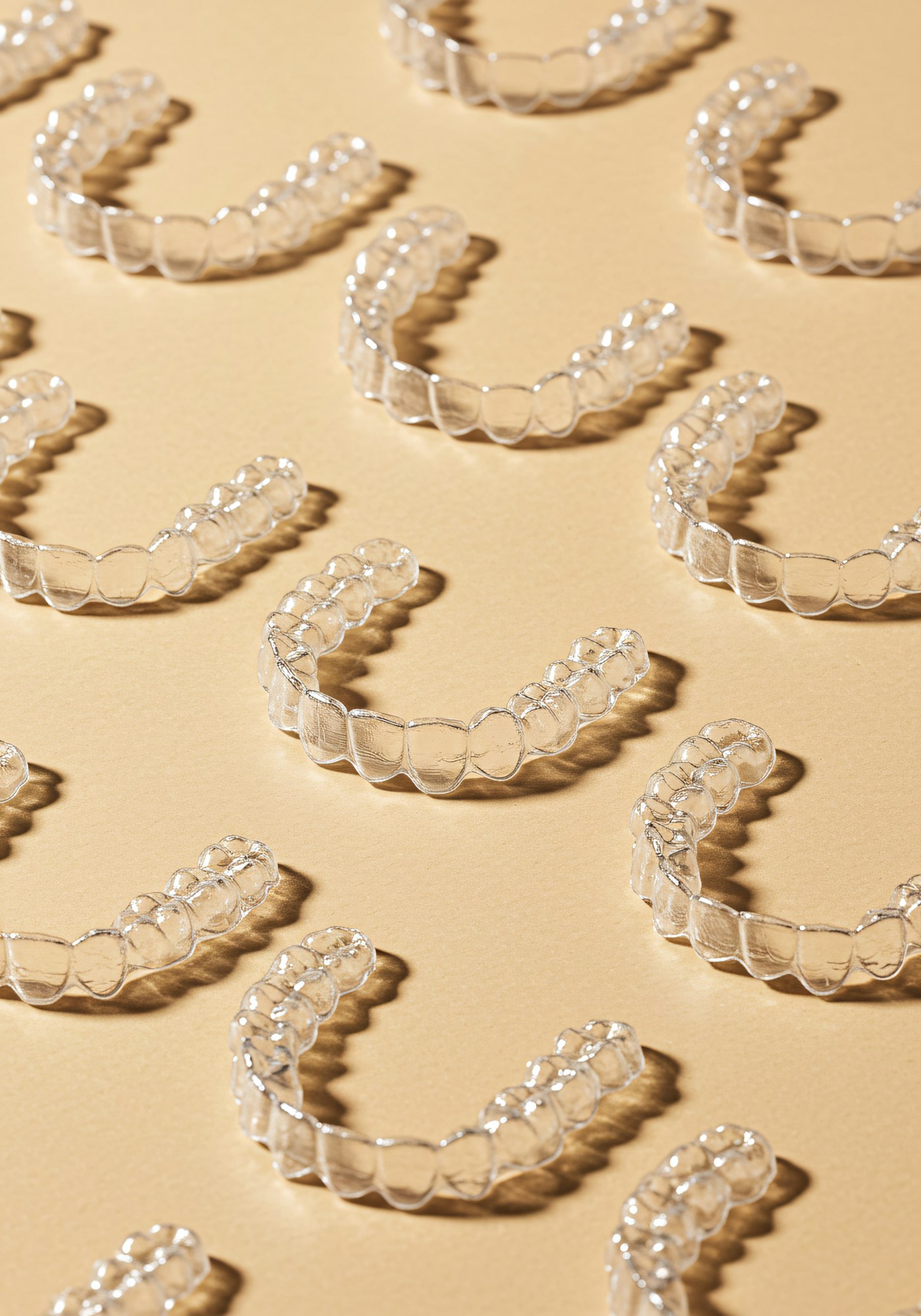
Clear aligners turned orthodontics into something you can order without anyone at work noticing. That marketing has been so effective that a lot of people now assume aligners are simply the modern, better version of braces. They're not a universal replacement, they're a different tool that happens to overlap with braces for a lot of cases and diverge sharply for others. Here's how they actually compare, and how to tell which side of that line you're on.
How Each One Actually Works
Clear aligners are a series of custom, clear plastic trays, each one nudging your teeth slightly closer to their final position than the last. You wear each tray for roughly one to two weeks before switching to the next in the sequence, and the whole set is planned out in advance using a 3D scan of your mouth. Some systems check in with a dentist or orthodontist in person periodically; others are managed mostly remotely with photos you send in.
Traditional braces use brackets bonded to each tooth, connected by a wire that's tightened and adjusted over time. That wire applies continuous, gentle pressure around the clock, and an orthodontist makes physical adjustments every few weeks to keep guiding teeth toward the target position. Braces come in metal, ceramic (tooth-colored brackets, less visible), and lingual (brackets on the back of the teeth, hidden from view) versions.
The core mechanical difference is this: braces are attached to your teeth and work whether you think about them or not. Aligners are removable, which is the whole appeal, and also the whole risk.
Where Aligners Win
- Aesthetics. They're genuinely close to invisible in everyday conversation, which matters a lot to adults who don't want a mouth full of metal in client meetings or wedding photos.
- Comfort. No brackets or wire ends to irritate the inside of your cheeks and lips, especially in the first few days after each adjustment.
- Eating freedom. Because they come out, there's no list of forbidden foods. Popcorn, corn on the cob, and chewy candy are all still on the table (literally), you just take the trays out first.
- Easier hygiene. Brushing and flossing look exactly like they did before treatment, since there's no hardware to navigate around. Braces make flossing genuinely harder and create more spots for plaque to hide.
- Fewer in-person visits for some systems. Depending on the provider, check-ins can be less frequent than the monthly tightening schedule braces typically need.
Where Braces Win
- Complex cases. Significant crowding, teeth that need to rotate a lot, bite problems involving the jaw, or teeth that need to move vertically (extrusion) or have their roots repositioned are all things braces handle more reliably. Aligners are good at translation (sliding teeth) but weaker at more complicated three-dimensional movements.
- Work regardless of compliance. A bonded wire doesn't care if you forgot to put it back in after lunch. It's applying force for 24 hours a day whether you're thinking about your teeth or not.
- Predictability on difficult movements. Orthodontists have decades of data and mechanical control over hard cases with braces that aligner software is still catching up on for the trickiest situations.
- No lost trays. It happens more than people admit: a tray wrapped in a napkin at a restaurant, thrown out by accident. A bonded bracket can't be misplaced.
The Discipline Factor (This Is the Part People Underestimate)
Aligners need to be worn 20 to 22 hours a day to stay on schedule. That leaves roughly two hours of daily wiggle room for eating, drinking anything but water, and brushing, combined. Miss that window regularly and the plan slips: teeth don't move as predicted, the next tray in the sequence stops fitting properly, and the whole timeline stretches out or needs to be redone with new scans.
Non-compliance is, by a wide margin, the number one reason aligner cases stall or underperform. It's not usually a mechanical failure of the technology, it's someone leaving trays out at a party, forgetting them at a friend's house overnight, or just deciding "an hour won't matter" often enough that it adds up.
This is worth being honest with yourself about before choosing. If you know you're someone who'll take the trays out and genuinely forget to put them back in, or if your lifestyle involves grazing on food and drinks all day (coffee refills, snacking through work), braces remove that variable entirely. There's no discipline required for hardware that's bonded to your teeth.
Aligners vs. Braces at a Glance
| Clear Aligners | Traditional Braces | |
|---|---|---|
| Visibility | Nearly invisible | Visible (less so with ceramic) |
| Removable | Yes | No |
| Daily wear needed | 20-22 hours | 24 hours, no choice involved |
| Eating restrictions | None (remove first) | Yes, avoid hard/sticky foods |
| Hygiene | Same as normal brushing/flossing | Harder, needs extra tools |
| Comfort | Mild pressure per tray | Can irritate cheeks/lips, especially early on |
| Best for | Mild to moderate crowding/spacing | Mild to complex cases, including bite issues |
| Compliance required | High, self-directed | Low, works passively |
| Typical treatment length | Often 6-18 months for suitable cases | Often 18-24+ months, varies by complexity |
| Relative cost | Generally comparable to moderate braces cases; complex cases can shift this | Wider range depending on complexity and bracket type |
Treat the cost row as a rough shape rather than a number. Fees depend heavily on case complexity, your location, and whether you're going through a general dentist, an orthodontist, or a direct-to-consumer aligner company. This site has a separate, detailed breakdown specifically on Invisalign pricing if cost is the deciding factor for you; the short version is that a straightforward case and a complex one can land in very different places even within the same treatment type.
How a Dentist or Orthodontist Actually Decides
A consultation usually isn't just "which do you prefer." It typically includes:
- A scan or impressions and x-rays, to see not just where teeth are but how roots and jaw structure look underneath the gumline.
- A bite assessment, since problems with how the upper and lower jaw meet (a significant overbite, underbite, or crossbite) often need the added control that braces, or braces combined with other appliances, provide.
- A crowding and spacing evaluation, because mild-to-moderate cases are where aligners perform closest to braces, while severe crowding needing real rotation or extraction planning tends to favor braces.
- An honest conversation about your habits, since a provider who knows compliance is going to be a struggle may steer you toward braces even if your case would technically work with aligners.
It's worth asking directly: "if this were your mouth, which would you pick, and why." A provider who only offers one option is worth a second opinion, since not every case is a good match for aligners, and not every adult wants brackets for two years if a well-run aligner plan would get them the same result.
What About Teens?
Aligners are increasingly common for teenagers, not just adults, and modern systems include compliance indicators (small dots that fade with enough wear) so a parent and orthodontist can actually check whether the trays are being worn enough. Whether that's a good fit depends heavily on the individual teen's reliability more than their age. This site has a longer guide for parents specifically weighing aligners for teens if that's the situation you're navigating.
Frequently Asked Questions
Can I switch from aligners to braces partway through if it's not working?
Yes, this happens more often than people expect, usually when compliance has slipped or the case turns out to be more complex than the initial scan suggested. It typically means new impressions and a revised plan, so it does add some time and cost, but it's a normal mid-course correction rather than a failure.
Do aligners hurt more or less than braces?
Most people describe aligners as pressure rather than sharp pain, similar to a dull ache for the first day or two after switching trays. Braces tend to cause more soreness right after each tightening appointment and some cheek or lip irritation from the hardware itself, though both settle down as you adjust.
Will my results actually look the same either way?
For mild to moderate cases, final results are often very comparable between the two. For complex bite or crowding issues, braces (sometimes combined with other appliances) tend to achieve more precise and predictable outcomes, which is exactly why case complexity is the first thing a provider assesses.
How do I know if my case is "mild" or "complex"?
You can't reliably tell from a mirror, this is genuinely why the scan and x-ray exist. Two people can look similarly crowded and have very different underlying root positions and bite relationships that only show up on imaging.
Is it true aligners are always cheaper than braces?
Not always. Costs overlap a lot between the two, and a complex case that needs extra aligner refinements or attachments can end up costing as much as braces would have. Cost should factor into the decision, but it shouldn't be the only one.
The Bottom Line
Both aligners and braces move teeth effectively when they're matched to the right case. The real choice isn't aesthetics versus tradition, it's whether your specific teeth need the passive, round-the-clock force of braces, or whether they're a good candidate for a removable system that depends on you wearing it as instructed. Get a consultation and a scan before deciding anything; that fifteen-minute imaging appointment tells a provider far more about which option will actually work than any amount of guessing from a mirror.
This article is for general information only and is not a substitute for professional dental advice. Always consult your dentist about your individual needs.