Veneers Cost: What Actually Determines the Price
What really drives the cost of veneers, typical price ranges by material, insurance and financing options, and how to spot a quote that is too good to be true.
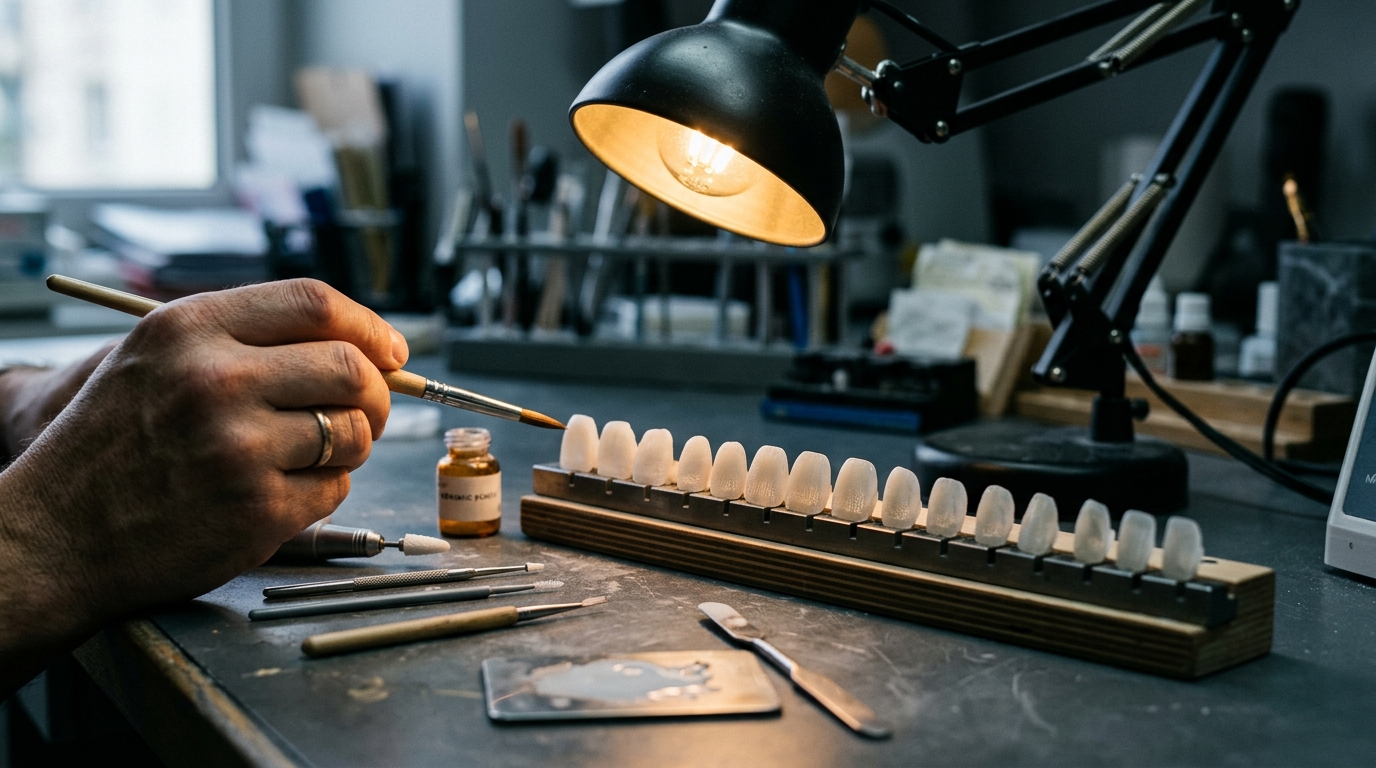
You've seen one price for veneers online, heard a very different number from a friend, and then been quoted a third figure at a consultation. All three can be accurate. Veneers are almost always priced per tooth, so your total depends on the material, how many teeth you treat, who actually makes them, where you live, and what your mouth needs before anything gets bonded on. Here's what moves the number, what typical ranges look like, and how to tell a fair quote from one worth walking away from.
What Actually Drives the Price of Veneers
A veneer is a thin shell, either ceramic or tooth-colored resin, bonded to the front of a tooth to change its color, shape, or apparent alignment. Nearly every quote is built the same way: a price per tooth, multiplied by the number of teeth, plus whatever your teeth need first.
Material. Composite resin, which a dentist sculpts directly onto your tooth in one visit, sits at the low end. Porcelain sits higher because the ceramic itself costs more and because a lab has to build each shell to fit one specific tooth.
The lab and the ceramist. With porcelain, part of what you're paying for is a dental technician you never meet. A hand-layered veneer from a highly skilled ceramist takes hours of work and costs the practice several times what a mass-produced one does. That difference shows up in your quote, and it's usually visible in the result too.
How many teeth you treat. Most people treat the teeth that show when they smile, commonly six to ten upper teeth. Some practices offer a modest per-tooth discount on larger cases, but the total still climbs quickly, so treating fewer teeth is the single biggest lever you control.
Your dentist's experience and demand. A dentist who does cosmetic work daily, has a waiting list, and photographs every case usually charges more than a general practice that does a few veneers a year. That's not automatically better value, but it isn't arbitrary either.
Where you live. Rent, staff wages, and local lab costs vary enormously. The same case can differ by thousands of dollars between a major coastal city and a smaller inland town.
Work that has to happen first. Veneers get bonded to healthy teeth and healthy gums. If you have decay, gum inflammation, failing old fillings, or a bite problem, that treatment comes first and is billed separately. Gum contouring, whitening your lower teeth so they match, or short-term orthodontics to straighten a tooth before veneering it all add to the total.
Planning and technology. Digital scans, a diagnostic wax-up, and a trial smile you can wear and look at before anything is permanent all take chair time and lab time. They tend to raise the price and lower the odds of an expensive redo.
What's bundled in. Temporary veneers, adjustment visits, a follow-up polish, and a night guard may be included or may be extra. Two quotes that look far apart can end up close once you compare what each one actually covers.
Typical Veneer Costs, Type by Type
The ranges below are broad United States figures, per tooth unless the row says otherwise. Use them as a sanity check on a quote, not as a price list. Only a dentist who has examined your teeth, taken x-rays, and looked at your bite can give you a real number.
| Type or method | Typical range (USD) | What's usually included | Insurance likelihood |
|---|---|---|---|
| Direct composite veneers | $250 to $1,500 per tooth | Resin sculpted and polished in one visit | Very unlikely |
| Lab-made composite veneers | $400 to $1,800 per tooth | Impression or scan, lab fabrication, bonding | Very unlikely |
| Traditional porcelain veneers | $900 to $2,500+ per tooth | Prep, temporaries, lab work, bonding | Very unlikely |
| No-prep or minimal-prep porcelain | $800 to $2,200 per tooth | Scan, lab work, bonding visit | Very unlikely |
| Removable clip-on veneer shell | $400 to $2,500 per arch | One removable appliance, no bonding | Almost never |
| Consultation and records | $0 to $500 | Exam, x-rays, photos, mock-up | Sometimes, for exam and x-rays |
| Night guard afterward | $300 to $800 | Custom guard to protect the veneers | Sometimes, partial |
Run the math for your own case before you panic or celebrate. Eight upper porcelain veneers at the middle of that range is a five-figure decision, while four composite veneers on the teeth that actually show can land in the low thousands. Same procedure name, very different projects.
Does Dental Insurance Cover Veneers?
If the reason for treatment is appearance, the honest answer is usually no. Dental plans are written to cover disease and function, and cosmetic exclusions are near universal.
There are narrow situations where a plan pays something. If a front tooth is fractured, badly worn, or has a large failing restoration, a veneer or crown may qualify as a restorative treatment rather than a cosmetic one. Coverage still isn't guaranteed, and two things usually shrink it:
- Least expensive alternative treatment clauses. Many plans pay only what the cheapest reasonable option would have cost. If a filling would have technically worked, they pay filling rates and you cover the difference.
- Annual maximums. Most plans cap yearly benefits somewhere in the range of $1,000 to $2,000. Even a covered case burns through that with one or two teeth.
Before you commit, ask the office to submit a predetermination, sometimes called a pre-treatment estimate. The insurer responds in writing with what it will and won't pay. It takes a few weeks and removes most of the guesswork. Also check for waiting periods if your plan is new, since some restorative benefits don't start for six to twelve months.
Financing and Payment Plan Options
Veneers are elective, which means you almost always have time to arrange payment sensibly instead of signing whatever is put in front of you.
- In-house payment plans. Some practices split the fee across the treatment phases or offer an interest-free plan over a few months. Ask directly, because it isn't always advertised.
- Third-party health care credit. These cards are common in dental offices and often advertise deferred interest. Read that term carefully. If any balance remains at the end of the promotional window, interest is typically charged retroactively on the original amount, not the remainder.
- A personal loan or credit union line. Often a lower and more predictable rate than a store card, and worth pricing out before you're sitting in the chair.
- HSA or FSA funds. Purely cosmetic treatment generally isn't eligible. If part of your treatment is restorative, some of it may qualify. Confirm with your plan administrator rather than assuming.
- Phasing across two benefit years. If any portion is covered, splitting treatment across December and January can let you use two annual maximums instead of one.
- Dental savings plans. These are membership discounts, not insurance. They can shave a percentage off, though cosmetic work is often excluded or discounted less.
How to Lower the Cost Without Cutting Corners
Saving money on veneers is mostly about scope and sequencing, not about hunting for the cheapest per-tooth price.
- Treat fewer teeth. Smile at a mirror and notice which teeth actually show. Many people need four to six, not ten.
- Whiten first, then match. Whitening your natural teeth before the shade is chosen can mean fewer veneers, because the untreated teeth blend in instead of standing out.
- Consider composite as a first step. It costs less, can often be done in one visit, and buys you time to save. It won't last as long, and your dentist should tell you honestly whether your case suits it.
- Ask about lab tiers. Many practices work with more than one lab at different price points. There's often a middle option nobody mentions unless you ask.
- Look at dental school clinics. Treatment is done by students or residents under faculty supervision at reduced fees. Appointments run longer and candidacy is screened, but the oversight is real.
- Get two or three written plans. Compare itemized documents, not verbal totals. You'll spot what's included and what isn't.
- Ask about payment method discounts. Some offices discount for payment in full or by check because card processing costs them money.
Treatment abroad deserves a plain word. Prices can be dramatically lower and plenty of people are happy. What changes is the follow-up. If a veneer debonds or the bite feels off two months later, the fix means another flight or paying a local dentist to correct someone else's work. Price that risk in honestly rather than ignoring it.
Red Flags: When a Low Price Signals a Problem
A low quote isn't automatically bad. These specific patterns are.
- A price quoted with no exam and no x-rays. Nobody can plan bonded restorations from a photo of your smile.
- No itemized written treatment plan. You should be able to see the fee per tooth and every add-on before you decide.
- Pressure to book today. Expiring discounts and a "last slot this month" pitch are sales tactics, not clinical reasoning.
- Vagueness about who makes the veneers. A confident practice will name its lab or show you its own milling setup.
- No conversation about gums, decay, or your bite. Bonding porcelain over active gum disease or an untreated grinding habit is how cases fail early.
- A default recommendation of a full set. If every patient gets the same number of veneers regardless of what shows when they smile, the plan isn't about your face.
- Heavy tooth reduction presented as routine. Teeth trimmed far past what a veneer needs can't be undone, and that's a conversation to have before, not after.
- No remake or warranty policy. Ask what happens if one chips in year two, and ask for the answer in writing.
The useful question isn't "why is this cheap?" It's "what has been left out of this number, and when will I have to pay for it?"
What to Ask Before You Say Yes
Bring this short list to every consultation. Compare the answers side by side.
- How many teeth do you recommend, and why those specific teeth?
- Which material are you suggesting for my case, and what made you pick it?
- How much enamel will be removed, if any?
- Which lab makes them, and is a trial smile or wax-up included?
- Are temporaries, adjustments, and a night guard in this price?
- What's the remake policy if one chips or debonds?
- What does the maintenance look like in five years, and what will it cost?
Frequently Asked Questions
How much does a full set of veneers cost? It depends entirely on how many teeth "a full set" means for you and which material you choose. Six to ten upper porcelain veneers commonly lands in the mid five figures at typical United States pricing, while a smaller composite case can be a few thousand dollars. The only accurate figure comes from an in-person exam and a written treatment plan.
Why did two dentists quote me such different prices? Usually because they're quoting different things. Different materials, different labs, a different number of teeth, and different amounts of included follow-up all move the total. Ask both offices for itemized plans and compare line by line rather than comparing headline numbers.
Will insurance pay for any part of my veneers? If the treatment is purely for appearance, almost certainly not. If a tooth is fractured, worn, or has a large failing filling, a plan may contribute at a restorative rate. Ask your dentist's office to submit a predetermination so you get the insurer's answer in writing before treatment starts.
Does grinding my teeth make veneers more expensive? It can add cost in two places. You'll likely need a custom night guard, and your dentist may recommend addressing the grinding before bonding anything on. Skipping that step is one of the more common reasons veneers chip or debond early, so it usually saves money over the life of the case.
Are cheaper composite veneers a waste of money if I want porcelain later? Not necessarily. Composite is often a reasonable interim step, especially if it's placed with little or no enamel reduction, and it lets you live with the new shape before committing. Ask your dentist specifically whether the composite plan would preserve enough tooth structure to keep porcelain on the table down the road.
This article is for general information only and is not a substitute for professional dental advice. Always consult your dentist about your individual needs.