Retainers After Braces: How Long Do You Really Need Them?
A clear walkthrough of retainers after braces: what happens at the appointment, the first-year timeline, aftercare, and what's normal versus what's not.
Getting braces off is supposed to be the good part. Then someone hands you a retainer, a cleaning tablet, and a list of rules, and suddenly you're wondering how much this is going to hurt and how long you're stuck with it. If you're anxious about the appointment or about messing up afterward, that's a normal place to be. Here's what actually happens on the day, what the first year feels like, which things deserve a phone call, and the honest answer to how long retainers really last.
Why You Need a Retainer at All
Teeth aren't set in concrete. Each one sits in its socket held by a thin ligament, a layer of stretchy fibers between the root and the bone. During braces, those fibers get stretched on one side and squeezed on the other while the bone slowly rebuilds around the new position.
When the braces come off, the tooth is in its new spot but the ligament and the surrounding bone haven't finished settling. That takes months, not days. During that window the fibers still have a pull toward where the tooth used to be, and without something holding the line the teeth will drift back. This isn't a sign that treatment failed. It's just how the biology works for everyone.
There's a second reason retainers stick around long term. Teeth shift slowly throughout life whether or not a person ever had braces. Lower front teeth in particular tend to crowd up over the decades, which is why plenty of adults who never wore braces still develop a bit of overlap in their thirties and forties. A retainer isn't a penalty for a job half-done. It's the maintenance step that keeps the result you already paid for.
The Types of Retainers You'll Likely Be Offered
Most people end up with one of three, and a lot of people get a combination.
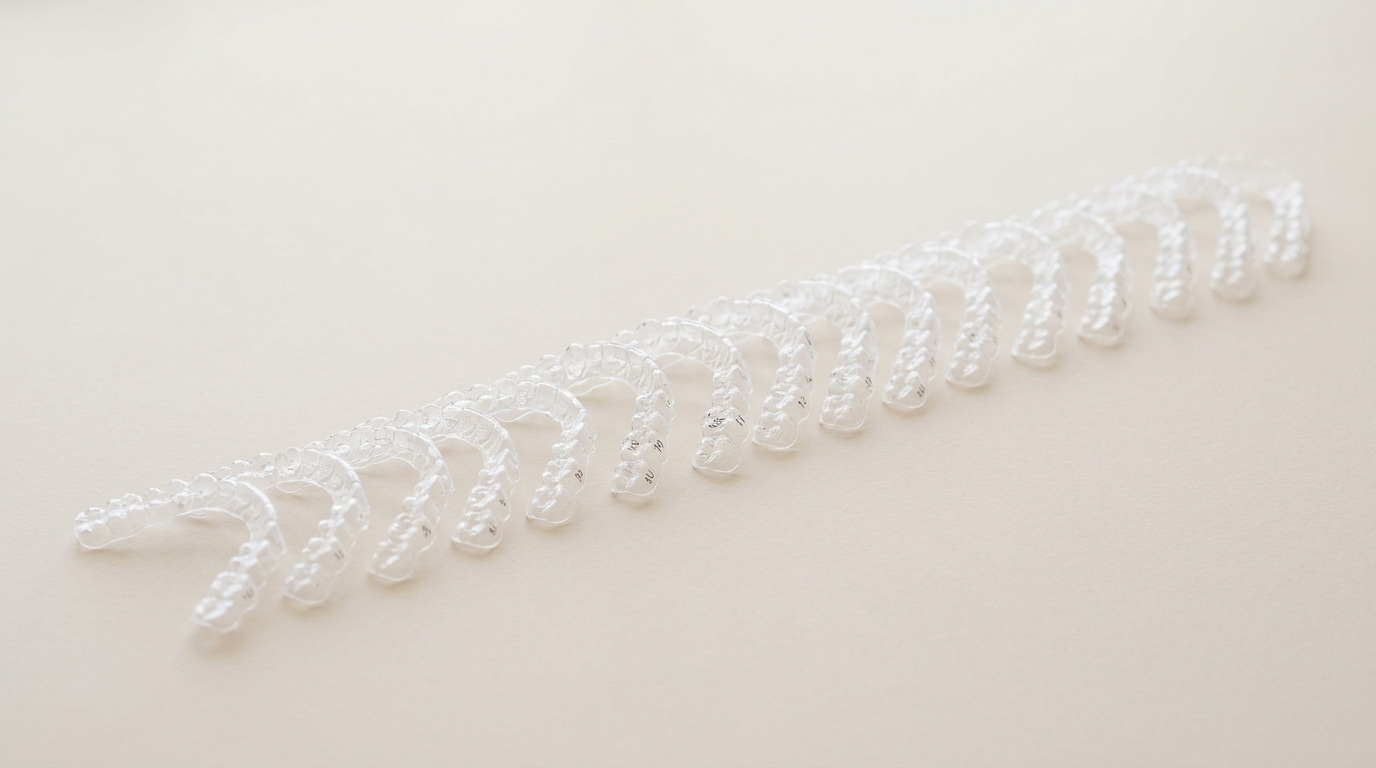
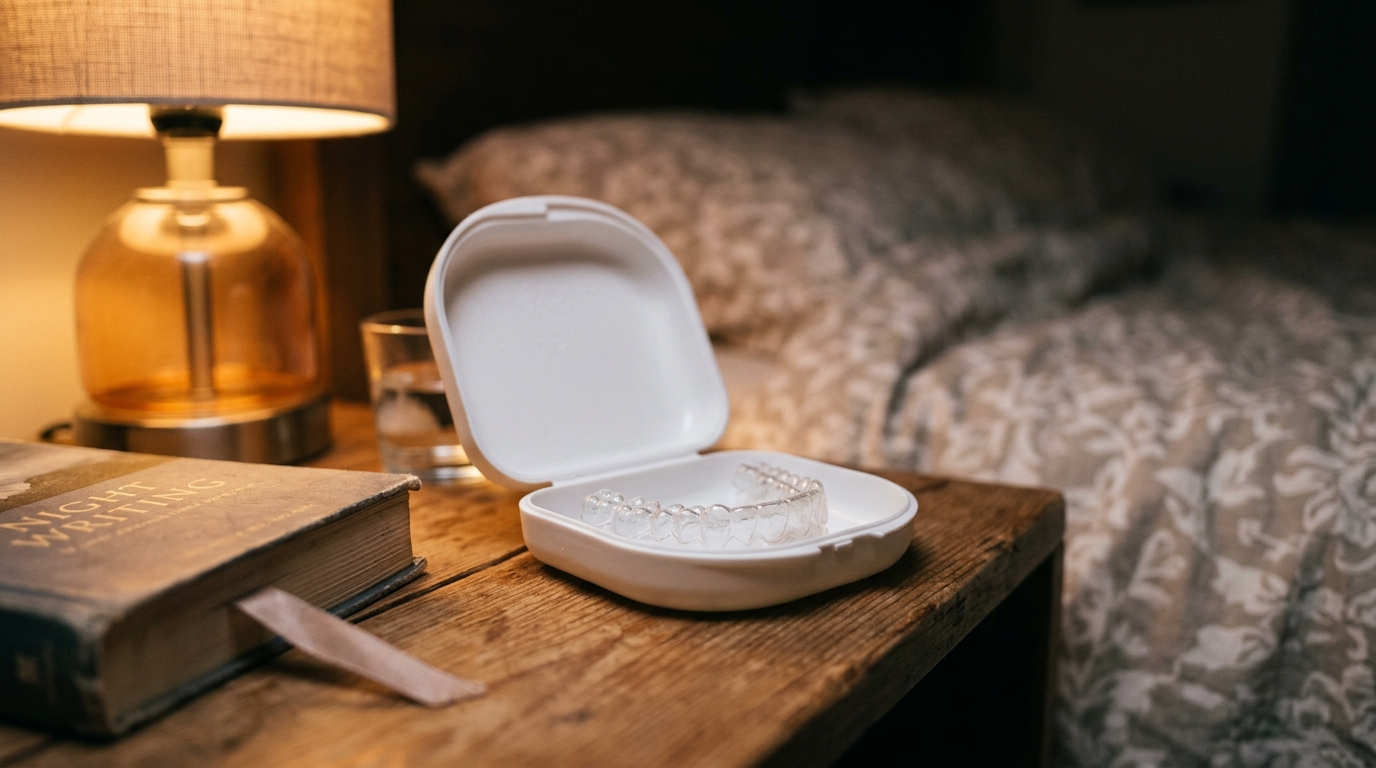
Clear removable retainers are the ones that look like a thin, transparent aligner molded to your teeth. They're nearly invisible, comfortable to get used to, and easy to carry. They're also the easiest to lose, the easiest to warp with heat, and the ones that need replacing most often, typically every couple of years with regular use.
Wire and acrylic retainers, often called Hawley retainers, have a plastic body that sits against the roof of your mouth or behind your lower teeth, with a visible wire across the front. They're more noticeable and take a bit longer to speak normally in, but they're tough, they can be adjusted by the orthodontist rather than remade, and they often last considerably longer than a clear one.
Fixed or bonded retainers are a thin wire glued to the back surfaces of your front teeth. You can't take it out, which means you can't forget it. That's the main appeal. The trade-off is that flossing takes a threading tool and a little patience, and the glue can come loose without you noticing, so it needs checking.
A very common setup is a bonded wire behind the lower front teeth plus a removable retainer on top for nights. Your orthodontist will recommend based on what your teeth were doing before treatment, not on preference alone. Teeth that came in badly rotated or a gap that was closed are both more prone to relapse, and those cases often get a bonded retainer.
Before the Appointment: What to Expect
The visit where your braces come off and your retainer gets started usually runs somewhere between 45 and 90 minutes. There are no needles and no numbing. Nothing about this appointment involves drilling into a tooth.
A few practical things to know going in:
- Eat beforehand. Your teeth may feel tender afterward and you'll be in the chair a while.
- Your mouth will be open a lot. Lip balm helps, and it's fine to ask for a break.
- You'll get a scan or an impression. Many offices now use a digital scanner, which is a small camera wand that maps your teeth in a few minutes with nothing to swallow or gag on. Some still use putty in a tray, which sets in about a minute or two. If you gag easily, say so at the start. Sitting upright, breathing steadily through your nose, and focusing on that breathing genuinely helps.
- Ask when the retainer arrives. Some practices hand it to you the same day. Others need a few days for the lab, and may give you a temporary retainer in the meantime. Wear whatever they give you exactly as instructed, because the first week after debond is when teeth move fastest.
Step by Step: What Actually Happens
Knowing the order of events takes most of the tension out of it.
- The brackets come off. The orthodontist uses a plier-like tool that gently flexes each bracket until the bond releases. You feel pressure and a small pop. Most people describe it as strange rather than painful.
- The glue gets polished away. A small polishing tool removes the leftover adhesive from each tooth. There's vibration and a warm, dusty smell, and this is usually the longest step. It doesn't reach the nerve, so it shouldn't hurt, though it can feel buzzy.
- Your teeth get cleaned and polished. Many offices finish with a fluoride treatment. This is also the first time you'll feel your teeth with your tongue, and the smoothness is genuinely startling.
- Photos and sometimes an x-ray. These document the finished result for your record.
- The scan or impression is taken so your retainer matches your teeth exactly as they are now.
- A bonded retainer is placed, if you're getting one. Your teeth are kept dry with cotton rolls or a small shield, the wire is shaped and positioned, and a bonding material is set with a blue curing light. It takes roughly 15 to 30 minutes and involves no discomfort beyond holding still.
- Your removable retainer is fitted. They'll check that it seats fully and evenly and trim any edge that digs in. Speak up right away if something feels sharp. This is much easier to fix in the chair than over the phone.
- You get your instructions. Wear schedule, cleaning routine, and when to come back. Ask for it in writing or take a photo of the sheet.
You can talk, eat, and go back to school or work straight afterward. Nothing about this appointment needs a recovery day.
Your First Year in Retainers
Every case is a little different, but the arc below is what most people experience. The right-hand column is the part worth screenshotting.
| Stage | What's normal | Call the office if |
|---|---|---|
| Day 1 | Slippery teeth, tight retainer, extra saliva | The retainer won't seat all the way down |
| Days 2 to 3 | Mild soreness, a slight lisp, tender gums | Sharp pain, or a wire poking your tongue |
| First week | Speech settles, sore spots fade | A sore that keeps getting worse, not better |
| Weeks 2 to 4 | Retainer feels routine and snug | Any crack, split, or rough break in the plastic |
| Months 2 to 3 | Possible switch to nights only | The retainer suddenly feels loose everywhere |
| Months 4 to 6 | Nights only for most people | A visible gap opening or a tooth shifting |
| Months 6 to 12 | Nights only, plus a check-up visit | A bonded wire that feels loose or lifts off a tooth |
| After year 1 | Nights, long term | The retainer no longer fits after time away |
| Any time | Plastic intact, fits snugly, no pain | It's lost or broken: call within days, not weeks |
Two of those deserve a note. A retainer that won't seat completely usually means a tooth has already moved, and forcing it can crack the plastic or hurt the tooth. Stop and call. And a bonded wire that has come unglued from even one tooth can let that tooth drift while the rest stay put, which is exactly the kind of thing you'd rather fix in one short visit than three months later.
How Long Do You Really Need Them?
Here's the straight answer most people are looking for.
For roughly the first 3 to 6 months, you'll likely wear a removable retainer full time, meaning everything except eating, drinking anything other than water, and brushing. This is the settling window, when the bone and ligament are firming up around the new tooth positions.
After that, most orthodontists move patients to nights only. That's a big drop in hours and it's where retainers stop feeling like a burden. After a few years of stable teeth, some people get the go-ahead to reduce to three to five nights a week, but that's a decision to make with your orthodontist, not on your own.
Long term, the honest expectation is that nighttime retainer wear continues indefinitely. Teeth don't reach an age where they stop drifting. Framed differently: it's a few seconds at bedtime, and the alternative is watching a result you spent a year or two earning slowly undo itself. If you have a bonded wire, it's holding those specific teeth around the clock without you doing anything, but you'll still usually wear a removable retainer at night for the rest of the arch, and the wire itself needs periodic checking.
Pain and Discomfort: What's Normal
The discomfort here is mild and short. Knowing what shape it takes makes it much easier to sit with.
- Pressure-type soreness in the first day or two, similar to the day after a braces tightening. It fades on its own. If you want something for it, the same over-the-counter pain reliever you'd take for a headache is fine, following the directions on the label.
- Tooth sensitivity to cold for a few days to a couple of weeks after debond. Your enamel is intact. The surfaces are simply newly exposed and freshly polished.
- Tender gums where brackets used to sit, especially if the gums were a bit puffy during treatment. This settles as brushing gets easier.
- A lisp with a new retainer, usually for two to four days. Reading out loud for ten minutes a day speeds it up more than anything else.
- Extra saliva on the first day, because your mouth reads a new object as something to wash away. It calms down within a day.
- A rough spot from a bonded wire rubbing the tongue in the first week. Orthodontic wax over the spot handles it while the tissue toughens up.
What is not normal: throbbing pain, swelling in the gum or face, a tooth that wiggles noticeably, or a sore that hasn't started healing after about 10 to 14 days. None of those are emergencies in most cases, but all of them are reasons to call rather than wait it out.
Aftercare Dos and Don'ts
Do:
- Put it in the case every single time it comes out, without exception.
- Rinse it with cool water the moment you take it out, before saliva dries into a film.
- Brush it gently with cool water and a drop of mild dish soap or hand soap, using a soft brush kept for that purpose.
- Soak it with retainer cleaning tablets as often as your orthodontist suggests.
- Brush and floss your teeth before putting it back in at night.
- Take it out to eat and to drink anything other than water.
- Bring it to every dental appointment so it can be checked against your teeth.
- Keep your old retainer until the new one is confirmed to fit.
Don't:
- Don't use hot water, boiling water, a dishwasher, or a car dashboard. Heat warps the plastic permanently and a warped retainer doesn't hold anything.
- Don't scrub it with regular toothpaste. Most are abrasive enough to scratch clear plastic and cloud it over time.
- Don't soak it in bleach or alcohol-based mouthwash, which can weaken and discolor the material.
- Don't wrap it in a napkin at a restaurant or in a school cafeteria. This is the most common way retainers get thrown away.
- Don't leave it where a dog can reach it. Dogs find them irresistible, and this is a genuinely frequent replacement reason.
- Don't chew or click it. Repeated flexing cracks the plastic at the thin points.
- Don't force one that won't seat, and don't bend a wire yourself.
- Don't treat a clear retainer as a whitening tray unless your dentist specifically tells you to.
What Retainers Cost and What Insurance Covers
The first set of retainers is often bundled into the overall orthodontic fee, so check your original treatment agreement before assuming anything. Replacements are where costs show up.
A replacement clear removable retainer typically runs somewhere in the range of $100 to $500 per arch (an arch being the upper or lower set of teeth). A wire and acrylic retainer usually sits at the upper end of that or slightly above, since it takes more lab work. Placing a bonded retainer commonly falls in the range of $250 to $600, while re-gluing one that has come loose is generally much less.
What moves the number:
- Where you live, since regional overhead varies a lot
- Whether the practice has an in-house lab or sends work out
- Whether a fresh scan is needed or an existing digital record can be reused
- Whether you buy a single retainer or one of the multi-set packages some offices sell at a discount
On insurance: dental plans that include orthodontic coverage usually apply a lifetime maximum rather than an annual one, and the initial retainers are typically treated as part of the treatment that maximum covers. Replacement retainers are usually out of pocket. FSA and HSA funds generally can be used. The only real price is the written quote your own dentist or orthodontist gives you after looking at your teeth.
One money-saving habit worth more than any discount: keep the retainer in its case. Most replacement costs are avoidable.
Frequently Asked Questions
What happens if I stop wearing my retainer for a while?
Teeth start drifting within days, though visible change usually takes weeks to months. If the retainer still seats fully and snugly, go back to wearing it at night and book a check-up. If it doesn't seat, don't force it. Call the office, because forcing it can crack the plastic or put unhealthy pressure on a tooth.
Do I have to wear a retainer forever?
Realistically, yes, but only at night after the first several months. Teeth keep shifting throughout life, so retention is ongoing maintenance rather than a phase that ends. The time commitment shrinks dramatically after the first year.
Does getting braces taken off hurt?
No numbing is needed, and most people describe it as odd rather than painful. You'll feel pressure and small pops as brackets release, then vibration while the glue is polished off. Teeth can feel tender and cold-sensitive for a few days afterward.
Can I whiten my teeth right after my braces come off?
Most dentists suggest waiting a couple of weeks so any post-debond sensitivity settles first. It's also worth letting your dentist look at the enamel before you start, since the surfaces under the brackets can look slightly different at first and often even out on their own. Don't use your retainer as a whitening tray unless you're told to.
My bonded retainer wire feels loose. Is that an emergency?
It's not an emergency, but don't sit on it. Call within a few days, because a tooth freed from a loose wire can move noticeably in a short time. If the wire end is poking your tongue, cover it with orthodontic wax until your appointment.
This article is for general information only and is not a substitute for professional dental advice. Always consult your dentist about your individual needs.