Electric vs Manual Toothbrush: Does It Actually Matter?
Electric brushes clean modestly better for most people, but technique matters more than the device. Here is what the evidence supports and how to choose without overpaying.
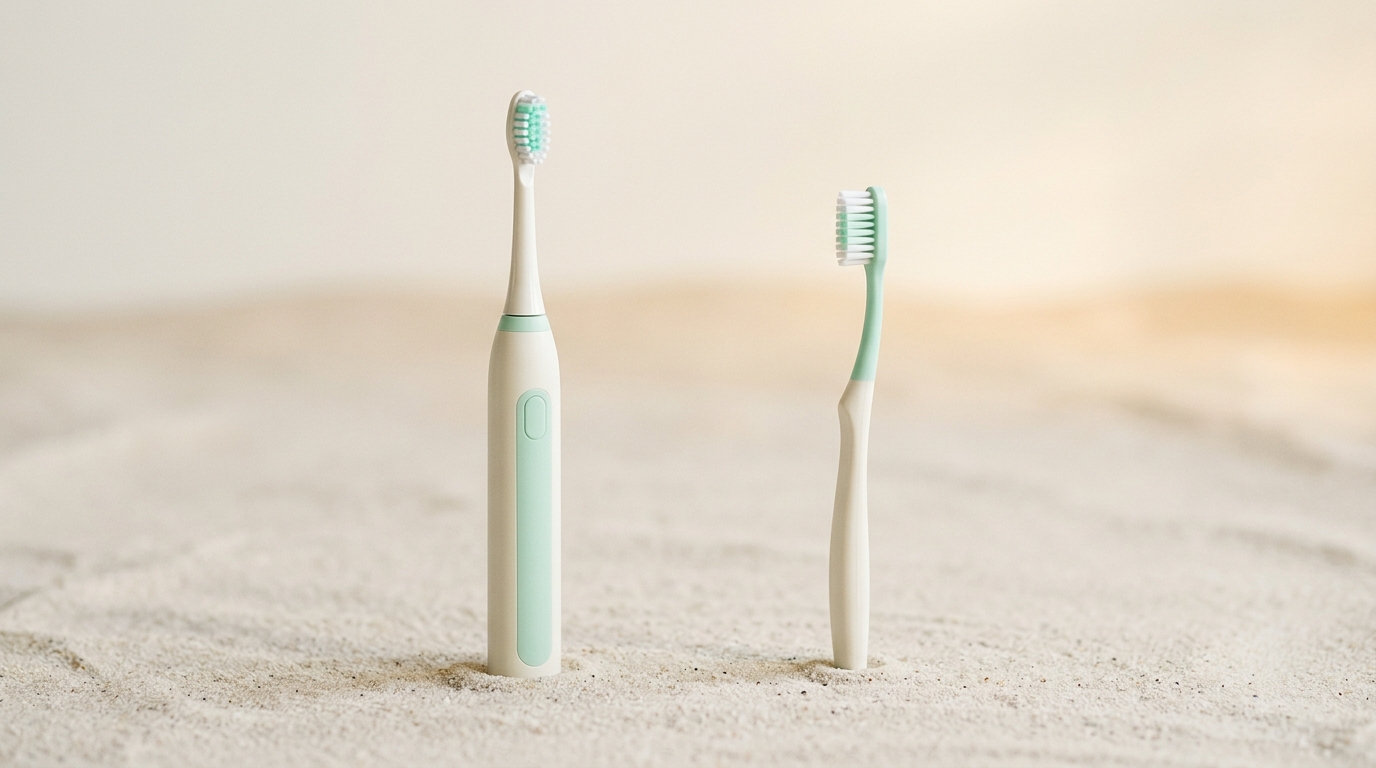
You are standing in front of a wall of toothbrushes. At one end, a two dollar manual brush. At the other, a boxed electric one costing about as much as a decent pair of shoes, promising to remove dramatically more plaque than "a regular manual toothbrush." You cannot tell how much of that is science and how much is packaging.
Or maybe you already own an electric brush. It has been sitting dead on the charger since the head went scratchy, and you are wondering whether to buy replacement heads or just go back to the cheap ones.
Here is the short version, so you can stop reading whenever you like. A manual brush used well beats an electric brush used badly, every single time. But for most people, on most days, an electric brush makes decent brushing easier to achieve without having to think about it, and that convenience is the real benefit. Below is what the evidence actually supports, which features do genuine work, who gets the biggest gain, and what each option costs over years rather than at the register.
Does an Electric Toothbrush Really Clean Better?
Yes, modestly. The size of the difference matters more than the direction of it.
When the two are compared properly, electric brushes come out ahead on two measures: plaque, the soft sticky film of bacteria that builds up on teeth within hours, and gingivitis, inflammation of the gums that shows up as redness, puffiness, and bleeding when you brush. The advantage is consistent enough to be taken seriously. It is also not enormous. Nobody with an electric brush is cleaning twice as well as a careful person with a manual one.
Within the electric category, oscillating-rotating brushes (small round heads that spin one direction, then the other, often with an added pulsing motion) have the strongest track record when compared head to head with other designs. Sonic brushes (longer, more conventionally shaped heads that vibrate at very high frequency) also clean well, and many people prefer how they feel. The practical gap between those two categories is smaller than the gap between using either one properly and using it in a rush.
So the honest framing is this: the brush is not doing the work. You are. What a good electric brush does is remove several of the ways you can accidentally do that work badly.
The Two Features That Actually Earn Their Keep
Most of the price difference between a mid-range brush and a premium one sits in features you will use twice and then ignore. Two features are genuinely worth paying for.
The pressure sensor. This is the most useful thing an electric toothbrush does, and it has almost nothing to do with cleaning. Brushing harder does not remove more plaque. Plaque is soft. What hard brushing does remove, slowly and permanently, is tooth structure at the gumline and gum tissue itself, producing sensitive notches and receded margins that do not grow back. Many people scrub hard because it feels thorough. A sensor that flashes red or cuts the motor retrains that habit in about a week, which is something no amount of being told to press lightly seems to accomplish. If you are a heavy brusher, this feature on its own can justify the purchase.
The timer. People are terrible at estimating brushing time. Someone convinced they brush for two minutes is often closer to forty-five seconds, and the surfaces that get skipped are the awkward ones: the inside of the lower front teeth, the outer back molars, the tongue side of everything. A timer with thirty-second quadrant pacing removes the guesswork and quietly adds real cleaning time exactly where it was missing.
Everything else is optional. Bluetooth apps, five cleaning modes, whitening programs, travel cases with sanitizing lights, phone displays mapping where you brushed: some people enjoy them, very few are still using them a month in, and none of them change what happens at your gumline as much as pressure and time do.
Technique Still Matters More Than the Device
An electric brush changes how you should use it, and this is where a lot of the potential benefit gets thrown away.
You do not scrub with an electric brush. You guide it. Place the head against one or two teeth at a time, angled slightly toward the gumline, hold it there for a few seconds while it does its own motion, then move to the next spot. If you are sweeping it back and forth like a manual brush, you are fighting the mechanism and cancelling out most of the advantage you paid for.
Two other things carry over regardless of which brush you hold. Soft bristles, always. Medium and hard bristles do not clean better and they do measurable damage to gums over years. And spitting rather than rinsing after brushing, so the fluoride you just applied stays on the enamel instead of going down the drain.
If your technique is the part you are unsure about, that is worth a separate read on brushing technique rather than a new appliance. A brush cannot fix an approach that misses the same three surfaces every night.
Who Genuinely Benefits Most From Going Electric
For some people the upgrade is a modest nice-to-have. For others it is close to a genuine clinical difference. You are in the second group if any of these apply.
- You wear braces or another fixed appliance. Brackets and wires create dozens of new plaque traps, and the decalcified white marks left around brackets are permanent. Electric brushes, especially with an orthodontic head, make a real difference here.
- You have arthritis, tremor, limited grip, or reduced dexterity. This includes recovery from a stroke, Parkinson's disease, multiple sclerosis, a shoulder or wrist injury, or simply hands that do not do fine repetitive movement comfortably anymore. The brush supplies the motion your wrist would otherwise have to.
- You brush hard. If you have notches at the gumline, worn-down bristles after three weeks, or receding gums on the side you hold the brush, a pressure sensor addresses the actual problem.
- You have a history of gum disease. If you are on a maintenance schedule with a hygienist, the daily margin an electric brush gives you at the gumline is worth having.
- You are brushing someone else's teeth. Caregivers, and parents of children who will not stand still, get better results with less struggle.
- Your brushing is chronically rushed. If you are honest that you brush fast and distracted, the timer will do more for you than any technique advice.
And who gains least? Someone with healthy gums, no recession, no decay history, and a genuinely thorough manual routine. If that is you, staying manual is a perfectly defensible choice. There is no reason to feel behind.
What Each Option Costs Over Five Years
The handle is not the real cost. Replacement heads are, because they should be changed roughly every three months, or sooner once the bristles splay.
| Option | Upfront | Ongoing per year | Rough five year total | What you are paying for |
|---|---|---|---|---|
| Manual brush | $2 to $8 | $10 to $30 | roughly $50 to $160 | Full control, zero features, no charging |
| Battery powered brush | $8 to $20 | $12 to $35 | roughly $70 to $200 | Light vibration, usually no pressure sensor |
| Entry rechargeable | $25 to $60 | $20 to $50 | roughly $125 to $310 | Real oscillating or sonic action, timer |
| Mid range rechargeable | $60 to $130 | $25 to $60 | roughly $185 to $430 | Pressure sensor, better battery, a few modes |
| Premium rechargeable | $150 to $350 | $30 to $80 | roughly $300 to $750 | App, display, extra modes, travel case |
| Third party heads | n/a | $10 to $30 | saves $50 to $200 | Cheaper heads, variable bristle quality |
These are ranges rather than quotes. Where you live, which retailer you use, sale timing, and whether you buy genuine or third party heads move them considerably.
Two things fall out of that table. First, a mid range brush kept for five years costs a few dollars a month, which is a fair price for a pressure sensor if you are a scrubber. Second, the premium tier is mostly buying software. If money is tight, buy the previous generation model of a reputable line and spend the savings on heads you will actually replace on time.
How to Pick One Without Overpaying
Work down this list in order.
- Check head prices before you buy the handle. This is a razor and blades business. A cheap handle tied to expensive proprietary heads costs more over five years than a mid range handle with widely available ones.
- Insist on a pressure sensor. If a model does not have one, move up until you find the cheapest one that does. That is usually the right purchase.
- Take the timer, ignore the app. Quadrant pacing is useful. Charts of your brushing history are not, for almost everyone.
- Soft bristles only. Ignore any head sold as firm, deep clean, or extra scrubbing.
- Match the head shape to your mouth. Small round oscillating heads reach crowded back teeth and small mouths more easily. Larger sonic heads cover ground faster and feel gentler to some people. Either is fine. Preference is a legitimate tiebreaker, because the brush you like is the brush you use.
- For kids, buy the one they will pick up. A character on the handle and a two minute song beat a technically superior brush that stays in the drawer.
- Buy last year's model. The clinically relevant features have not changed much in years.
Frequently Asked Questions
Is an electric toothbrush worth the money?
For most people, yes, but as a convenience purchase rather than a rescue. It makes good brushing more likely to happen without extra effort. If you have braces, receding gums, a heavy hand, or reduced dexterity, the case is much stronger and worth prioritizing.
Do I still need to floss if I use an electric toothbrush?
Yes. No brush of any kind reaches the surfaces where two teeth touch, and that is where a large share of cavities and gum inflammation start. Cleaning between your teeth once a day with floss or interdental brushes stays necessary regardless of what you hold in your hand.
How often should I replace the brush head?
About every three months, and sooner if the bristles are splayed or bent outward. Frayed bristles do not clean the gumline properly, and a worn head is the most common reason someone feels their expensive brush "stopped working."
Can an electric toothbrush damage my gums or enamel?
Not by itself. Damage comes from pressure and from firm bristles, not from the motor. Used with a light touch, soft bristles, and a working pressure sensor, an electric brush is generally gentler on gums than an enthusiastic manual scrub.
Are cheap electric toothbrushes any good?
Battery powered vibrating brushes are a small step up from manual at best, and most lack a pressure sensor. An entry level rechargeable from an established brand is a much better value than a very cheap vibrating one, and often cheaper over five years once heads are counted.
Sonic or oscillating: which should I buy?
Oscillating-rotating brushes have the better comparative record, but both clean well, and the difference between them is smaller than the difference proper use makes. Pick the feel you prefer and can tolerate twice a day. A high frequency sonic brush feels ticklish to some people, and a spinning round head feels noisy to others.
What to Do Next
If you already own an electric brush, do the cheapest thing first: put a fresh head on it, charge it, and spend a week holding it against each tooth instead of scrubbing. That alone recovers most of what you paid for.
If you are buying, find the least expensive model from a reputable brand that has both a pressure sensor and a timer, then check what heads cost before you commit. If you are staying manual, buy soft bristled brushes, replace them every three months, and slow down. That is a completely reasonable place to land.
And if your gums bleed when you brush, or you can feel notches where the tooth meets the gum, no toothbrush purchase substitutes for having that looked at. Book a check-up and ask specifically about your brushing pressure and gum levels. Bring the brush you use, so the answer is about your actual routine rather than a hypothetical one.
This article is for general information only and is not a substitute for professional dental advice. Always consult your dentist about your individual needs.