How Cavities Form, and How to Actually Stop Them
A cavity is a running total of acid attacks your saliva could not keep up with. Here is the cycle in plain words, why snack frequency beats quantity, and the levers that work.
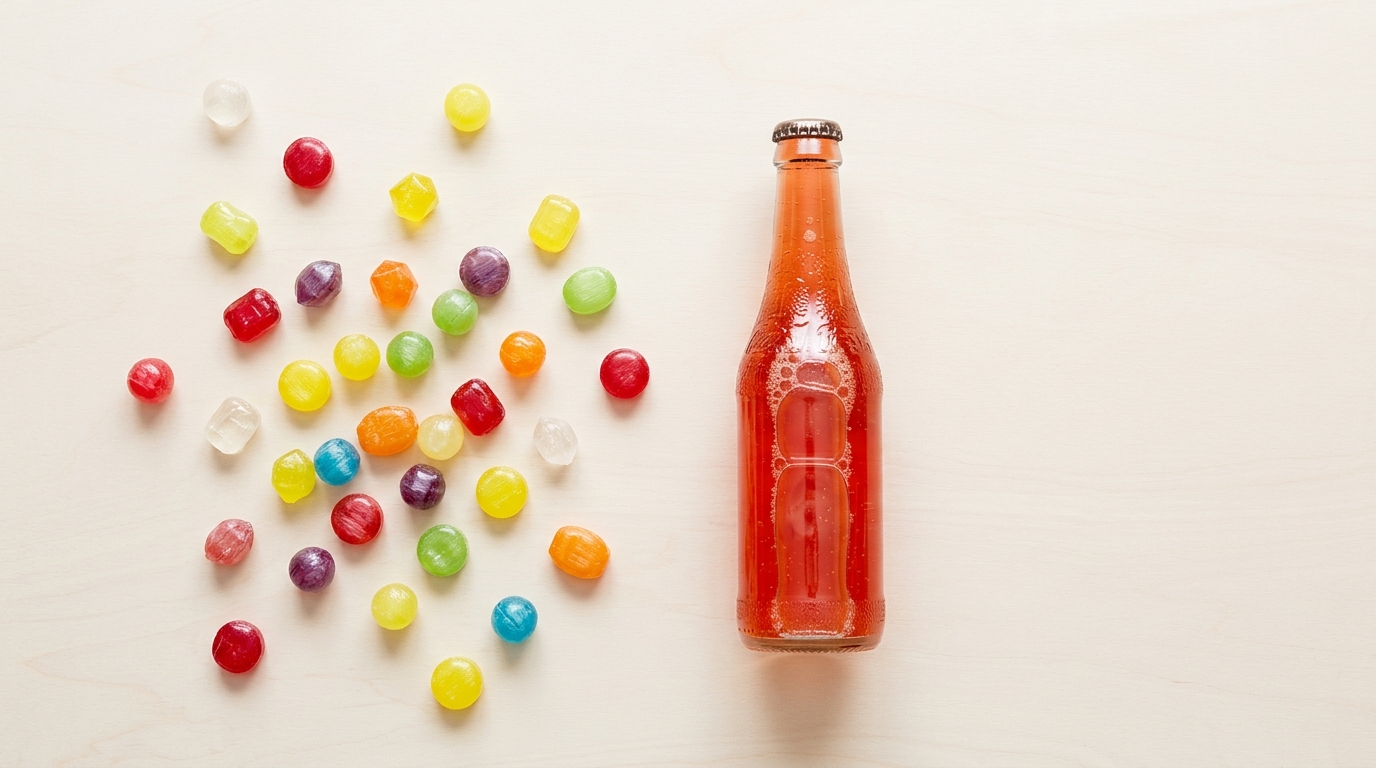
You brush twice a day, you do not think of yourself as someone with a sweet tooth, and your dentist still found two cavities. Meanwhile someone you know drinks soda daily and has never had a filling.
That gap is not luck, or at least it is not only luck. Decay follows a specific and fairly mechanical process, and once you can see the process, the reason one mouth gets cavities and another does not usually becomes obvious. It also explains why some of the advice you have been given works and some of it barely moves the needle.
Here is what is actually happening on your teeth, why how often you eat matters more than how much sugar you eat, and the short list of things that genuinely change the outcome.
What a Cavity Actually Is
A cavity is not something that grows on your tooth. It is a hole left behind where tooth mineral dissolved away.
Enamel is a dense crystal lattice built mainly from calcium and phosphate. It is the hardest material your body makes, but it has one weakness: acid dissolves it. Below a certain level of acidity, mineral starts leaving the enamel surface and moving out into the fluid around it. That is demineralization.
The acid comes from bacteria. Your teeth are coated in plaque, a sticky community of bacteria living in a film they build for themselves. Some of those species do something very specific: when you feed them carbohydrate, they produce acid as a waste product, right against the tooth surface, under a layer that keeps saliva from washing it away quickly.
So the sequence is short. You eat. The bacteria in plaque ferment what you ate. Acid forms. Mineral leaves the enamel. Nothing about this is unusual or a sign you have done something wrong. It happens in every mouth, several times a day.
The Other Half of the Cycle, and Why Most People Never Hear About It
If demineralization were the whole story, everyone would lose their teeth by thirty. It is not, because your mouth pushes back.
Saliva does three jobs here. It dilutes and washes away the acid. It buffers, meaning it actively neutralizes acidity and brings your mouth back toward normal. And it carries dissolved calcium and phosphate, which move back into the softened enamel once conditions turn favorable again. That return of mineral is remineralization, and it is happening on your teeth right now.
Fluoride tips this exchange. When mineral rebuilds in the presence of fluoride, the new crystal that forms is tougher and dissolves at a lower level of acidity than the original enamel did. Fluoride also interferes with the bacteria's acid production. The fluoride article on this site goes into the detail, including the safety questions.
So every tooth in your mouth is running a ledger. Acid episodes take mineral out. Saliva and fluoride put mineral back. A cavity is what happens when, over months and years, the withdrawals outpace the deposits at one particular spot. That is the entire disease in one sentence.
It also explains something people find surprising: early decay can be reversed, because the mineral can go back in as long as the surface is still intact. Once the surface collapses into an actual hole, there is no scaffolding left to rebuild on, and a filling becomes the only option. We cover exactly where that line falls in the article on whether early tooth decay can be reversed.
Why Frequency Matters More Than Quantity
Here is the part that changes how people eat.
When carbohydrate reaches plaque, acidity spikes within minutes. Then saliva goes to work, and it typically takes something in the region of twenty to forty minutes after the last of the food is gone for conditions to return to normal. During that window, mineral is leaving the tooth. After it, mineral is going back in.
Which means each separate eating occasion costs you one acid episode, and the length of the episode does not depend much on how much you ate. A whole slice of cake and a single mint start similar clocks.
Now compare two days that contain identical amounts of sugar.
| Eating pattern | Separate acid episodes | Roughly how long the mouth stays acidic |
|---|---|---|
| A can of soda drunk with lunch, in one sitting | 1 | Around half an hour |
| The same can sipped slowly across an afternoon | Continuous | Two to three hours |
| Three meals, nothing between them | 3 | Around one and a half hours total |
| Three meals plus two coffees with sugar and three snacks | 8 | Four hours or more |
| Dessert eaten right after dinner | Shares the meal's episode | Adds little beyond the meal itself |
| The same dessert eaten two hours after dinner | 1 extra | Adds another half hour |
These are illustrative patterns rather than measurements of your particular mouth, and saliva flow, plaque levels, and fluoride exposure all shift the picture. The point is the shape of it, not the exact minutes.
This is why the most effective dietary change is usually not eating less sugar. It is eating it at fewer separate moments. Have the dessert with the meal instead of an hour later. Finish the drink rather than nursing it. If you want a snack, make it a snack rather than a two hour grazing session.
What Counts as Sugar to the Bacteria
Broader than most people assume. Plaque bacteria ferment fermentable carbohydrate, which means not just obvious sugar but anything that breaks down into it quickly in the mouth.
That includes crackers, chips, pretzels, bread, and cereal, all of which start turning to sugar the moment salivary enzymes hit them, and which have the added problem of packing into the grooves of your molars and staying there. It includes dried fruit, which is sticky and concentrated. It includes milk and yogurt to a modest degree, sweetened coffee, sports and energy drinks, smoothies, cough drops, breath mints, and gummy vitamins.
Acidic drinks deserve a separate mention, because they attack from two directions. Soda, citrus, wine, kombucha, and sparkling water with added flavoring are acidic enough to soften enamel directly, without any help from bacteria. When the drink is both sugary and acidic, you get both processes at once.
Where Cavities Actually Start
Decay is not random across the tooth. It begins in three places, and knowing which one applies to you shapes what you should do about it.
The grooves of back teeth. The pits and fissures on the chewing surfaces of molars can be narrower than a toothbrush bristle, so no amount of good brushing reaches the bottom of them. This is the most common site in children and teenagers, and it is the one that sealants exist to address.
Between the teeth. At the contact point where two teeth touch, a brush cannot reach at all. This is why flossing or interdental brushing is not optional for anyone who wants to avoid fillings, and why these cavities are so often found on X-rays rather than by looking.
At the gumline and on exposed root. Root surface is softer than enamel and dissolves at a milder level of acidity, so it decays under conditions enamel would shrug off. This becomes the dominant pattern later in life, particularly with gum recession or a dry mouth.
The Levers That Actually Work
Roughly in order of how much they move the ledger.
Fluoride, every day, and do not rinse it off. Brushing twice daily with a fluoride toothpaste is the single most reliable thing on this list, and most people undo part of it in the last five seconds by rinsing with water. Spit out the excess and leave the rest on your teeth. If you are cavity-prone, ask about a prescription high-fluoride paste.
Cut the number of exposures. Not the amount. Aim for meals plus at most one or two deliberate snacks, and water in between.
Clean between your teeth once a day. Floss, interdental brushes, or a water flosser, whichever you will genuinely use. Reaching the surfaces a brush cannot is the point.
Protect your saliva. A dry mouth is probably the single biggest risk multiplier there is, because it removes the entire repair half of the cycle. Many common medications reduce saliva flow, as do some medical conditions and treatments. If your mouth is dry, treat that as a dental priority, not just a comfort issue.
Seal deep grooves. For molars with anatomy a brush cannot clean, a sealant closes the site off entirely. It applies to plenty of adults too, not just children.
Finish acidic drinks rather than sipping them, and rinse with water afterward. Do not brush for half an hour or so after something acidic, because enamel is temporarily softened and brushing at that moment scrubs mineral away.
Chew sugar-free gum after meals, ideally with xylitol. Chewing drives saliva flow, which speeds the return to normal. It is a small lever, but it is easy and it stacks.
Get examined regularly. Not because check-ups prevent decay, but because early lesions are invisible to you and reversible to your dentist. Catching one at the white spot stage is the difference between a fluoride plan and a drill.
Why Some People Get Cavities Despite Doing Everything Right
If your brushing is genuinely good and you still keep getting fillings, look at the multipliers rather than the technique:
- A dry mouth from medication, medical treatment, or mouth breathing
- Deep, narrow grooves in your molars that were never sealed
- Gum recession exposing softer root surface
- Braces or fixed retainers creating places plaque hides
- Reflux, or frequent vomiting, bathing the teeth in stomach acid
- Constant grazing or sipping at work, which is easy to underestimate
- Old fillings with worn margins where new decay can start underneath
Almost every one of these is addressable. None of them are fixed by brushing harder.
Frequently Asked Questions
Can I stop a cavity once it has started?
If it is still an early lesion in the enamel with the surface intact, yes, that can be halted and partly rebuilt with fluoride and changes to your habits. Once the surface has broken into a hole, no. The tooth cannot rebuild a missing structure, and it needs a filling.
Does sugar-free soda cause cavities?
It will not feed the bacteria, but most sodas are acidic regardless of sugar content, and acid alone softens enamel. Diet soda sipped all day is still a problem, just a different one. Water is the only drink you can genuinely have continuously without cost.
Why do I get cavities when my partner never does?
Saliva flow and buffering ability vary a lot between people, as does tooth anatomy, the mix of bacteria in your plaque, and the fluoride you were exposed to while your teeth were forming. It is genuinely not a fair fight. It does mean your prevention plan needs to be more deliberate than theirs.
Do I need to brush right after every meal?
No, and after acidic food or drink you should wait. Twice a day, done properly, with fluoride left on the teeth, beats frequent hurried brushing. Rinsing with plain water after a meal is a fine substitute in the moment.
Are cavities contagious?
The bacteria involved do transfer between people, particularly from caregivers to young children through shared spoons and similar. That is worth knowing, but it is not the reason most adults get cavities. Frequency of exposure, saliva, and fluoride matter far more.
What to Do Next
Spend one ordinary day writing down every single thing you eat or drink that is not plain water, including the time. Not the amounts. Just the count and the clock. Most people are startled by the number, and that number is the lever with the most slack in it.
Then fix the two easiest things this week: stop rinsing after you brush, and consolidate your snacking into fewer occasions. If your mouth is dry, or your molars have deep grooves, or you are getting decay at the gumline, raise that specifically at your next appointment, because each of those has a targeted answer rather than a general one.
This article is for general information only and is not a substitute for professional dental advice. Always consult your dentist about your individual needs.