Lost a Filling or Crown? What to Do Right Now
A filling fell out or a crown came off in your hand. What to do in the next hour, what you can safely do at home, how urgent it really is, and what the repair usually involves.
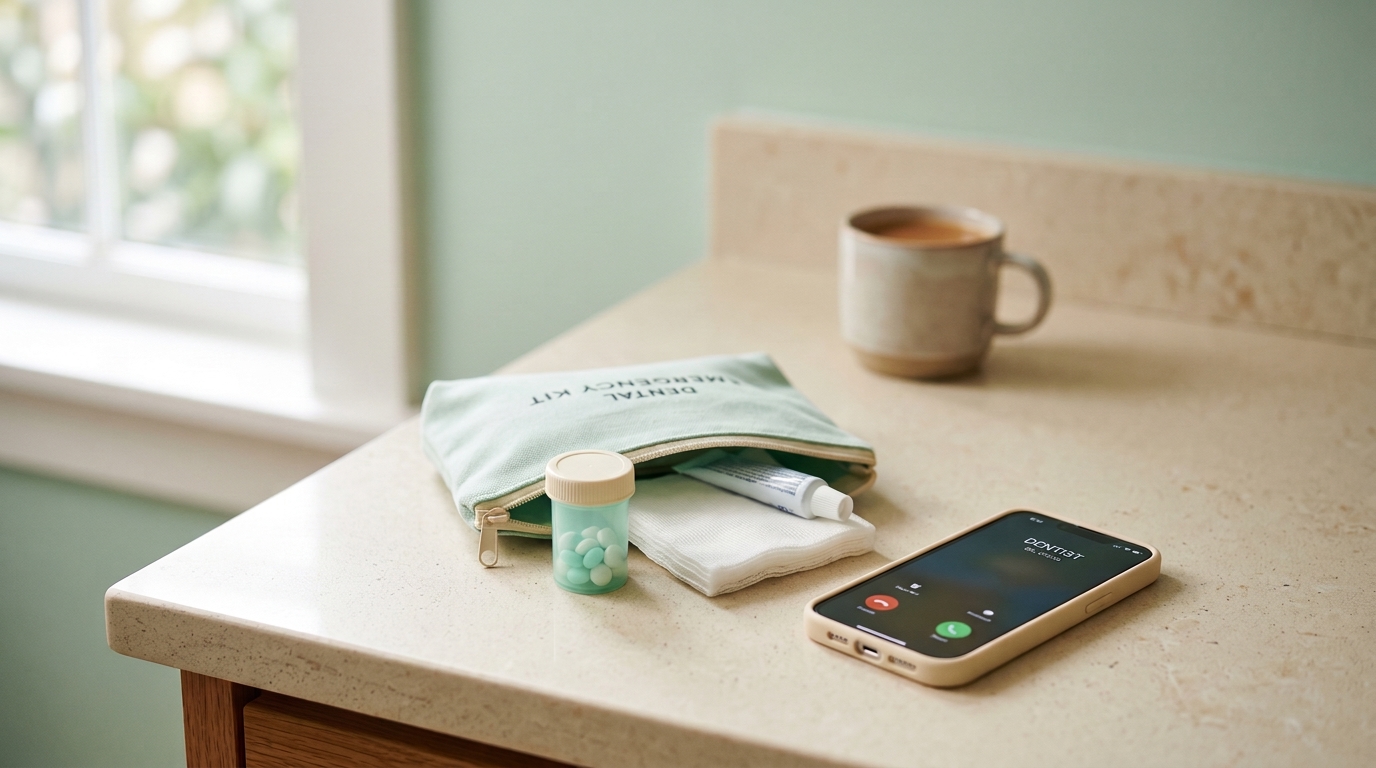
You bit into something and felt a hard piece rattle around your mouth. Now your tongue keeps finding a hole or a rough stump where a filling or crown used to be. It might hurt, or it might feel strangely fine.
Either way, this is a problem to fix soon, but in most cases it is not a middle of the night emergency. The steps you take in the first few hours make the repair simpler, and sometimes they mean your existing crown can go straight back on.
Here is what to do now, what you can safely do at home, and what to expect when you see your dentist.
First, Check for Signs That Mean Today
Most lost fillings and crowns can wait a day or two for an appointment. Call a dentist today, or go to urgent care if you cannot reach one, if you have:
- Swelling of the gum, face, or jaw
- Fever, or a bad taste or pus near the tooth
- Severe, throbbing pain that ordinary painkillers do not touch
- A tooth that has broken badly along with the filling or crown, with sharp pieces or bleeding
If swelling is spreading toward your eye, under your jaw, or into your neck, or you have trouble swallowing or breathing, go to a hospital emergency department. Our guide to what counts as a dental emergency explains the difference between urgent and can wait in more detail. The free tooth pain checker also screens for emergency signs if you are unsure.
What to Do in the First Hour
- Find the piece if you can. A crown is worth keeping. Rinse it gently, check that it is in one piece, and store it in a small bag or container. A lost filling is usually not reusable, so you do not need to hunt for every fragment.
- Rinse your mouth. Warm water, or warm salt water, clears food and debris from the exposed tooth.
- Look at the tooth. Use a mirror and a light. Note whether it looks broken, whether there is a sharp edge, and whether anything is bleeding.
- Call your dentist. Even if it is late, leave a message. Many practices keep same day or next day slots for exactly this.
- Take a painkiller if you need one. An over the counter painkiller you know you can take safely, at the dose on the packet. Never put an aspirin tablet against the gum, it can burn the tissue.
Lost Filling vs Lost Crown: What Is Different
A filling is material placed into a tooth after decay or damage has been removed. A crown is a cap that covers the whole visible part of a tooth, usually after a large filling, a crack, or a root canal. Losing either exposes tooth that was meant to be covered, but the details and the fix differ.
| Lost filling | Lost crown | |
|---|---|---|
| What is exposed | A hole in the tooth, often with sensitive inner layers | A smaller, shaped stump of tooth, sometimes with a post |
| Common causes | New decay around the edge, wear, a hard or sticky bite | Cement washing out, decay under the edge, a broken stump |
| Can the piece be reused? | Almost never | Often, if the crown and tooth are both intact |
| Temporary home fix | Pharmacy temporary filling material | Pharmacy dental cement to seat the crown |
| Typical permanent fix | New filling, or a crown if the tooth is weak | Recementing, or a new crown and core build-up |
| How soon to be seen | Within a few days | Within a day or two, to stop teeth shifting |
Safe Things You Can Do at Home
For a lost filling
Pharmacies sell temporary filling material, a soft paste that hardens in the hole and protects it for a few days. Clean and dry the tooth as best you can, press in a small amount, and bite gently to shape it. It is a stopgap, not a repair, and it will wear away.
If you have nothing else, a small piece of sugar free gum pressed into the hole can cover a sharp edge for a few hours. Do not use ordinary gum with sugar.
For a lost crown
If the crown is whole and the tooth underneath is not broken, you can often seat it back temporarily using dental cement, sold in pharmacies for this purpose. Check the fit first without any cement: it should sit fully down and your bite should feel normal. Then apply a thin layer, press it on, bite gently, and wipe away the excess.
Never use superglue or household adhesive. It can damage the crown and the tooth, irritate the gum, and make it harder for your dentist to recement the crown properly.
If the crown will not seat fully, or your bite feels high, leave it out and keep it safe. Forcing it can crack the tooth.
What to avoid until it is fixed
- Chewing on that side
- Very hot, very cold, or very sweet foods, which can trigger pain in an exposed tooth
- Sticky or hard foods, which can pull out a temporary fix or break the tooth
- Leaving it for weeks because it does not hurt
Why It Matters Even When It Does Not Hurt
A tooth without its filling or crown is more vulnerable than it feels. The exposed dentin, the softer layer under the enamel, decays faster than enamel does. A crowned tooth is often already weakened, so the bare stump can crack with ordinary chewing. And if a crown is out for more than a short while, the neighbouring and opposing teeth can start to drift into the gap, so the crown may no longer fit.
That is the main reason to be seen within a day or two for a crown, and within a few days for a filling, even if the tooth is comfortable.
What Your Dentist Will Do
The visit usually starts with a look and often an x-ray to find out why the filling or crown came out. That reason decides the repair.
- The cement simply failed. If the crown and the tooth are both sound, the dentist cleans both and recements the crown. This is usually quick and far less expensive than a new crown.
- There is new decay underneath. The decay must be removed. A lost filling is then replaced, sometimes with a larger one. If too little tooth is left, a crown may be advised.
- The tooth has broken. A small break may be rebuilt with a filling. A larger one usually needs a core build-up, where the tooth is rebuilt with filling material to give a new crown something to hold onto, and then a crown.
- The nerve is involved. If decay or a break has reached the pulp, the nerve and blood vessels inside the tooth, a root canal may come first.
Our guide to dental crowns and what to expect explains the crown process if you need a new one.
What the Repair Might Cost
Costs depend entirely on what has gone wrong underneath. Here are typical US ranges for the pieces you are most likely to need.
| Treatment | Typical US range |
|---|---|
| Exam and x-ray | $50 to $250 |
| Core build-up | $150 to $450 |
| New crown | $1,000 to $2,500 depending on material |
| Root canal, front tooth | $700 to $1,300 |
| Root canal, premolar | $800 to $1,500 |
| Root canal, molar | $1,000 to $2,000 |
These are ranges, not quotes. Where you live, the materials, and how complex the tooth is all move the price, and insurance changes what you pay. Recementing an intact crown and replacing a small filling usually cost well below a new crown. The dental cost calculator can give a range for your area.
Frequently Asked Questions
How long can I wait after losing a filling?
If there is no pain or swelling, a few days is usually fine, ideally with a temporary filling in place. Do not leave it for weeks. The exposed tooth can decay or crack, turning a simple repair into a bigger one.
Can I glue my crown back on myself?
Only with dental cement made for the purpose, and only as a temporary measure. Never use superglue. If the crown does not seat fully or your bite feels wrong, leave it out and bring it to your dentist.
Why does my tooth hurt now the filling is gone?
The inner layers of the tooth are now exposed to air, temperature, and sugar. That usually causes sharp, short sensitivity. Pain that throbs, lingers, or wakes you up can mean the nerve is inflamed and should be checked soon.
Will my dentist charge me to put my crown back on?
Usually there is a fee, but recementing is typically much less expensive than a replacement. If the crown came off soon after it was placed, ask whether the practice covers the cost, since many will.
I swallowed my crown. What now?
In most cases a swallowed crown passes through on its own without harm. If you cough, struggle to breathe, or have chest or stomach pain, get medical help right away, as it may have gone into the airway. Otherwise call your dentist, who will plan a new crown.
What to Do Next
Rinse, check the tooth, and keep the crown if you have it. Call your dentist for the next available slot, and mention whether it is a filling or a crown, since that affects how soon they want to see you.
In the meantime, use a pharmacy temporary filling or dental cement if it helps, avoid chewing on that side, and keep the area clean. Go in sooner, or seek urgent care, if you develop swelling, fever, or severe pain. Most of these repairs are straightforward when they are done promptly.
This article is for general information only and is not a substitute for professional dental advice. Always consult your dentist about your individual needs.