Same-Day Crowns: How the Technology Actually Works
How a crown can be scanned, designed, milled and bonded in a single visit, what you gain by skipping the temporary, and where a lab-made crown still does better.
Your dentist says a tooth needs a crown, then adds that the practice can make it today. No temporary, no second appointment, no tray of impression putty. It sounds almost too convenient, so it's fair to wonder what the catch is.
There isn't a catch so much as a set of trade-offs. A same-day crown is a real, permanent crown, cut from a solid block of ceramic by a small milling machine in the practice rather than built by a technician in a dental lab. For many back teeth it's an excellent option. For some front teeth, and for a few tricky situations, a lab still does better.
Here's how the technology works, step by step, and how to tell which kind of crown suits your tooth.
What a Same-Day Crown Actually Is
A same-day crown is made with CAD/CAM, short for computer-aided design and computer-aided manufacturing. In plain terms: the tooth is scanned, the crown is designed on a computer, and a machine carves it out. The whole chain sits inside the practice. CEREC is one well-known system, and several others work on the same principle.
The crown itself is not a stopgap or a lesser version. It's a single piece of ceramic, bonded to your tooth, meant to last for years like any other crown. What changes is who makes it, where, and how fast.
If you want the fuller picture of why teeth need crowns in the first place and how the traditional two-visit route works, there's a separate guide to what to expect from a dental crown. This article sticks to the same-day version.
How It Works, Step by Step
Plan on an appointment of around two hours, sometimes longer if the tooth needs rebuilding first. A good part of that is waiting while the crown is made, and you can usually sit up, sip water, and relax during it.
1. Numbing and preparing the tooth
This part is the same as for any crown. Your dentist numbs the area with local anesthetic, removes decay and any old filling, rebuilds missing structure if needed, and shapes the tooth so the crown has room to sit over it. You feel pressure and vibration, not pain.
2. The digital scan
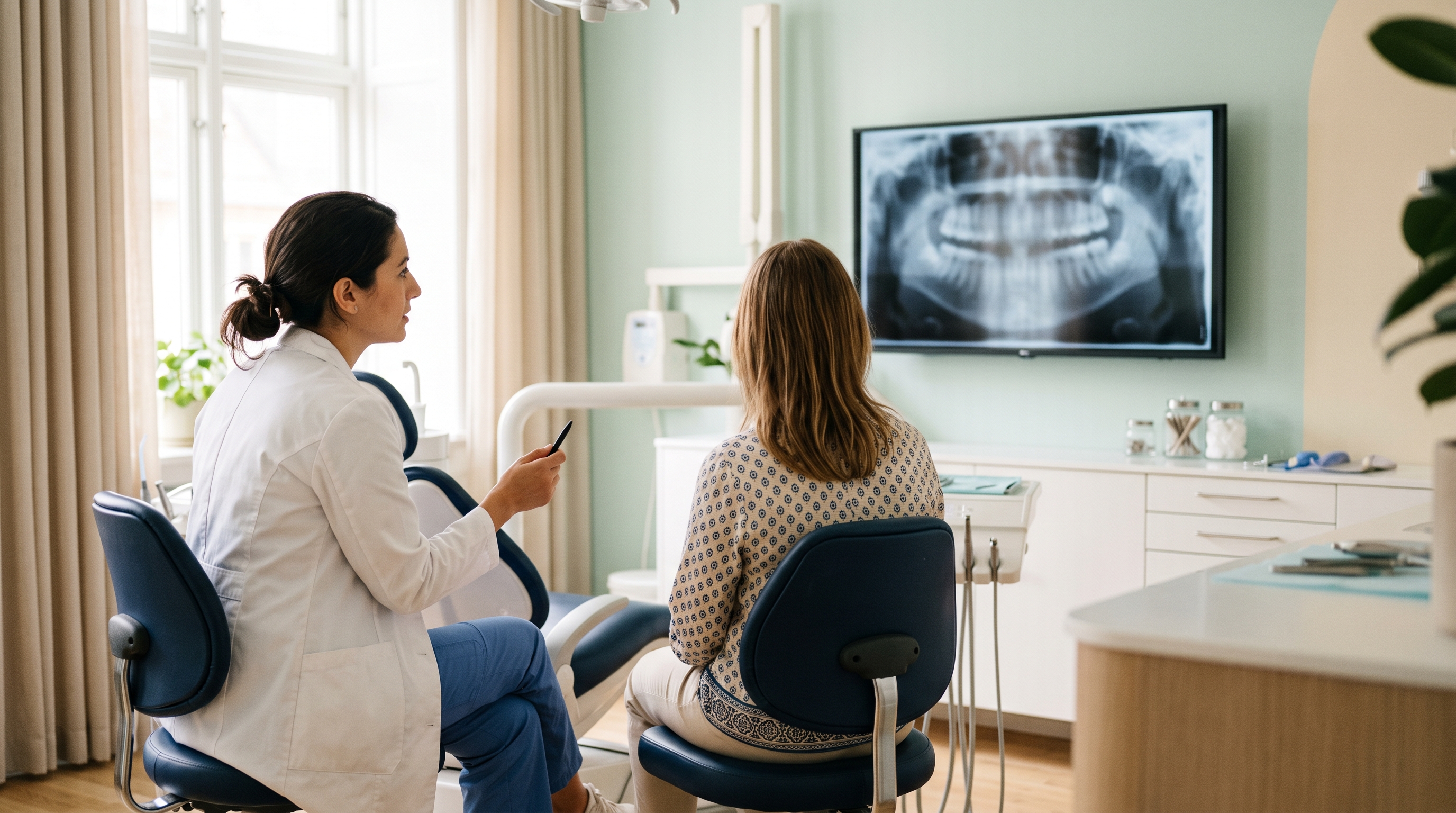
Instead of a tray of putty, your dentist passes a small handheld camera, an intraoral scanner, over the prepared tooth, its neighbors, and the teeth in the opposite jaw. The scanner captures a rapid stream of images and stitches them into a 3D model on screen within minutes. You bite together briefly so the software records how your teeth meet.
The scan has one real limitation: it can only record what it can see. The margin, the fine edge where the crown will meet the tooth, needs to be clearly visible and dry. If it sits well below the gum, or the gum is bleeding, your dentist may need to gently hold the gum back first. In some cases a traditional impression and a lab remain the better choice.
3. Designing the crown on screen
The software proposes a crown shape based on your tooth, the teeth beside it, and the tooth it bites against. Your dentist then refines it: how firmly it touches its neighbors, the height of the biting surface, the contours near the gum. You can often watch this on the monitor, which many people find reassuring.
4. Milling from a ceramic block
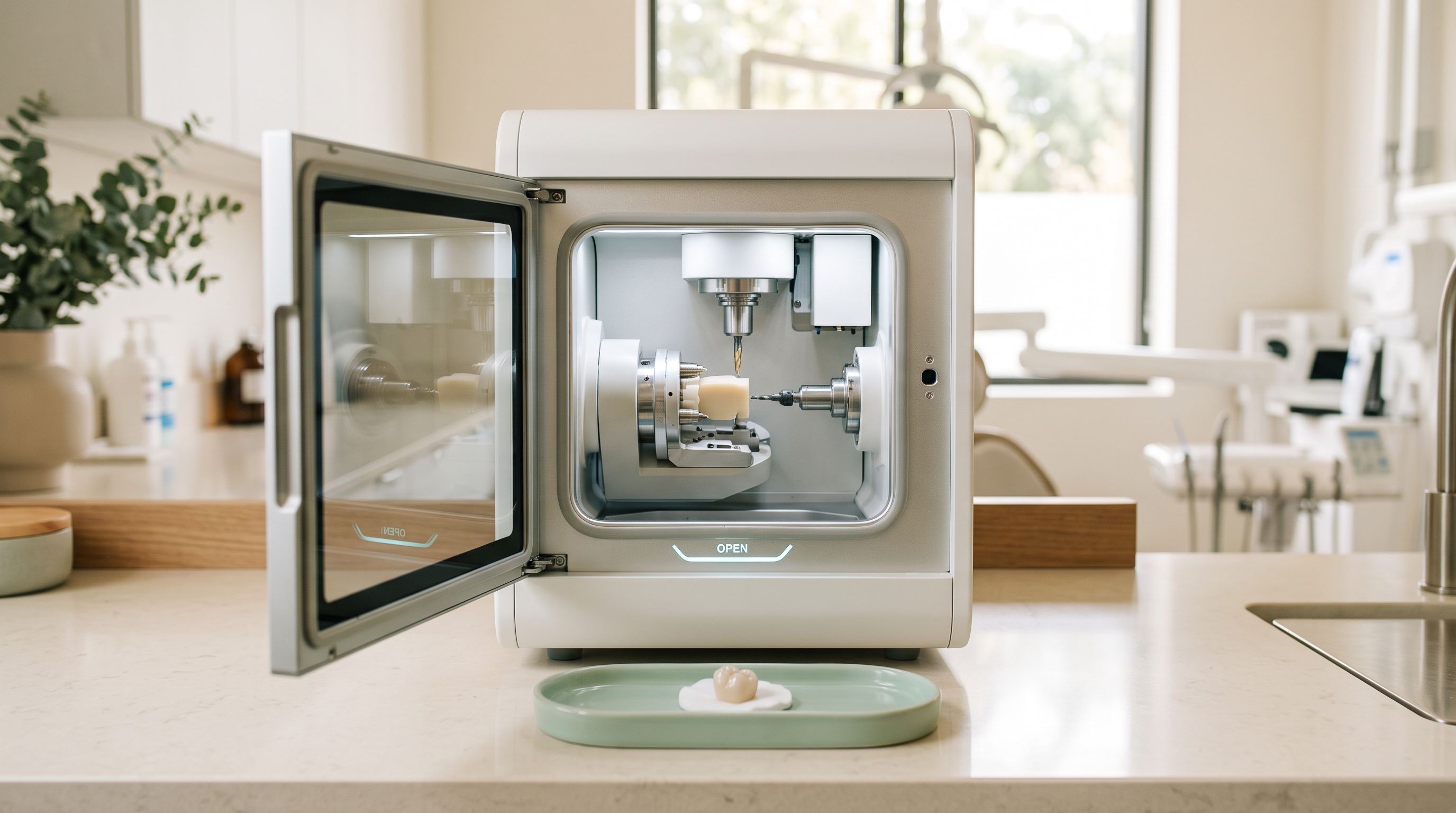
The finished design goes to a milling unit, a compact machine with fine diamond-coated tools that carve the crown from a solid block of ceramic under a spray of water to keep it cool. Depending on the material and the machine, this takes minutes rather than hours.
Blocks come in different materials and shades. Some have a built-in color gradient, slightly deeper near the gum and more translucent toward the edge, the way a natural tooth is.
5. Firing, staining, and glazing
Some ceramics are milled in a softer, partly processed state and then fired in a small oven in the practice to reach full strength. Lithium disilicate, a strong glass ceramic widely used for crowns, is the classic example: it can come out of the mill an odd bluish color and turns tooth-colored in the oven. Zirconia also needs a heating step, called sintering, and faster ovens have made that possible chairside.
Before or during firing, surface stains can be added for character and a glaze applied for shine. Other materials are simply polished.
6. Try-in and bonding
The crown is tried on your tooth and checked for fit at the margin, contact with the teeth on either side, and bite. Once it's right, the tooth is cleaned and the crown is bonded with a resin cement, hardened with a curing light. Excess cement is cleared from the gum line and between the teeth, and your bite is checked again with thin marking paper.
You walk out with the final crown in place.
What You Gain With a Same-Day Crown
- No temporary crown. On the traditional route you spend two or three weeks with a provisional crown held on by deliberately weak cement. Temporaries come off, feel bulky, and can leave the tooth sensitive. Skipping that stage is the biggest practical benefit.
- One round of numbing. One injection, one visit, one afternoon away from work instead of two.
- No putty impression. Anyone with a strong gag reflex will appreciate this, although many practices now scan for lab crowns too.
- The tooth is sealed the same day. The prepared tooth isn't left for weeks under a temporary, where cement can wash out and bacteria can seep in underneath.
- Quick fixes if something is off. If the fit isn't right, the crown can often be adjusted, or redesigned and milled again, in the same visit rather than sent back to a lab for another wait.
The Trade-Offs
- Fewer material choices. Chairside machines work with ceramic blocks, hybrid ceramics, which blend ceramic and resin, and zirconia. Gold, porcelain fused to metal, and hand-layered porcelain are lab territory.
- Less artistry in the shade. A block is one piece of material with at most a built-in gradient, finished with surface stain. A skilled lab technician can build a front crown in layers, adding translucency, faint white flecks, and subtle color shifts to mirror the tooth next to it. For a molar nobody sees, this hardly matters. For a single front tooth between two natural ones, it can matter a lot.
- One long appointment. Two hours or more in the chair, even with breaks, suits some people better than others.
- Tricky margins. Preparations that extend deep under the gum are harder to scan accurately.
- Heavy grinding. This is about material rather than method, but if you grind hard your dentist may prefer a material or design that's easier to get through a lab.
- Larger jobs. Several crowns in a row, bridges, and cases that change the bite across many teeth are often planned and made through a lab, although some chairside systems can make short bridges and crowns for implants.
Same-Day Crown vs Lab-Made Crown
| Same-day crown | Lab-made crown | |
|---|---|---|
| Number of visits | One, usually around two hours | Two, usually two to three weeks apart |
| Temporary crown | None | Worn between visits |
| How the tooth is recorded | Digital scan | Digital scan or putty impression |
| Numbing | Once | At the first visit, sometimes again at fitting |
| Materials available | Ceramic, hybrid ceramic, and zirconia blocks | Full range, including layered porcelain, porcelain fused to metal, and gold |
| Shade and character | Good, from shaded blocks plus surface stain | Can be excellent, with hand layering by a technician |
| Best suited to | Back teeth, many premolars, single crowns, margins that are easy to see | Front teeth with demanding looks, several crowns, deep margins, complex bites |
| If it doesn't fit | Often remade in the same visit | Sent back to the lab, another wait |
| Typical cost | Roughly $1,000 to $2,500 | Roughly $1,000 to $2,500, depending on material |
These are ranges, not quotes. Your location, the material, and how much rebuilding the tooth needs first all move the figure, and a written treatment plan is the only number that applies to your tooth.
How Long Same-Day Crowns Last
How long a crown lasts depends mostly on the material, how well it fits and is bonded, how much healthy tooth sits underneath, and your habits. Where it was made matters much less. Chairside systems have been in use for decades, and research on the crowns they produce has been broadly reassuring, generally putting their lifespan in the same territory as lab-made crowns of similar material.
The things that end crowns are the same whichever route you take: decay starting at the margin, the tooth underneath cracking, and grinding that chips or wears the ceramic. Cleaning along the gum line every day, and wearing a night guard if you grind, do more for a crown's lifespan than the choice between same-day and lab.
Cost and Insurance
A same-day crown is usually priced much like a lab-made crown in the same material, roughly $1,000 to $2,500. Some practices charge a little more for the convenience, some a little less because there's no outside lab bill, and many charge the same. Ask whether a core build-up, the filling material that rebuilds a broken tooth before it's shaped, is billed separately.
Insurance generally treats a same-day crown like any other crown. Plans commonly place crowns in the major category, often paid at around half of the allowed fee after the deductible, and that payment counts toward an annual maximum that typically sits somewhere between $1,000 and $2,000. You can rough out the full price with the dental cost calculator and your likely share with the dental insurance estimator before asking for a written estimate. Treat all of these figures as ranges rather than quotes.
Questions to Ask Before You Agree
- Which material are you planning to use, and why that one for this tooth?
- Would you make this crown chairside if it were a front tooth, or send it to a lab?
- Is the fee the same as for a lab crown, and is a build-up charged separately?
- What happens if the fit or color isn't right?
- How long should I plan to be in the chair?
Frequently Asked Questions
Are same-day crowns as strong as regular crowns?
Strength comes from the material, not the method. A lithium disilicate or zirconia crown milled in the office is the same kind of material a lab would use. Where lab crowns have the edge is in the range of materials and in hand-layered looks, not in basic strength.
Does getting a same-day crown hurt?
Preparing the tooth feels like having a large filling done: pressure and vibration under local anesthetic. Once the crown is bonded, mild sensitivity or gum tenderness for a few days is normal. If your bite feels high or the tooth gets more sensitive rather than less, call the practice.
Can I eat right after a same-day crown?
The crown is fully bonded before you leave, so you don't need to baby it the way you would a temporary. The practical limit is the numbness. Wait until it wears off so you don't bite your cheek or tongue, and start with softer food that evening.
Can a same-day crown go on a front tooth?
Yes, and the result can be very good, especially when several front teeth are done together and don't need to match a natural neighbor. For a single front crown between natural teeth, many dentists still prefer a lab because a technician can layer color by hand. Ask to see examples of the practice's front tooth work.
Why doesn't every dentist offer same-day crowns?
The scanner, design software, milling unit, and oven are a large investment, and they take training to use well. Plenty of excellent dentists prefer to work with a lab they trust. Not offering same-day crowns says nothing about the quality of the care.
What to Do Next
If your dentist has recommended a crown, ask whether the practice makes them in-house and whether your tooth is a good fit for that route. Then ask the two questions that matter most: which material, and why.
For a back tooth with margins that are easy to reach, a same-day crown is usually a sensible and convenient choice. For a front tooth where matching matters to you, ask about a lab-made option as well, and get both prices in writing before you decide.
This article is for general information only and is not a substitute for professional dental advice. Always consult your dentist about your individual needs.