At-Home Whitening Kits vs In-Office Whitening: What's the Real Difference?
At-home whitening kits and in-office whitening compared on cost, comfort, speed, and how long results last, plus who each option actually fits.
You're standing in the drugstore aisle holding a box of whitening strips, and somewhere in the back of your mind is the chairside treatment your dentist mentioned that costs many times more. Both promise a brighter smile. The honest answer is that both can deliver one, they just take very different routes to get there. This guide covers how each method works, what each realistically costs, how long the results hold up, and which situations genuinely favor one over the other.
What Are At-Home Whitening Kits?
"At-home whitening" covers a wide range of products, and lumping them together is where most of the confusion starts. There are really two families, and they behave differently.
Over-the-counter kits are the ones you can buy without seeing anyone: whitening strips, pre-filled one-size trays, brush-on pens, and the LED gadgets that come packaged with a gel. These use low concentrations of bleaching gel, and you apply them daily for roughly one to two weeks.
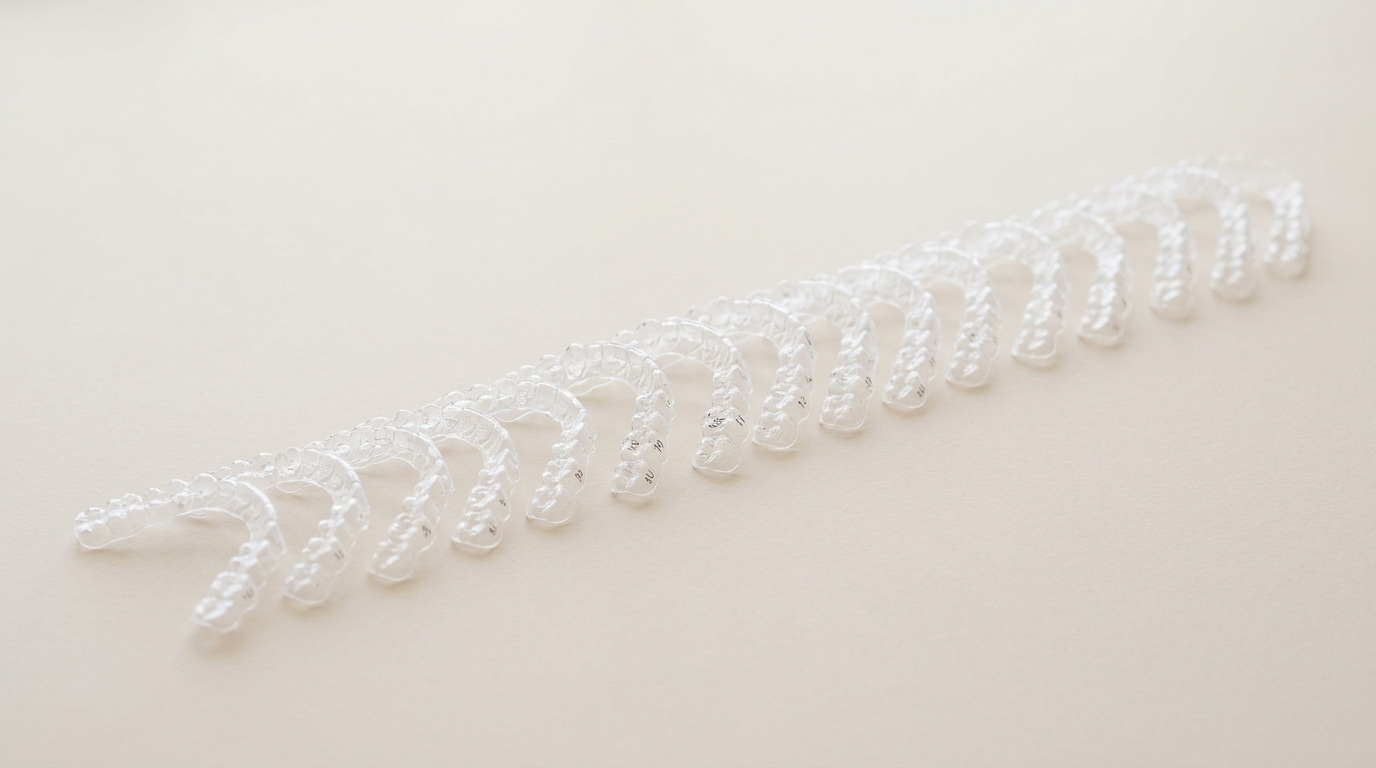
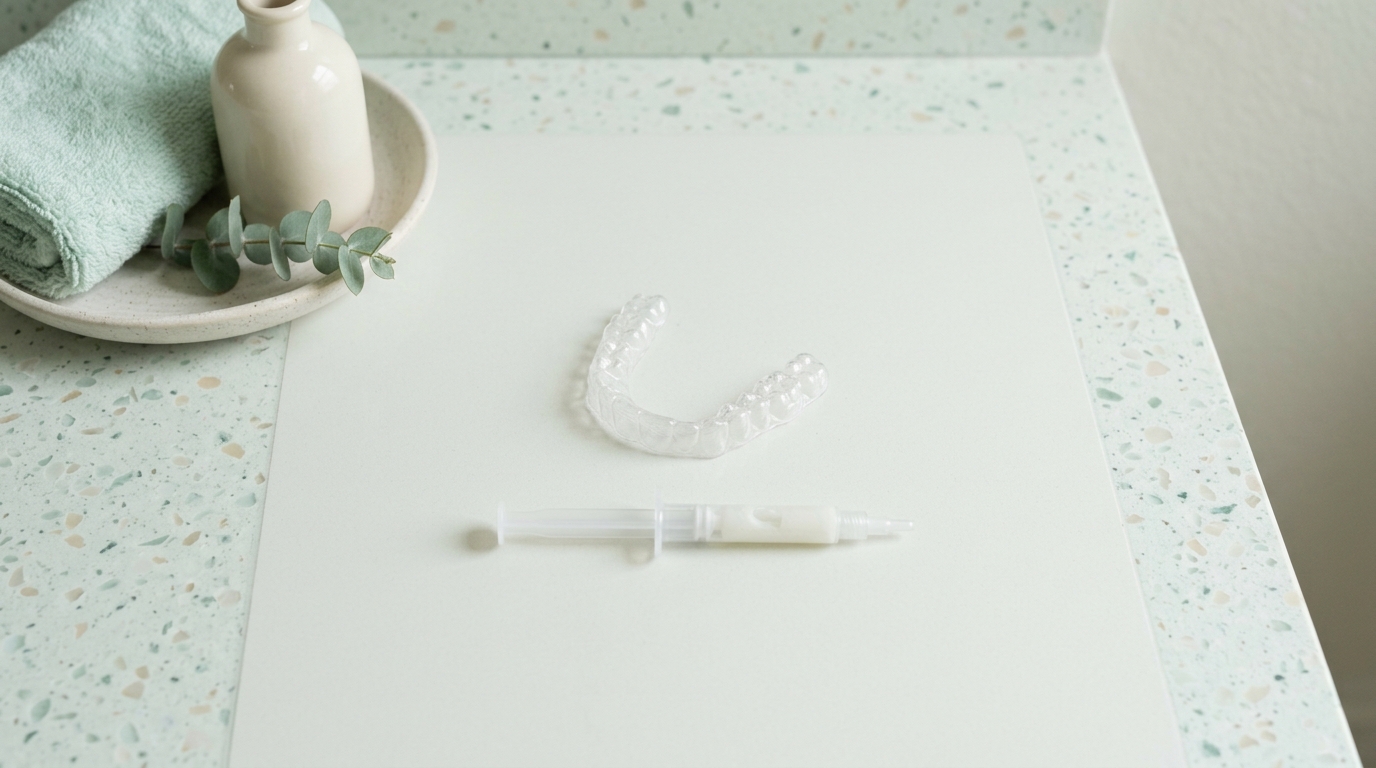
Dentist-supplied take-home kits are a different animal. Your dentist takes an impression or a digital scan of your teeth, has thin custom trays made to fit them exactly, and sends you home with syringes of a stronger gel plus instructions on how long to wear them. Depending on the gel, that might be 30 minutes a day or overnight, usually for one to two weeks.
Here's the chemistry in plain English. Whitening gels contain either hydrogen peroxide or carbamide peroxide, which is a slower-release version that breaks down into hydrogen peroxide once it's in your mouth. That's why carbamide percentages look so much higher for the same real strength. The peroxide passes through the outer enamel and reacts with the stain molecules sitting in the softer layer underneath, called dentin, breaking them into smaller pieces that reflect light differently. Nothing gets scraped off and no enamel is removed. The color of the stain itself changes.
Because at-home concentrations are mild, the trade you're making is time. You're applying a small dose over and over across several days instead of a strong dose in one sitting.
What Is In-Office Whitening?
In-office whitening, sometimes called chairside whitening, happens in a single appointment that usually runs 60 to 90 minutes. The dentist or hygienist first isolates your gums, either with a rubber dam or a resin barrier painted along the gumline, then applies a much stronger peroxide gel to the fronts of your teeth. The gel sits for a set time, gets suctioned off, and is reapplied. Most sessions include two to four rounds.
That gum protection isn't ceremony. Gel at professional strength irritates soft tissue if it sits against it, which is exactly why these concentrations aren't sold over the counter.
Some practices add a light or laser during the process. The added benefit of the light is genuinely debated among dentists, and plenty have stopped bothering with it because the gel does the real work. If a practice charges extra for the light specifically, it's fair to ask what it adds.
There's one more thing an in-office visit includes that a box of strips can't: someone looks in your mouth first. Untreated decay, a cracked tooth, gum inflammation, or a root surface exposed by receding gums will all turn a whitening session into a painful one. Catching that beforehand matters.
Many practices also send you home with custom trays and touch-up gel as part of the package. That's worth knowing when you compare prices, because it means the in-office fee sometimes covers both methods.
At-Home Whitening Kits vs In-Office Whitening: Side by Side
| Factor | At-Home Whitening Kits | In-Office Whitening |
|---|---|---|
| Typical cost (USD) | About $20 to $70 for store kits; about $200 to $600 for custom trays from a dentist | About $400 to $1,000 per session, sometimes more in large cities |
| Gel strength | Low, sold for unsupervised use | High, supervised only |
| Time to visible results | 5 days to 2 weeks of daily use | Same day, one appointment |
| Typical shade change | Gradual, modest to moderate | Larger jump in one visit |
| How long results last | Several months to a couple of years | Several months to a couple of years |
| Comfort | Milder per dose, but gum irritation if trays leak | Gums protected, but sensitivity can spike for a day or two |
| Maintenance | Refill gel; custom trays get reused | Touch-up trays at home, repeat sessions later |
| Exam beforehand | None with store kits | Yes, problems get caught first |
| Evenness of result | Can be patchy on crowded teeth | More even, dentist controls coverage |
| Best-fit candidate | Mild general yellowing, flexible timeline, tighter budget | Deadline to hit, deeper staining, wants supervision |
Those price ranges move with your region, the practice's overhead, whether take-home trays are bundled in, and how many rounds your case needs. A quote from a dentist who has actually looked at your teeth is the only number that means anything for you specifically.
Pros and Cons of At-Home Whitening Kits
The strongest argument for at-home whitening is that it puts a real result within reach of almost any budget, and it doesn't require taking time off work.
What works well:
- Low cost to try. A store kit costs a fraction of a chairside session.
- You control the pace. Stop when you like the shade instead of committing to a full session.
- Custom trays last for years. Once you own them, touch-ups cost only the price of gel.
- Gradual change looks natural. Nobody clocks the exact day it happened.
- No appointment needed for over-the-counter products.
What doesn't:
- It takes consistency. Skipping days stretches a two-week plan into a month of mediocre results.
- One-size trays leak. Gel that escapes onto the gums stings and can leave sore white patches for a day.
- Coverage can be patchy. Strips don't wrap well around crowded or rotated teeth, so the overlapped surfaces stay darker.
- Nobody checks your mouth first. Whitening over an untreated cavity, a crack, or an exposed root is how a mild product causes sharp pain.
- Overuse is easy. Running kit after kit back to back is a common way people end up with lingering sensitivity and irritated gums.
If you're buying over the counter, the ADA Seal of Acceptance on the box is a reasonable filter. It isn't a guarantee of a dramatic result, but it means the product met a review standard for safety and for doing what it claims.
Pros and Cons of In-Office Whitening
The case for in-office whitening isn't only speed, though speed is the headline.
What works well:
- One visit, visible change. You walk out lighter, which matters if you have a date on the calendar.
- An exam comes first. Decay, cracks, and gum problems get flagged before any gel touches a tooth.
- Your gums are protected. That's what makes the higher strength usable at all.
- More even coverage. The clinician can concentrate gel on the teeth that need it most.
- Planning around existing dental work. A dentist can tell you in advance that your front crown won't move, and plan for that.
What doesn't:
- It's the biggest single expense of any whitening route.
- Sensitivity can peak hard. Zingers in the first 24 to 48 hours are common, and while they usually settle, they're not fun.
- It still fades. In-office whitening isn't permanent, so most people end up doing at-home touch-ups anyway.
- Some discoloration barely budges. Deep intrinsic staining responds far less than surface staining.
- A big shade jump has side effects. If you have older white fillings or a crown on a front tooth, they'll suddenly look darker than everything around them.
What Neither Option Can Whiten
This is the part that gets skipped in most product marketing, and it's the single most common reason people feel let down.
- Crowns, veneers, bonding, and tooth-colored fillings do not whiten. They're ceramic or resin, and peroxide has no effect on them. If you brighten the teeth around them, they'll look out of place. Matching usually means replacing that restoration after your natural teeth have settled at their new shade.
- Grey discoloration responds poorly. Yellow and brown tones lift far more readily than grey ones. Staining from tetracycline antibiotics taken while teeth were forming is the classic hard case.
- A single dark tooth is a different problem. When one tooth goes noticeably darker than its neighbors, especially after a knock, that often points to changes inside the tooth rather than staining on the outside. That needs an assessment, not a whitening kit.
- Decay and exposed roots aren't stains. Whitening won't fix them, and bleaching over them tends to hurt.
None of this means whitening is pointless. It means the honest expectation is a lighter, cleaner version of your own natural color, not a preset shade from a chart.
How Long Do the Results Actually Last?
Both routes fade, and they fade for the same reason: the same things that stained your teeth the first time are still in your diet. Coffee, black tea, red wine, dark sodas, tomato-based sauces, curry, and tobacco are the usual suspects.
Realistically, people see results holding for anywhere from several months to a couple of years. Someone who drinks water and brushes carefully will sit at the long end. A pack-a-day coffee-and-red-wine routine will sit at the short end, whichever method they paid for.
Two habits stretch results more than anything else:
- Be careful in the first day or two. Right after whitening, enamel is temporarily more absorbent, so deeply colored food and drink can settle in. Many dentists suggest sticking to pale foods for 24 to 48 hours.
- Touch up before it's obvious. A few nights of tray gel every 6 to 12 months maintains the shade for far less money than restarting from scratch.
That second point is why custom trays are quietly the best long-term value in whitening, regardless of how you got bright in the first place.
Which One Is Right for You?
Here's who each option genuinely fits.
Over-the-counter kits fit you if your teeth are mildly yellowed rather than deeply stained, you have no known dental problems and you've had a checkup recently, your timeline is flexible, and you'd rather spend the smallest amount that gets a real result.
Dentist-supplied take-home trays fit you if you want a stronger gel without the chairside price, your gums are sensitive to leaking one-size trays, you expect to maintain the result for years, or store kits have already given you a patchy outcome.
In-office whitening fits you if you have a fixed date coming up, your staining is deeper than a store kit has managed, you've had sensitivity trouble and want it handled by someone who can adjust the protocol, or you have existing crowns and veneers and need a plan rather than a product.
Hold off on both if you have untreated decay, bleeding or receding gums, a cracked tooth, or an unexplained dark tooth. Whitening on top of any of those is uncomfortable at best and masks a real problem at worst. Get it looked at first, then whiten. Dentists also routinely suggest postponing elective whitening during pregnancy and breastfeeding, so it's worth asking rather than assuming.
And if you're stuck between the two, the combination is common for a reason: an in-office session to make the jump, then custom trays to hold the line. That costs more up front and less over five years than repeating either one alone.
Frequently Asked Questions
Does in-office whitening work better than whitening strips?
It works faster, which isn't quite the same thing. A single professional session produces a bigger change than a single strip application because the gel is far stronger. Given enough consistent days, at-home whitening can land in a similar place for most everyday yellowing. Where in-office genuinely pulls ahead is on deeper staining, on uneven teeth, and when you have a deadline.
How white will my teeth actually get?
Nobody can promise a specific shade, and any product that does is overselling. Your result depends on your starting color, whether the discoloration is on the surface or built into the tooth, and how consistent you are. A realistic goal is a noticeably brighter version of your own natural tone. Teeth that are naturally warm in color rarely turn bright white, no matter the method.
Will whitening damage my enamel?
Used as directed, peroxide whitening doesn't strip or permanently weaken enamel. The two real risks are temporary tooth sensitivity and gum irritation from gel sitting where it shouldn't, and both usually settle within a few days. Problems mostly come from overuse: running kit after kit, wearing trays far longer than instructed, or whitening on top of untreated decay.
Why do my teeth get sensitive after whitening, and how long does it last?
Peroxide temporarily makes it easier for hot, cold, and sweet signals to reach the nerve inside the tooth, which shows up as short, sharp zingers. For most people it fades within a day or two after they stop. A sensitivity toothpaste containing potassium nitrate or a high-fluoride paste, started a week or two beforehand, takes the edge off. If sensitivity lingers past a few days or centers on one tooth, that's worth a call.
Can I whiten if I have crowns or veneers?
You can whiten the natural teeth around them, but the crowns and veneers themselves won't change color at all. If they're on front teeth, brightening everything else will make them stand out. The usual approach is to whiten first, let the shade stabilize for a couple of weeks, then have the restoration remade to match. Talk that sequence through with your dentist before you start, because doing it in the wrong order means paying for the same crown twice.
This article is for general information only and is not a substitute for professional dental advice. Always consult your dentist about your individual needs.