Can Veneers Be Whitened? What Actually Works
Whitening gel doesn't lighten porcelain or composite veneers. Here's why, what's really making yours look dull, and the fixes that do work.
You paid for a bright smile, and a few years in, it isn't as bright as it was. The obvious move is a box of whitening strips or a session in the dentist's chair, so why does everyone online say that won't work on veneers? The short version: whitening gel changes the color of natural tooth structure, and a veneer isn't natural tooth structure. That doesn't mean you're stuck, though. There are real fixes, and knowing which one you need starts with understanding what's actually changed.
The Claim: What People Believe About Whitening Veneers
The belief is reasonable on its face. Veneers look like teeth. They sit where teeth sit. Whitening works on teeth. So a whitening tray, a strip, or a professional bleaching session should brighten veneers the same way, right?
A few things reinforce that assumption:
- Whitening toothpaste marketing rarely says "natural teeth only" on the front of the box
- Plenty of people with veneers do get a whiter-looking smile after treatment, because their untreated teeth lightened
- Nobody explains at the consultation what happens to veneers in five years
- Surface stain wiped off a veneer during a cleaning looks a lot like whitening
The claim isn't foolish. It's just built on a wrong idea of how bleaching works.
What the Evidence Actually Says
Tooth whitening relies on peroxide, either hydrogen peroxide or carbamide peroxide, soaking into the porous outer layers of a tooth and breaking apart the pigment molecules trapped inside. It's a chemical reaction that happens inside enamel and dentin. The gel doesn't scrub color off the surface. It reaches into the tooth and changes what's already there.
Now look at what veneers are made of. Porcelain is a fired, glazed ceramic. It's essentially glass with mineral filler. There are no organic pigment molecules inside it to break down, and the glazed surface isn't porous enough for peroxide to penetrate anyway. Composite veneers are a resin material, a plastic matrix loaded with fine glass or ceramic particles. Peroxide doesn't oxidize the stain locked into cured resin in any meaningful way either.
So the finding is consistent and not really controversial in dentistry: whitening products do not change the shade of a veneer. Leaving the gel on longer doesn't help. A stronger in-office concentration doesn't help. The material simply doesn't respond.
Two things do happen when someone with veneers whitens anyway. The natural teeth around and beneath the veneers lighten, which can make the veneers look darker and more obvious than before. And the exposed natural tooth at the gumline and the back of the tooth may get sensitive, since bleaching temporarily opens up the tiny tubules inside dentin. Neither of those is dangerous, but neither is what you were hoping for.
Verdict at a Glance
| Common claim | Verdict | What's actually going on |
|---|---|---|
| Whitening strips lighten porcelain veneers | False | Peroxide can't penetrate glazed ceramic |
| Whitening gel lightens composite veneers | False | Cured resin doesn't bleach either |
| Whitening toothpaste keeps veneers white | Partly true | Removes film, never changes shade |
| Veneers never change color | Partly true | Porcelain holds; composite and margins don't |
| A polish can brighten dull veneers | True | Lifts surface stain and biofilm |
| Whitening first, then veneers, is pointless | False | Shade gets matched to lightened teeth |
| Bleaching will loosen bonded veneers | Mostly false | Sensitivity is likelier than debonding |
| Dull veneers always mean replacement | Partly true | Polishing fixes many cases first |
Why Veneers Change Color in the First Place
If bleaching isn't the answer, the useful question becomes what actually changed. There are five common culprits, and they have different fixes.
Surface film and stain. A thin layer of plaque, tea, coffee, and tobacco residue sits on top of the restoration. This is the most common cause and the easiest to reverse.
Composite picking up stain internally. Resin is slightly porous and gets more so as it wears. Over several years, composite veneers genuinely darken and yellow. Porcelain almost never does this.
A dulled or scratched surface. Abrasive whitening pastes, charcoal powders, hard scrubbing, and some polishing equipment can wear the glaze on porcelain or the polish on composite. A microscopically rough surface both looks duller and grabs new stain faster.
Margin staining. The resin cement holding the veneer on sits in a thin line at the edge. Over years that line can pick up color or start to break down, showing as a dark rim near the gum.
Gum recession or a darkening tooth underneath. As gums recede, natural root surface appears above the veneer's edge, and root is naturally darker and more yellow than crown enamel. Separately, a tooth that has darkened from age or past trauma can show through a thin ceramic shell.
That last group is worth an exam rather than a home fix, because recession and a discolored underlying tooth both mean something is changing beyond the surface.
Who Might Actually Benefit From Whitening
Whitening still has a place if you have veneers. It just isn't aimed at the veneers themselves.
- You have veneers on the front six or eight teeth only. Everything behind them is natural tooth, and if those teeth have yellowed, whitening them can bring the whole smile back into balance. Do this with a dentist watching the shade so you don't overshoot and make the veneers look grey by comparison.
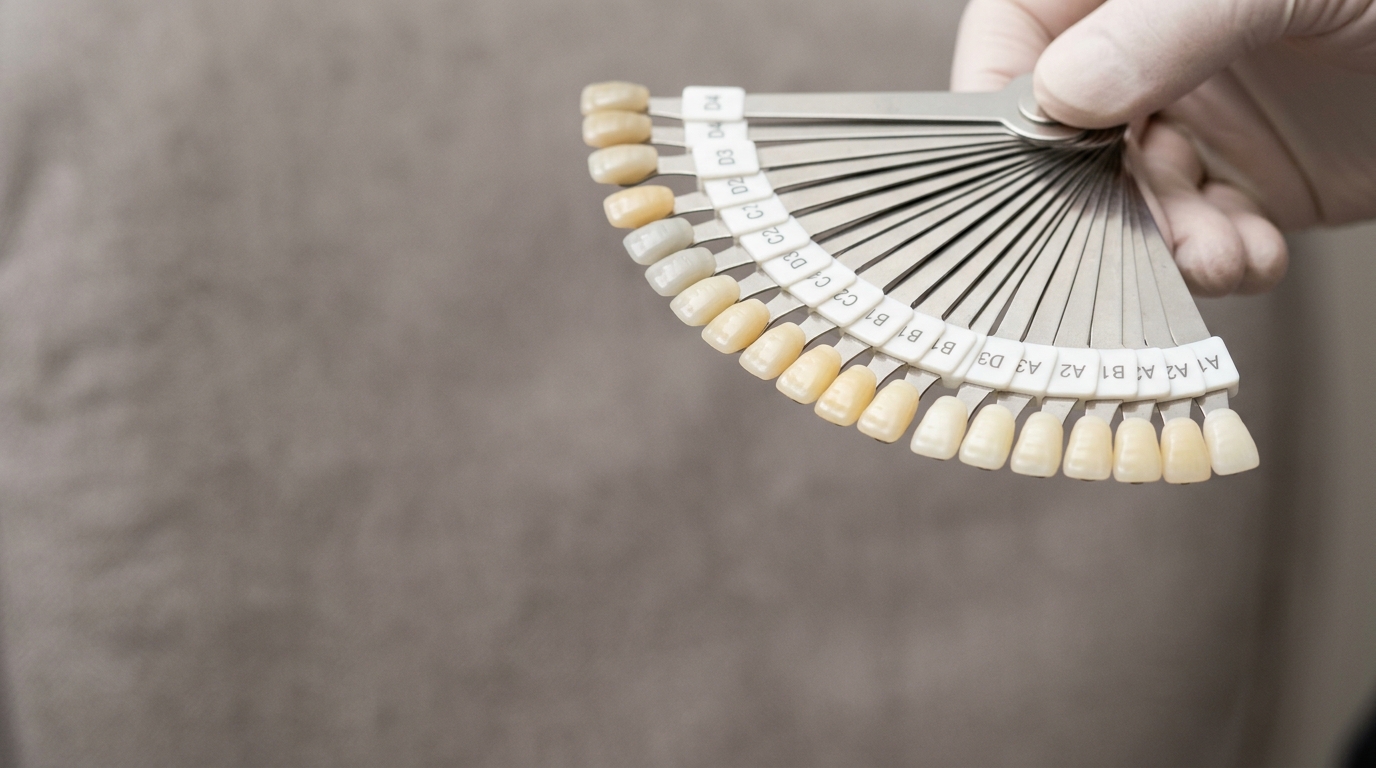
- You're planning veneers but haven't had them made yet. Whiten first, let the shade stabilize for about two weeks, then have the veneers matched. Once they're bonded, that shade is locked in.
- You're already replacing veneers. Whitening the surrounding natural teeth before the new shade is chosen gives the technician a brighter target to match.
- Only some of your restorations are veneers. People often don't know whether a front tooth has a veneer, a crown, or bonded composite. A dentist can tell you which surfaces will respond to bleaching and which won't.
What doesn't help anyone: buying stronger gel and wearing trays for weeks in the hope that the porcelain eventually catches up. It won't, and the gum irritation is real.
What Actually Works If Your Veneers Look Dull
Here are the options dentists actually use, roughly from least to most involved.
- A professional clean and polish. A hygienist can remove surface stain and biofilm with a non-abrasive paste made for restorations. For a lot of people this is the entire fix. Typical cost runs about $75 to $200, often bundled into a routine cleaning.
- Repolishing composite veneers. Composite can be refinished chairside with polishing discs and pastes, which restores much of the original luster. Expect roughly $50 to $250 per tooth depending on how much is involved.
- Adding or replacing composite at a stained margin. If the dark line is at the edge, sometimes the fix is a small repair rather than a whole new veneer.
- Whitening the natural teeth, then rematching. The sequence matters: whiten, wait, then replace the veneers to the new shade.
- Replacing the veneer. For a badly stained composite, a chipped porcelain shell, or a veneer that no longer matches its neighbors, replacement is the honest answer. Porcelain replacement generally lands around $900 to $2,500 per tooth, and composite around $250 to $1,500, with location, lab quality, and case complexity moving it in either direction. Only a written quote after an exam gives you a real number.
Prevention is cheaper than any of these. Use a non-abrasive toothpaste and skip charcoal and baking soda scrubs, which dull the surface you're trying to keep shiny. Rinse with water after coffee, tea, red wine, or curry. Use a straw for cold staining drinks. Keep up regular cleanings and tell the hygienist which teeth have veneers so they choose the right instruments. If you grind at night, a guard protects both the surface and the edges.
How to Tell What You're Dealing With
You can't always tell surface stain from material discoloration by looking in the bathroom mirror, but a few clues help.
- Stain that looks uniform and slightly filmy, worse near the gumline, is usually surface deposit and polishes off.
- A veneer that has slowly gone yellower over years while its neighbors stayed put is more likely composite that has aged.
- A distinct dark line right at the gum suggests a margin issue or recession, not staining.
- Veneers that look fine but suddenly seem dark next to newly whitened natural teeth mean the mismatch is the problem, not the veneers.
Any of these is worth mentioning at your next checkup. A dentist can assess which is happening in about a minute of looking, and the fix for each is completely different.
Frequently Asked Questions
Can you use whitening strips with veneers on your front teeth? You can use them safely, but they won't change the veneers at all. What will happen is that your natural teeth lighten, which can make the veneers look darker by contrast and more noticeable than they were. If you want to whiten around veneers, talk to a dentist about how far to go before the shades stop matching.
Will whitening toothpaste damage your veneers? Some will. Gentle whitening toothpastes mostly work by removing surface film, which is fine and can help veneers look brighter. The abrasive ones, including charcoal powders and gritty pastes, can scratch the glaze on porcelain and dull the polish on composite, leaving them duller and more stain-prone over time.
Should you whiten your teeth before getting veneers? Yes, if you want the final result brighter than your current teeth. Veneers are matched to a shade at the time they're made and that shade never changes, so whitening afterward can only shift everything else. Most dentists whiten first, wait about two weeks for the color to settle, then pick the veneer shade.
There's a dark line at the gum. Can that be whitened away? No, and that's usually not staining. A dark line at the gum typically means either the gum has receded and exposed the darker root or the bonding cement at the margin has broken down. Both need an exam, because a leaking margin can let decay start underneath.
Are composite veneers easier to fix than porcelain if they get stained? Generally yes. Composite can often be repolished or partly rebuilt in a single visit for a fraction of replacement cost, since the material is added and shaped in the chair. Porcelain can't be repolished the same way, so a discolored or chipped porcelain veneer usually means a new one from the lab.
This article is for general information only and is not a substitute for professional dental advice. Always consult your dentist about your individual needs.