Charcoal Toothpaste: Does It Actually Whiten Teeth?
Does charcoal toothpaste really whiten teeth? Here is what it can and cannot do, why enamel abrasion is the real concern, and what works better instead.
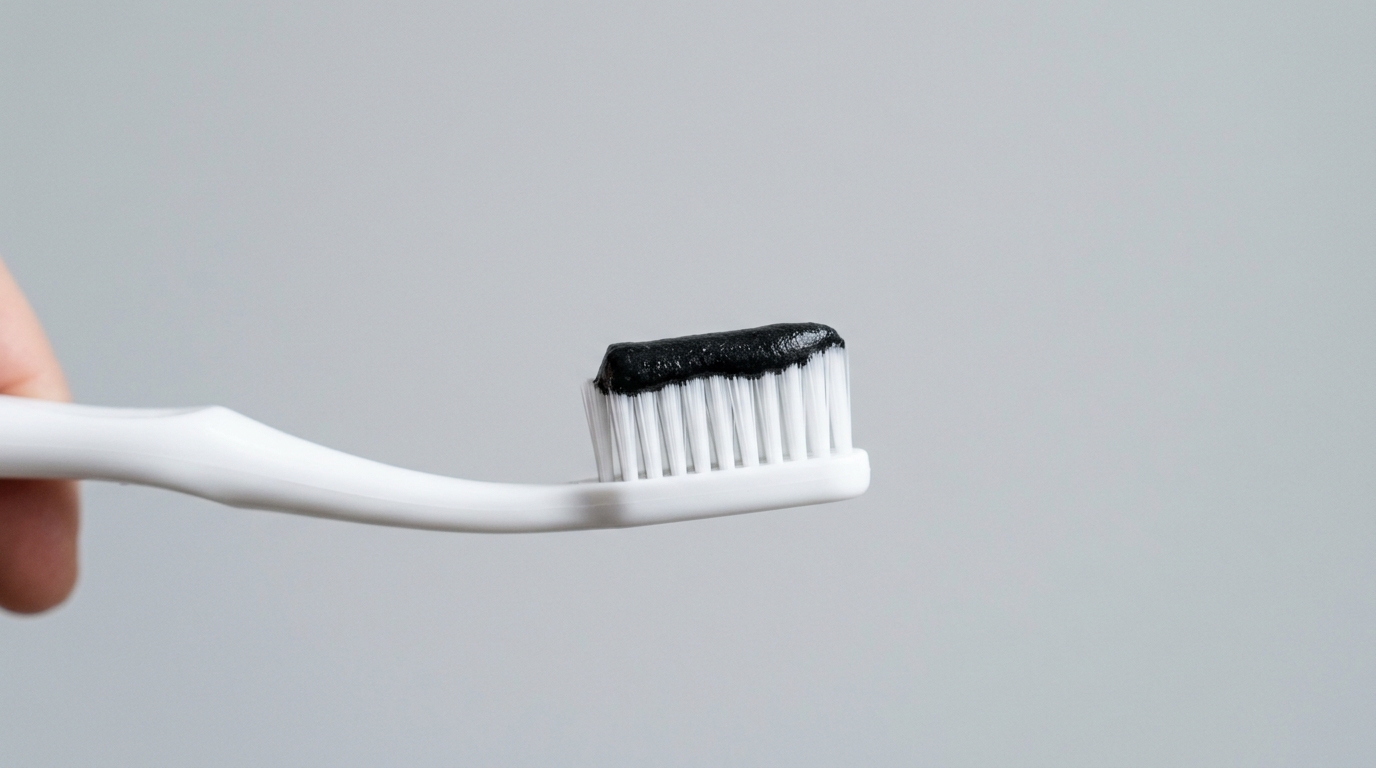
Charcoal toothpaste looks like it's working. You squeeze out a jet-black paste, brush, spit something dramatic into the sink, and the contrast alone makes your teeth seem brighter in the mirror. It's a genuinely satisfying ritual, and that's a big part of why the trend has stuck around. But feeling like something worked and having it actually change your tooth color are two different things. Here's what charcoal toothpaste really does, what the evidence supports, and where the honest concerns are.
The Claim: What People Believe About Charcoal Toothpaste
The marketing around charcoal toothpaste tends to make a cluster of related promises. Most versions of the pitch include some combination of these:
- It whitens teeth naturally, without bleach or chemicals.
- It "draws out" or absorbs stains, toxins, and bacteria.
- It's gentler than peroxide whitening because it's a natural product.
- It's safe to use every day, in place of regular toothpaste.
- It freshens breath and detoxifies your mouth.
It's worth saying plainly: none of this is an absurd thing to believe. Activated charcoal is a real substance with a real medical use. In hospitals it's given by mouth to bind certain swallowed poisons so the body doesn't absorb them, because its surface is extremely porous and grabs onto molecules. If it can trap toxins in a stomach, trapping stains on a tooth sounds like a reasonable extension of the same idea.
The problem is that a tooth isn't a stomach, and a stain isn't a toxin. What makes charcoal useful in one setting doesn't transfer to the other.
What the Evidence Actually Says
To judge any whitening claim, you first need to know that teeth get discolored in two very different ways, and nothing treats both.
Extrinsic stains sit on the outside of the enamel. They come from coffee, tea, red wine, dark sodas, curry, and tobacco, and they build into a thin film on the surface. Intrinsic discoloration lives inside the tooth. It comes from aging (enamel thins over the years, letting the naturally yellow dentin underneath show through), from genetics, from trauma to a tooth, and from certain medications taken during childhood.
That distinction explains almost everything about charcoal toothpaste.
It can lift some surface stain
Charcoal is gritty. Scrubbing a tooth with a gritty substance does remove some of the film sitting on top of it, the same way any abrasive polish removes a surface layer. So teeth can look slightly cleaner after using it, especially if you had noticeable coffee or tobacco staining to begin with.
That's a genuine effect. It just isn't whitening in the sense people mean. It's cleaning, and it's the same thing a regular toothpaste with a mild polishing agent does, or a dental cleaning does more thoroughly and more safely.
It can't change the color of the tooth itself
Actual whitening, the kind that takes a tooth several shades lighter, happens when peroxide passes into the enamel and dentin and chemically breaks apart the pigment molecules there. Charcoal has no bleaching action at all. It doesn't penetrate enamel and it doesn't alter pigment. If your teeth are yellowing because your enamel is thinning with age, charcoal cannot touch that, no matter how long you use it.
Abrasion is the real, well established concern
This is the part dentists care about most, and it's the one with the strongest footing. Enamel is the hardest substance in the human body, and it also does not grow back. Once it's worn away, your body has no mechanism to replace it.
Toothpaste abrasiveness is measured on a scale called RDA (relative dentin abrasivity), and mainstream toothpastes are formulated to stay within a range considered safe for daily use. Many charcoal toothpastes don't publish an RDA value at all, and charcoal particles vary a lot between products in size and hardness. That's the crux of the concern: it isn't that every charcoal paste has been shown to destroy enamel, it's that you often have no way to know how abrasive the one in your hand is, while using it twice a day for years.
There's an unpleasant irony here too. If abrasion does wear enamel thin, more of the yellow dentin underneath shows through. A product bought to make teeth whiter can, over a long enough period, contribute to teeth looking darker.
Most charcoal pastes leave out fluoride
Fluoride's ability to reduce cavities is one of the most established findings in all of dentistry. A lot of charcoal toothpastes are marketed as natural and skip it, and some that do include fluoride raise a fair question about whether the charcoal binds it before it can reach the tooth. Either way, swapping your only toothpaste for one without fluoride trades a proven protective benefit for an unproven cosmetic one.
The particles get into places you'd rather they didn't
Charcoal grains are small and dark, and they have a habit of settling into the gum line, into small cracks in enamel, and around the edges of fillings, crowns, and veneers. The result can be grey flecks along the margins of dental work, which is the opposite of the look people were going for. Restorations don't respond to any whitening product anyway, charcoal included.
Verdict at a Glance
| Common claim | Verdict | What's actually going on |
|---|---|---|
| Charcoal whitens teeth | Partly true | Scrubs off surface stain, doesn't lighten the tooth |
| It's a gentler natural option | Misleading | Natural doesn't mean non-abrasive |
| It removes deep or age-related yellowing | False | No bleaching action, doesn't reach dentin |
| It detoxifies your mouth | False | No evidence it pulls toxins from teeth or gums |
| It's safe for daily long-term use | Unproven | Abrasiveness varies and is often unpublished |
| It fights cavities | Usually false | Most versions contain no fluoride |
| It freshens breath | Partly true | Brushing does that, charcoal isn't the reason |
| It works on veneers and crowns | False | Restorations don't change color, and can pick up flecks |
| Dentists recommend it | False | Charcoal pastes generally lack the ADA Seal |
Who Might Actually Benefit
This isn't a product anyone needs, but it's not poison either, and it doesn't deserve a panic response. There are a few people for whom occasional use is reasonable.
- Someone with mild surface staining who likes the ritual. If you enjoy it, using it once or twice a week while brushing with a fluoride toothpaste the rest of the time is a low-risk compromise.
- Someone getting a short-term cosmetic lift. A bit of surface polish before an event is a real, if modest, effect.
- Someone whose main goal is fresher breath. You'll get that from brushing regardless, so a regular toothpaste does the same job.
Charcoal is a poor fit if you have gum recession (exposed root surface is much softer than enamel and wears faster), existing enamel erosion, sensitive teeth, or visible dental work along the front of your smile. And it's a poor fit for anyone hoping to correct genuine yellowing, because that's simply not what it does.
What Dentists Suggest Instead
If the actual goal is whiter teeth, there's a clear ladder to work up, starting with the cheapest and least invasive.
Start with the basics. A fluoride toothpaste carrying the ADA Seal of Acceptance, used twice a day, plus daily flossing. This won't lighten your teeth, but it prevents the plaque buildup that makes teeth look dull and holds onto stain.
Get a professional cleaning. This is the most underrated whitening step there is. A hygienist removes hardened tartar and surface stain that no toothpaste can shift, and many people find their teeth look noticeably brighter afterward without any bleaching at all. In the US, a cleaning typically runs somewhere in the $75 to $200 range, and it's often the procedure dental insurance covers most generously.
Try a whitening toothpaste with the ADA Seal. These use mild polishing agents or a small amount of peroxide, and the seal means the abrasiveness has been evaluated. Expect subtle results on surface stain, not a shade change.
Move to peroxide if you want a real color change. Over-the-counter strips generally cost around $20 to $60 and give a modest lift. Custom trays and gel from a dentist commonly land in the $200 to $600 range and fit better, which keeps gel off your gums. In-office whitening typically runs $300 to $1,000 and gives the fastest result. Location, the strength of the product, and how many sessions you need all move these figures, and only a written quote from an office tells you your real price.
Change the habits that cause the stain. Rinse with water after coffee, tea, or red wine. Use a straw for iced coffee and dark sodas. Wait about 30 minutes after anything acidic before you brush, since enamel is temporarily softened right after and brushing straight away wears it faster.
Ask what's actually causing your discoloration. If it's intrinsic, no toothpaste on any shelf will fix it, and bleaching may only go so far. Bonding or veneers are options in that situation, but they're a bigger commitment and a conversation to have with a dentist rather than a default answer.
Frequently Asked Questions
Will charcoal toothpaste ruin my enamel?
Occasional use is unlikely to cause meaningful harm to healthy enamel. The concern is daily long-term use, especially with products that don't publish how abrasive they are, and especially if you brush hard or already have gum recession or thin enamel. Since enamel doesn't regenerate, the safer approach is to treat charcoal as an occasional extra rather than your everyday toothpaste.
What if I've already been using it every day for months?
Probably not in a way you'd notice, and this isn't cause for alarm. Enamel wear from brushing happens gradually over years, not weeks. Switch back to a fluoride toothpaste for daily use, and mention it at your next checkup so a dentist can look at your enamel thickness and gum line and give you a real answer.
Why do my teeth look whiter right after using it?
Two things are happening. You've polished off a thin layer of surface film, which is a genuine if small effect, and your eyes are adjusting after seeing a mouth full of black paste, which exaggerates the contrast. The polishing effect is real but limited, and it doesn't accumulate into a shade change over time.
Can charcoal toothpaste replace whitening strips?
No. They do fundamentally different things. Strips use peroxide to chemically lighten pigment inside the tooth, while charcoal only abrades stain off the outside. If you want your teeth to actually change shade, charcoal isn't a substitute at any frequency of use.
Are charcoal floss, charcoal mouthwash, and charcoal toothbrushes any better?
There's no good evidence that adding charcoal improves any of them. Floss works through mechanical action between teeth, and the charcoal coating isn't what's doing the cleaning. If you like how they feel, they're not dangerous, but you're paying extra for an ingredient that isn't earning its place.
This article is for general information only and is not a substitute for professional dental advice. Always consult your dentist about your individual needs.