How Long Does Invisalign Really Take?
How long Invisalign treatment actually takes, what makes some cases faster than others, and the habits that quietly add months to your timeline.
Right after "what will it cost," the question almost everyone asks is "how long am I going to be wearing these?" It's a fair thing to want pinned down, especially if there's a wedding, a graduation or a job change somewhere on the calendar. The frustrating truth is that the honest answer is a range, and where you land in that range depends partly on your teeth and partly on you. Here's what actually sets the timeline, what you can influence, and what happens when the last aligner comes out.
A quick note on terms. Invisalign is a brand of clear aligner made by Align Technology. The timelines below reflect how clear aligner treatment generally works, while things like specific product tiers and wear indicators are particular to the brand.
What "Treatment Time" Actually Covers
When a practice quotes you 14 months, that number usually describes the planned series of aligners: the number of trays multiplied by how often you switch them. It's a projection generated from a digital plan, not a guarantee.
What that number often leaves out is everything around the main series. There's the workup before you start, which can include X-rays, a scan, photos and sometimes fillings or gum treatment that need to happen first. There's the refinement stage at the end, meaning extra aligners ordered when teeth haven't landed exactly where the plan predicted. And there's retainer wear afterward, which doesn't end.
So a "12 month case" can realistically occupy 14 to 18 months of your life from consultation to final retainer. That's not a bait and switch. It's how the process works, and it's worth knowing upfront so the timeline feels normal instead of alarming.
What Decides How Long Your Case Takes
Teeth don't slide through bone. They move because steady, gentle pressure prompts the bone around the root to break down on one side and rebuild on the other. That biological process sets the speed limit, and no appliance gets around it.
The factors that stretch or shrink a timeline:
- How far teeth need to travel. Closing a small gap is quick. Moving a tooth across several millimeters of bone is not.
- The type of movement. Tipping a tooth is relatively easy. Rotating a round tooth like a canine or premolar, or moving a root rather than just the crown, takes considerably longer.
- Whether the bite needs correcting. Fixing an overbite, underbite or crossbite means moving whole groups of teeth into a new relationship, which adds months compared with straightening front teeth only.
- Extractions. If a tooth is removed to create room, closing that space is one of the slowest movements in orthodontics.
- Your age. Teenagers' bones remodel faster, and a growing jaw can be used to help correct a bite. Adult treatment tends to run a bit longer for equivalent movement.
- Wear time. The biggest variable that's entirely in your hands, and the one covered in more detail below.
- How well teeth track. If a tooth lags behind the digital plan, refinement aligners are ordered. This is common and expected, not a failure.
Invisalign Timelines at a Glance
| Question | Typical answer | What changes it |
|---|---|---|
| Full treatment length | About 12 to 18 months | Bite correction, extractions |
| Simple or limited cases | 3 to 6 months | Front teeth only, minor crowding |
| Complex cases | 2 years or more | Large movements, jaw issues |
| Daily wear needed | 20 to 22 hours | Non-negotiable for the plan to hold |
| Aligner change interval | Every 1 to 2 weeks | Set by your provider, not by you |
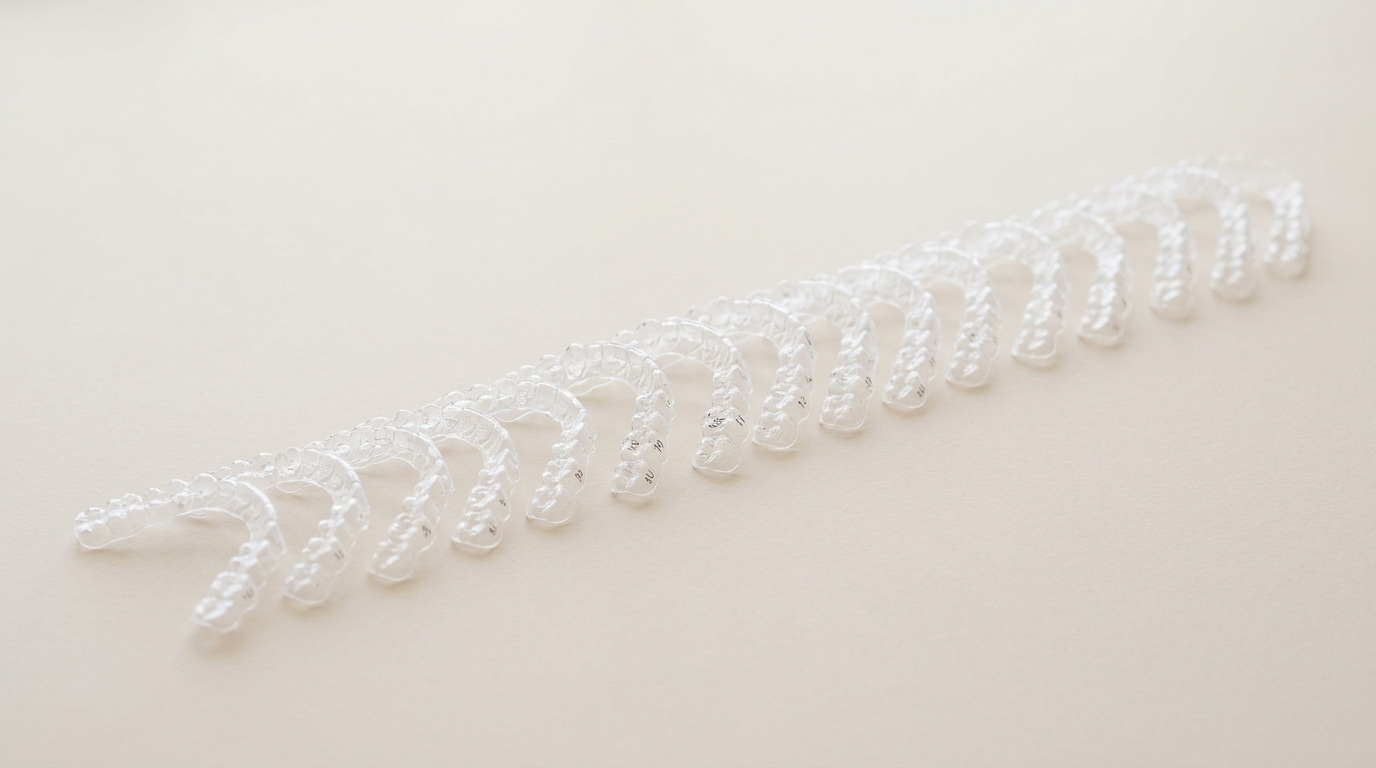
| Number of aligner sets | Roughly 20 to 50 for a full case | Complexity and change interval |
| In-office check-ins | Every 6 to 10 weeks | Some plans use remote monitoring |
| First visible change | Often within 1 to 3 months | Front teeth usually move first |
| Refinement stage | Adds a few weeks to several months | How closely teeth tracked the plan |
| Retainers afterward | Nightly, indefinitely | Teeth drift for life |
Read those as typical patterns rather than promises. A provider who has seen your X-rays can give you a projection specific to your mouth, and that projection will be far more useful than any average.
Why the Timeline Matters for Your Teeth and Gums
It's tempting to treat treatment time as purely a convenience question. It isn't, for a few reasons.
Crowded and overlapping teeth are harder to clean, because floss and bristles can't reach the surfaces that are hidden. Every month you spend with that crowding is another month of trapped plaque in those spots. Finishing treatment is what actually fixes the cleaning problem, so a case that drags on for avoidable reasons delays that benefit.
There's also a risk that runs in the other direction. Wearing aligners means your teeth spend most of the day sealed under plastic. If you sip a sweet coffee or a soda with trays in, the sugar sits against enamel with nowhere to go. Over a long treatment, that can lead to white spot lesions, which are chalky patches where enamel has started to lose minerals. They're preventable with simple habits, but the longer treatment runs, the more chances there are to slip.
Bite problems matter too. An uncorrected deep bite or crossbite can wear teeth unevenly, chip edges, and strain the jaw joint over years. That's an argument for finishing treatment properly rather than stopping the moment the front teeth look straight.
What You Control: Wear Time and the Habits Around It
Here's the part that genuinely changes your timeline. Aligners only work while they're on your teeth. The plan assumes 20 to 22 hours a day, which means they come out to eat, to drink anything other than water, and to brush. That's it.
Skipping a couple of hours here and there feels harmless. It isn't, because each tray is engineered to deliver a specific amount of movement in a specific window. Fall behind and the next tray won't seat properly, which means backing up a set or ordering refinements. That's how a 12-month plan becomes an 18-month one.
Practical habits that keep you on schedule:
- Switch to a new tray at bedtime. The tightest, achiest hours pass while you're asleep.
- Use your chewies. These are small foam cylinders you bite on to seat the aligner fully against your teeth. A tray that isn't fully seated isn't fully working.
- Keep the previous set. If a new tray won't go in, or an aligner is lost, your provider may have you drop back a step rather than lose progress. Never skip ahead on your own.
- Carry the case everywhere. Aligners wrapped in a napkin end up in the trash, and a replacement tray takes time to arrive.
- Brush or at least rinse before putting them back in. Sealing food debris against enamel for hours is exactly what you want to avoid.
- Drink only water with trays in. Hot drinks can also warp the plastic.
- Report a cracked or lost aligner the same day. Waiting a week to call is often what costs the extra month.
- Don't skip check-ins. Those appointments are where a tooth that's drifting off plan gets caught early, while it's still a small correction.
Common Misconceptions About Invisalign Timing
"Aligners are always faster than braces." Not necessarily. For some straightforward cases they finish quickly, but for complex bite corrections or extraction cases, fixed braces are sometimes the faster and more predictable route. Speed depends on the case, not the appliance category.
"The number of trays equals the number of weeks." Only if you change weekly, and not every plan works that way. Some providers use a two-week interval, and refinements add trays that weren't in the original count.
"Needing more aligners means something went wrong." Refinements are a normal, planned-for part of aligner treatment. The digital plan is a prediction of how bone and teeth will respond, and real biology rarely matches a prediction perfectly.
"Once my teeth look straight, I'm done." The final aligners often do the least visible and most important work: settling the bite and uprighting roots. Stopping early is how people end up with teeth that look fine and bite badly.
"Faster is better." Pushing teeth harder than bone can remodel isn't a shortcut. It risks root shortening and loose teeth. A timeline that respects biology is the whole point.
"Mail-order aligners do the same thing in less time." Shorter advertised timelines usually reflect simpler treatment goals rather than a faster method, and those plans typically skip the in-person exam and the attachments that make certain movements possible.
What Happens After the Last Aligner
The single most misunderstood part of the timeline is that it doesn't really end. Teeth drift throughout life, and they're most likely to shift in the months right after treatment while the bone and ligaments around them settle.
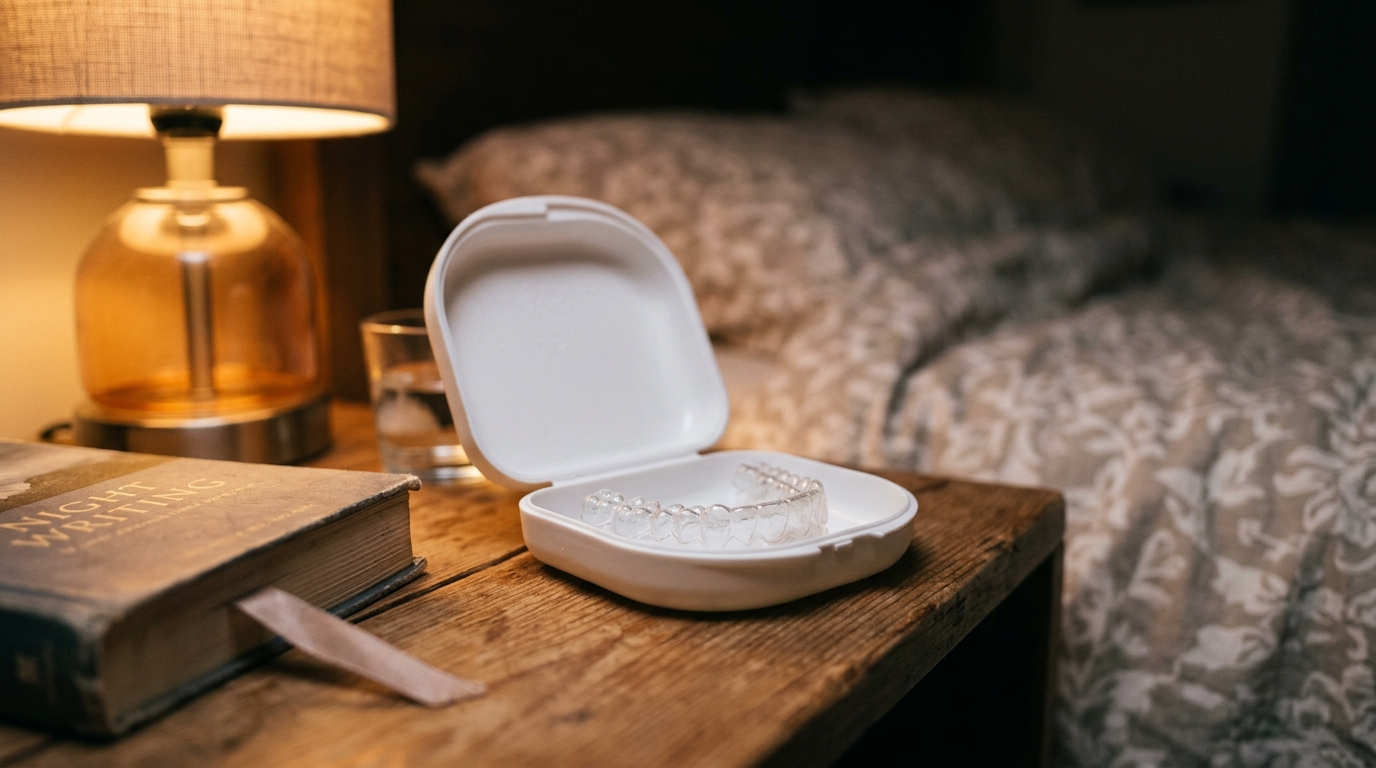
That's what retainers are for. Most people are told to wear a removable retainer full time for a short initial period, then nightly for the long term. Some providers also bond a thin fixed wire behind the lower front teeth, which stays put and doesn't rely on you remembering.
Nightly forever sounds like a lot. In practice, it's the cheapest and easiest part of the whole process, and it's what protects the time and money you've already spent. Retainer wear is where relapse cases come from, almost without exception.
Frequently Asked Questions
How long does Invisalign take for just mild crowding?
Limited cases involving a bit of crowding or spacing in the front teeth often run in the range of 3 to 6 months. That assumes the bite doesn't need work and the teeth only need small movements. A consultation with X-rays is the only way to know whether your case qualifies as limited.
Will taking my aligners out for a few hours a day really slow things down?
Yes, and more than people expect. The plan is built around 20 to 22 hours of daily wear, so consistently landing at 16 or 18 hours means trays stop fitting as designed and teeth fall behind schedule. That usually gets fixed with extra aligners, which adds weeks or months.
Why did my dentist add more aligners at the end?
That's a refinement, and it's routine. Digital plans predict how teeth will respond, and when a tooth moves slightly less than expected, a new scan and a fresh short series bring it into position. It's a normal correction, not a sign the treatment failed.
Is Invisalign faster than braces?
It depends entirely on the case. For simple alignment, clear aligners often finish in a comparable or shorter time. For extraction cases and significant bite correction, fixed braces can be quicker and give the provider more control. Ask for a projected timeline for both at your consultation.
How long do I have to wear retainers afterward?
Plan on nightly wear indefinitely. Teeth keep shifting throughout life regardless of whether you had orthodontic treatment, and retainers are what hold your result in place. Most people find it becomes an unnoticed habit within a few weeks.
This article is for general information only and is not a substitute for professional dental advice. Always consult your dentist about your individual needs.