Veneers vs Crowns: How to Tell Which One You Actually Need
Veneers and crowns compared side by side: cost, comfort, durability, how much tooth each one removes, and which fits your situation.
A dentist has mentioned veneers, or crowns, or maybe both, and now you're trying to work out which one your tooth actually needs. The two get compared constantly because both end with a tooth that looks better than it did. The difference that matters is how much of the tooth each one covers, and why that coverage is needed in the first place. Here's what separates them, what each typically costs, how long they hold up, and how to figure out which situation you're in.
What Are Veneers?
A veneer is a thin shell bonded to the front of a tooth. It's a facing, not a cover. It changes the color, shape, and surface of the part of the tooth that shows when you smile, and it leaves the back and most of the biting edge alone.
To make space for that shell, your dentist usually removes a thin layer of enamel, the hard outer surface of the tooth, from the front. The amount is small, roughly the thickness of the veneer that's going back on. Some people qualify for minimal-prep veneers where almost no enamel comes off, though that depends on how your teeth already sit in your mouth. Once enamel is removed it doesn't grow back, so a prepped tooth will always need something on it from then on.
There are two main materials:
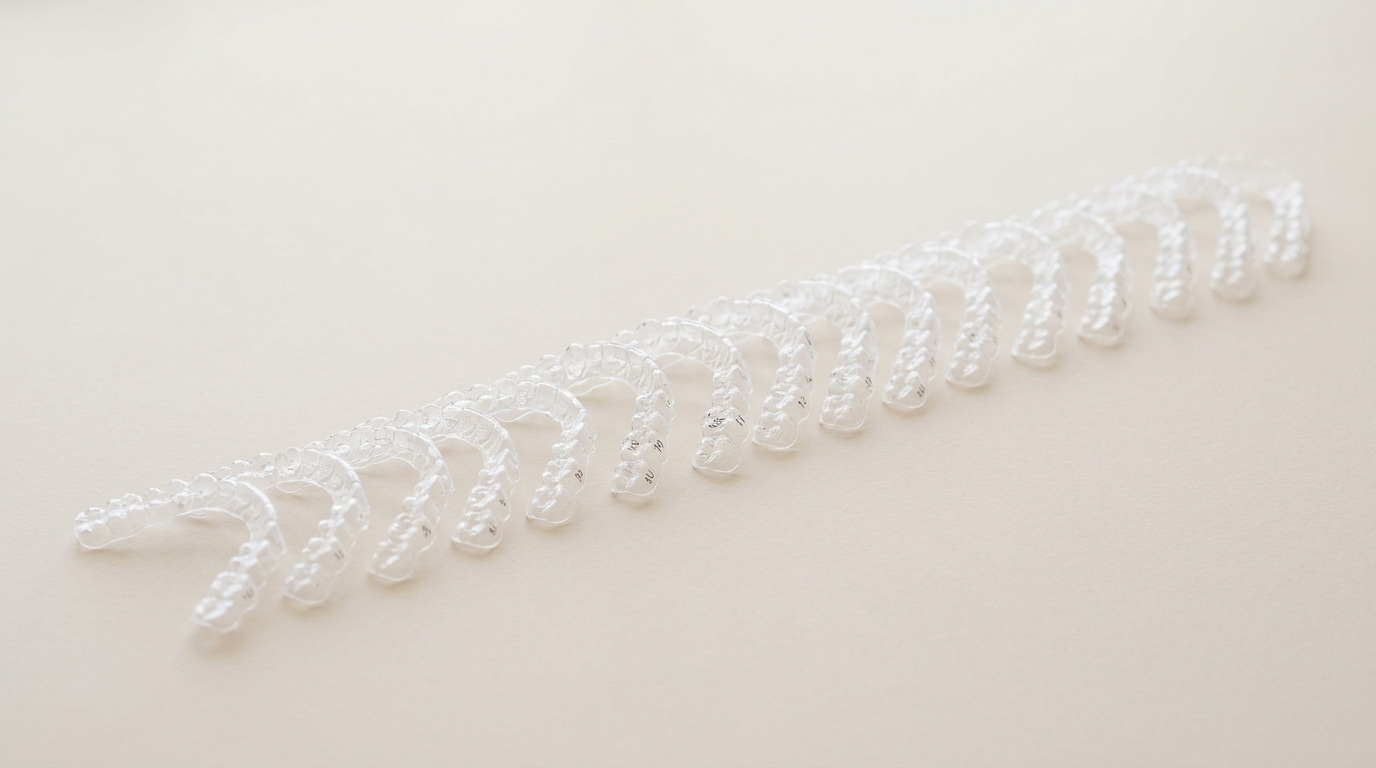
- Porcelain veneers. Made from a scan or impression, either in a dental lab or milled in the office, then bonded on. You usually wear temporary veneers between visits.
- Composite veneers. Built directly on the tooth from tooth-colored resin in one appointment, then shaped and polished by hand.
Veneers are mostly a cosmetic fix. They handle staining that whitening won't lift, small chips, uneven or slightly worn edges, and small gaps. What a veneer can't do is make a weak tooth strong. It leans on solid tooth underneath, so the tooth has to be healthy enough to carry it.
What Are Crowns?
A crown is a cap that covers the entire tooth, all the way around and over the chewing surface. Your dentist reduces the tooth on every side to make room, then cements the crown over what's left. After that, the crown is the tooth's outer surface and it takes the full force of your bite.
Crowns exist mainly to protect and rebuild. Your dentist is likely to bring one up when:
- The tooth has had a root canal and is now brittle
- A large old filling is left with thin walls of tooth around it
- The tooth is cracked or badly broken
- Grinding has worn the tooth down significantly
- Decay is too large for a filling to hold
- You're getting the visible part of a dental implant
Crown materials include all-ceramic options like zirconia and lithium disilicate, porcelain fused to metal, and gold or other metal alloys. Back teeth often get the tougher materials because that's where the heaviest chewing pressure lands. Front teeth usually get ceramic, which handles light more like natural enamel does.
Because a crown restores function and not just appearance, it's often at least partly covered by dental insurance when there's a clinical reason for it. That's a genuine financial difference between the two options, and it's worth checking before you decide anything.
Veneers vs Crowns: Side-by-Side Comparison
| What you're comparing | Veneers | Crowns |
|---|---|---|
| Typical cost per tooth | About $800 to $2,500 (porcelain) | About $800 to $3,000 |
| Tooth structure removed | Thin layer off the front | Reduced on all sides |
| Typical lifespan | Roughly 10-15 years (porcelain) | Roughly 10-15 years, often longer |
| Comfort during treatment | Local anesthetic, mild soreness | Local anesthetic, more prep time |
| Sensitivity afterward | Common for a few weeks | Common for a few weeks |
| Visits needed | Usually 2 | Usually 2, sometimes 1 |
| Everyday maintenance | Brush, floss, night guard if you grind | Same, plus watch the gum edge |
| Stain resistance | High for porcelain | High for ceramic |
| Insurance likelihood | Rarely covered | Often partly covered |
| If it chips or fails | Usually full replacement | Usually full replacement |
| Best-fit candidate | Healthy tooth, cosmetic goal | Weak, cracked, or heavily filled tooth |
Treat the cost figures as ranges, not quotes. What you actually pay depends on where you live, the material, and how much work the tooth needs before anything goes on it.
Pros and Cons of Veneers
The appeal is that you keep more of your own tooth. Less drilling means less stress on the nerve inside, which is one reason veneers are the more conservative of the two when the tooth is sound to begin with.
Where veneers do well:
- Keeps most of the natural tooth intact
- Porcelain reflects light in a way that reads as natural
- Fixes color, shape, and small gaps in one go
- Resists coffee, tea, and wine staining well
- Feels close to a normal tooth because the back surface stays yours
Where veneers fall short:
- Adds no real strength to a compromised tooth
- Almost always permanent once enamel is prepped
- Rarely covered by insurance
- A chip usually means replacing the whole veneer
- Can debond if you grind or bite hard objects
Veneers also need enough enamel to bond to. Bonding to enamel is more reliable than bonding to the softer dentin underneath, so a tooth that's already been heavily drilled may not hold a veneer well.
Pros and Cons of Crowns
The appeal here is coverage. When a tooth has cracks running through it or very little wall left, wrapping the whole thing is what keeps it from splitting further.
Where crowns do well:
- Holds a cracked or weakened tooth together
- Works on teeth that have had root canals
- Handles heavy chewing forces on back teeth
- Often qualifies for partial insurance coverage
- Available in materials tuned for strength or for looks
Where crowns fall short:
- Removes a lot more tooth structure
- More post-treatment sensitivity is common
- The gum edge can darken or recede over time, especially with metal underneath
- Overkill on a tooth that's structurally fine
- Redoing one later means preparing the tooth again
There's also the nerve to think about. Any time a tooth is reduced significantly, there's a chance the nerve reacts badly afterward and the tooth ends up needing a root canal. It isn't common, but it's a real trade-off that comes with the extra coverage.
What Do They Cost, and Why Is the Range So Wide?
Both procedures span a wide band because a "veneer" or a "crown" isn't one product. Several things push a case toward the low or the high end:
- Where you live. Big-city practices carry higher overhead, and that shows up in the fee.
- Material. A layered ceramic crafted for a front tooth costs more than a solid zirconia crown milled for a molar.
- Lab work. Custom shading by a skilled ceramist takes time, and time is the main cost in a dental lab.
- The dentist's training. Prosthodontists and dentists with heavy cosmetic training generally charge more.
- Prep work. Gum treatment, a core buildup, or a root canal before the crown goes on are separate fees.
- How many teeth. Matching eight veneers across a smile is a different job from one tooth.
A quote is the only number that means anything. Ask for it in writing, and ask what's bundled in: the temporary, the try-in visit, adjustments, and any warranty if something chips in the first year or two. If a crown is being done for a clinical reason, ask the office to run a pre-treatment estimate with your insurance so you know the actual out-of-pocket figure before you commit.
What Your Dentist Weighs Before Recommending Either
The choice is less about preference than most people expect. A few factors usually decide it:
- How much healthy tooth is left. This is the big one. Plenty of solid tooth points toward a veneer. Thin, cracked walls point toward a crown.
- Whether the tooth has had a root canal. Treated teeth tend to be drier and more prone to fracture, so they're usually crowned.
- Gum health. Bleeding or inflamed gums get treated first. Nothing bonds well at a wet, irritated margin.
- Your bite and any grinding. Heavy grinding raises the failure rate for both, and it usually means a night guard is part of the plan.
- Shade and timing. Neither veneers nor crowns respond to whitening gel. If you want a brighter smile overall, whiten your natural teeth first and match the new work to the result.
- What you actually want changed. Wanting a tooth to look different is a different problem from a tooth that keeps chipping.
It's also fair to ask whether you need either one yet. Whitening, bonding, or orthodontic movement solves some of these problems with less tooth removed. A good conversation includes the least invasive option that would still get you where you want to go.
Which One Is Right for You?
There's no overall winner here, because these two aren't really competing for the same job most of the time.
A veneer tends to fit you if:
- Your tooth is structurally sound and has plenty of enamel
- The problem is color, shape, edge wear, or a small gap
- You're focused on front teeth that show when you smile
- You can cover a cosmetic cost that insurance won't touch
- You don't have untreated grinding or gum problems
A crown tends to fit you if:
- The tooth is cracked, broken, or has very little structure left
- It's had a root canal
- It's a molar carrying heavy chewing load
- A large filling keeps failing or the tooth aches when you bite
- Insurance coverage matters to your budget and there's a clinical reason on file
Plenty of people end up with both in the same mouth: crowns on the teeth that need protection, veneers on the ones that just need to look better. That's a normal treatment plan, not a compromise.
If you're weighing them on timeline, they're similar, usually two appointments spread over two to three weeks. If you're weighing them on longevity, they're also similar, with the tooth underneath and your habits mattering more than the material on top. The honest deciding factor is almost always how much tooth you're starting with, and a dentist can tell you that from an exam and an x-ray in a single visit.
Frequently Asked Questions
Is a crown just a stronger veneer?
Not quite. A crown covers the whole tooth and takes over its function, while a veneer covers only the front and relies on the tooth beneath it for strength. That difference in coverage is why they're used for different problems, not just different budgets.
Can a veneer be used instead of a crown to avoid losing more tooth?
Sometimes, but only if the tooth is strong enough. If a tooth is cracked or mostly filling, a veneer leaves the weak parts exposed and the tooth can fracture later. Ask your dentist directly whether there's enough sound structure to support a veneer, and what the risk looks like if you go that route anyway.
Do veneers or crowns damage your natural teeth?
Both involve permanently removing enamel, and enamel doesn't grow back, so the tooth will need a restoration on it from then on. That's a real commitment rather than damage in the usual sense. Crowns remove considerably more tooth than veneers do.
Will a new veneer or crown match the teeth next to it?
The shade is chosen before the work is made, so it can be matched closely to the teeth beside it. The catch is that neither one lightens with whitening gel later. If a brighter smile is part of the goal, whiten first, wait a couple of weeks for the color to settle, then match the new tooth to it.
What happens when a veneer or crown wears out?
Most of the time it's replaced with a new one, which means preparing the tooth again and paying the fee again. Failure usually shows up as a chip, a loose feeling, decay at the edge, or a dark line at the gum. Getting it looked at early is generally cheaper than waiting, because decay under a loose restoration can spread quietly.
This article is for general information only and is not a substitute for professional dental advice. Always consult your dentist about your individual needs.