How to Choose a Toothpaste: What the Ingredients Actually Do
Fluoride, RDA, potassium nitrate, stannous fluoride, SLS: what the ingredient panel on a toothpaste tube actually means, and how to match it to the problem you are trying to solve.
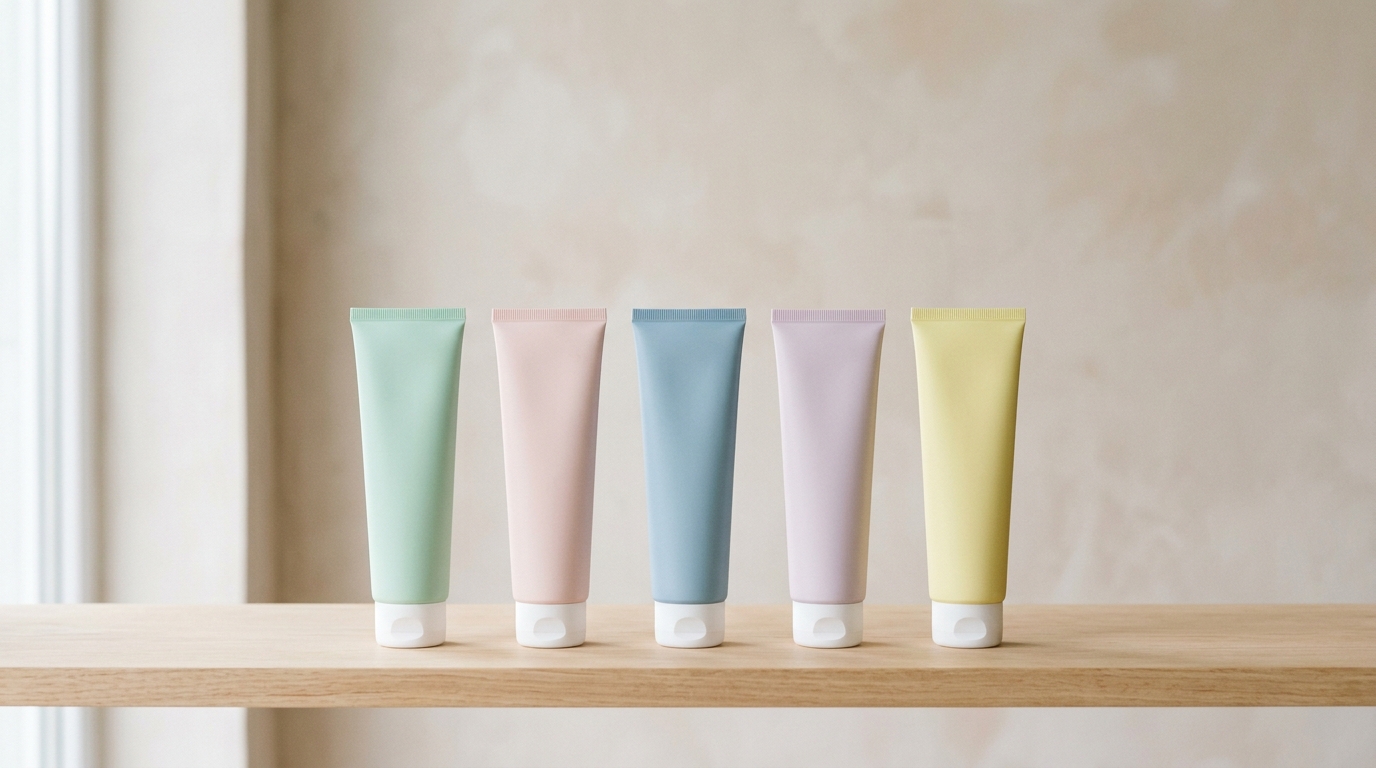
You are standing in front of forty tubes that all promise something slightly different. Total. Pro. Complete. Advanced. Repair. One says it strengthens enamel, the next whitens in three days, and the one for sensitive teeth costs three times what you normally pay.
Almost everything that separates those tubes is printed on the back, not the front. The ingredient panel is short, legally required, and once you can read it the aisle shrinks fast. Roughly six ingredients do anything you would notice. The rest is flavor and marketing.
Here is what each one does, and how to match them to the problem you are trying to solve. If your teeth are healthy and nothing is bothering you, the honest answer is cheaper and duller than the packaging suggests.
The One Ingredient That Has to Be There
Fluoride is a mineral that makes enamel more resistant to acid and helps repair the earliest stages of decay before a hole ever forms. It has the largest and longest body of evidence behind it, and it is most of the reason toothpaste does anything beyond scrubbing.
The mechanism is a tug of war. Every time you eat, bacteria in plaque produce acid that pulls minerals out of the enamel surface. Between meals, saliva puts minerals back. A cavity is what happens when the losing side wins for long enough. Fluoride tips that balance two ways: the rebuilt surface is harder to dissolve than the original, and it interferes with the bacteria's ability to make acid at all.
On the panel you will see one of three forms. Sodium fluoride is the most common, well proven and stable. Sodium monofluorophosphate is older, still effective, often paired with chalk based abrasives. Stannous fluoride is fluoride combined with tin, and it gets its own section below.
The form matters less than the concentration, printed in ppm, parts per million. Standard adult toothpaste sits around 1,000 to 1,500 ppm, and below roughly 1,000 ppm the anti-decay effect falls away for adults. Your dentist can prescribe a high fluoride paste at around 5,000 ppm if you keep getting cavities, have a dry mouth, have exposed root surfaces, or wear braces. That is a genuinely different product, not a stronger version of the same one.
For young children the guidance is about the amount rather than the strength: a rice grain smear under age three, a pea sized amount from three to six, supervised, spitting rather than swallowing. Advice varies by country, so confirm it with your own dentist.
Hydroxyapatite turns up as a fluoride free alternative. It is a mineral closely related to the one enamel is built from, and the research on it is growing, but it is not yet in fluoride's league for evidence. Treat it as a considered tradeoff rather than an equal swap, especially if you have a decay history.
What Stannous Fluoride Adds
Stannous fluoride is the multitasker of the category. Alongside the ordinary fluoride effect, the tin component is antibacterial, so it reduces plaque and calms the gum inflammation that makes gums bleed when you brush. It also eases sensitivity by plugging the microscopic channels in exposed dentin, and it offers some protection against acid erosion from citrus and reflux.
If you have bleeding gums, sensitivity, and a decay history all at once, it covers more ground in one tube than anything else on the shelf. If bleeding is your main concern, our separate piece on early gum inflammation matters more than the tube does.
The tradeoffs are minor. Some people notice a different taste or a slightly astringent feel, and stannous has an old reputation for surface staining that modern formulas have largely designed out.
Abrasives, and What RDA Actually Means
Every toothpaste is abrasive. It has to be, because part of the job is scrubbing away a soft film. The abrasive is usually hydrated silica, calcium carbonate, dicalcium phosphate, alumina, or baking soda.
RDA stands for relative dentin abrasivity, a laboratory measure of how much wear a paste produces compared with a reference material. The accepted upper limit for a safe product is 250, and virtually everything sold at a pharmacy sits well under it.
The reason to care is that not all of your tooth is equally hard. Enamel copes easily with a soft brush and ordinary paste. Dentin, the softer yellow layer underneath, does not, and it becomes exposed at the gumline when gums recede. So RDA matters most if you already have recession, notches at the gumline, or heavy erosion. Manufacturers rarely print the number, but pastes sold as extra whitening, smoker's, or deep clean sit at the higher end, and sensitivity formulas sit low.
Worth saying plainly, though: how hard you press and how stiff your bristles are do more damage than any paste on the shelf.
If Cold and Sweet Make You Wince
Dentin hypersensitivity is the short, sharp jolt from cold drinks, cold air, or something sweet that disappears within seconds of the trigger going away. It happens when dentin loses its enamel or gum covering and the tiny fluid filled tubes running through it, called tubules, are left open. Fluid shifts inside those tubes and the nerve reads the movement as pain.
Toothpaste attacks this from two directions:
- Potassium nitrate works on the nerve, making the nerve ending less likely to fire. That is why it does not work overnight. It needs several weeks of consistent twice daily use, and the effect fades if you stop.
- Tubule blockers work on the tooth. Stannous fluoride, arginine with calcium carbonate, hydroxyapatite, and calcium sodium phosphosilicate physically seal the openings. These often feel faster.
Three things make either type work better. Use it as your only toothpaste rather than alternating. Do not rinse afterward. And rub a smear onto the sensitive spot with a clean fingertip before bed, so it sits there instead of being brushed away. Give it two to four weeks.
One warning. Sensitivity toothpaste is for twinges across several teeth. Pain in one tooth that lingers after the cold is gone, throbs on its own, or wakes you at night is a different problem, and no toothpaste fixes it. That pattern is covered separately under the signs that point toward a root canal.
What Whitening Toothpaste Can and Cannot Do
Whitening pastes work in three ways, and it helps to know which one you are buying. Polishing agents remove surface stain from coffee, tea, red wine, and tobacco, which works within limits. Chemical stain removers such as sodium hexametaphosphate or low levels of peroxide loosen stains and make new ones stick less easily, though contact time in a two minute brushing is short, so expect modest results. Blue covarine deposits a thin blue tint that makes teeth look less yellow by optical trick rather than by changing them.
None of them change the color of the dentin underneath, which is where most natural yellowness lives. If your teeth are stained, toothpaste helps. If they are simply a darker shade, that is the territory our whitening articles cover, and a tube will not get you there.
SLS: the Foam, and Who Should Skip It
Sodium lauryl sulfate, usually written SLS, is a detergent that makes toothpaste foam and helps spread it around your mouth. It is not what cleans your teeth. The brush does that. The foam is mostly the sensation of cleaning.
For most people it is harmless. Consider an SLS free formula if:
- You get recurrent mouth ulcers. Many people find they come less often after switching, and it is a cheap thing to test for a couple of months.
- Your mouth is dry, sore, or burns easily. SLS irritates already irritated tissue.
- Orange juice tastes revolting after you brush. That is SLS suppressing your sweet receptors and stripping the compounds that normally blunt bitterness. Harmless, but annoying at breakfast.
SLS also interferes with chlorhexidine mouthwash, which is why that rinse has to be spaced away from brushing. More on that in the mouthwash guide.
The Rest of the Label
Tartar control ingredients such as pyrophosphates and zinc citrate slow soft plaque from hardening into calculus, the mineralized deposit you cannot brush off. They do not remove calculus already there. Only a hygienist can.
Baking soda is mildly abrasive, low on the RDA scale, and neutralizes acid. Fine, as long as the tube also contains fluoride. Xylitol is a sweetener oral bacteria cannot ferment into acid, a small plus. Zinc helps with odor, which matters more for the causes of bad breath than for your teeth. Charcoal is dark, gritty, frequently fluoride free, and easy to skip. And phrases like enamel safe, advanced, and clinically proven have no fixed legal meaning.
Match the Tube to the Problem
| What you want to fix | Look for on the panel | What to skip |
|---|---|---|
| Nothing in particular, general prevention | Fluoride at 1,000 to 1,500 ppm | Nearly every claim on the front |
| Cavities keep appearing | Prescription strength fluoride, or stannous fluoride | Whitening formulas as a priority |
| Cold and sweet twinges across several teeth | Potassium nitrate, or a tubule blocker | High abrasion whitening pastes |
| Gums bleed when you brush | Stannous fluoride | Relying on a rinse instead |
| Coffee and tea staining | Gentle polishing paste with fluoride | Charcoal and extra whitening grit |
| Teeth are a yellow shade, not stained | Nothing in a tube changes this | Buying tube after tube |
| Recurring mouth ulcers | SLS free, still with fluoride | Fluoride free herbal pastes |
| Dry mouth | SLS free, high fluoride, mild flavor | Strong mint, which stings dry tissue |
| Receding gums or exposed roots | Low abrasion plus a tubule blocker | Anything sold as deep cleaning grit |
| Braces | Fluoride, possibly prescription strength | Whitening pastes, which cannot reach under brackets |
| Child under six | Family fluoride paste, age appropriate amount | Fluoride free training pastes |
Price is a poor guide. A basic fluoride paste runs roughly $2 to $6 a tube, sensitivity and stannous formulas roughly $5 to $12, and prescription strength fluoride roughly $15 to $40. These are ranges rather than quotes, and location, pack size, insurance, and store promotions move them.
How Much to Use, and What to Do After
A pea sized amount is enough for an adult. More does not clean more. And the most wasted step in most routines is rinsing with water straight after brushing, which washes the fluoride away right when it would be working. Spit and stop.
Frequently Asked Questions
Is expensive toothpaste better than cheap toothpaste?
Not automatically. A basic supermarket paste with 1,000 to 1,500 ppm fluoride does the core job as well as a premium tube. You pay more for specific actives, worth it if you have the problem they solve, and for flavor and packaging, which are not.
Is sensitive toothpaste actually doing anything, or is it a gimmick?
It genuinely works for most people with generalized sensitivity, but it needs consistency. Potassium nitrate versions take a few weeks of twice daily use and stop working if you switch back. If four weeks changes nothing, the cause is probably not simple exposed dentin, and it is worth having looked at.
Is fluoride free toothpaste safe to use?
It is safe, but it gives up the ingredient with the strongest evidence for preventing decay. If you have never had a cavity and eat little sugar, you may well be fine. If you have a decay history, dry mouth, gum recession, or braces, going fluoride free is a real risk rather than a neutral preference.
Will whitening toothpaste damage my enamel?
Used normally with a soft brush, mainstream whitening pastes will not wear through enamel. The concern is different: they are more abrasive than average, so if you have gum recession, exposed roots, or a heavy hand, they wear the softer surfaces faster. Choose a low abrasion paste instead.
Should I switch toothpaste regularly?
No. Bacteria do not build resistance to fluoride. Change toothpaste when the problem you are solving changes, not otherwise.
What to Do Next
Turn over the tube you currently use. If it has fluoride at a normal adult concentration and nothing is bothering you, you already have the right toothpaste and can stop thinking about it.
If something is bothering you, change one variable. Sensitive across several teeth, try potassium nitrate or a stannous formula for a month. Gums bleeding, stannous fluoride plus proper cleaning between the teeth. Ulcers, try SLS free. Cavities appearing repeatedly, ask about prescription strength fluoride at your next appointment rather than working through the shelf.
And if the problem is pain in one tooth, bleeding that does not settle in a couple of weeks, or a stain that will not polish off, that is a conversation with a dentist rather than a purchase. Toothpaste is a maintenance product, not a repair for something that has already gone wrong.
This article is for general information only and is not a substitute for professional dental advice. Always consult your dentist about your individual needs.