Are Sugar-Free Drinks Bad for Your Teeth?
Sugar-free drinks cut cavity risk, but many are still acidic enough to wear enamel. Which drinks are kindest to teeth, which are not, and the simple habits that protect you either way.
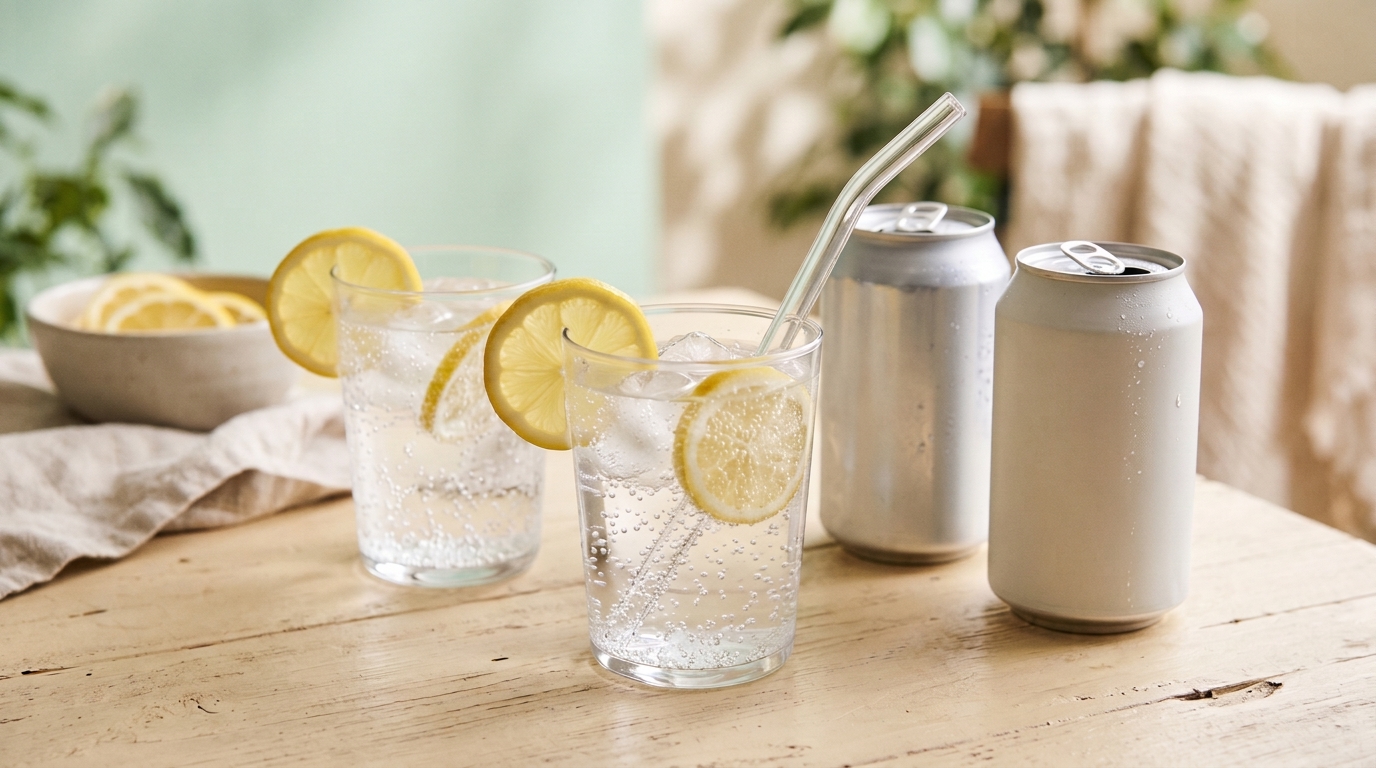
You switched to diet soda, sugar-free energy drinks, or flavored sparkling water because you wanted to look after yourself. So it is frustrating to hear that sugar-free drinks can still damage your teeth. Is that true, or is it one of those warnings that makes everything sound dangerous?
The honest answer is that switching away from sugar is a real improvement for your teeth. But sugar is only half the story. Many sugar-free drinks are acidic, and acid harms enamel in a different way from sugar. This guide explains the difference, ranks common drinks in plain terms, and shows you which small habits matter most.
Two Different Ways Drinks Harm Teeth
There are two separate processes to understand, and sugar-free drinks only remove one of them.
Tooth decay is caused by bacteria. Plaque bacteria feed on sugar and produce acid right against the tooth surface. Over time that acid makes a hole, which is a cavity. Take away the sugar and you take away the bacteria's fuel, so sugar-free drinks genuinely lower cavity risk. Our guide to how cavities form covers this in more detail.
Acid erosion is chemical. The acid is already in the drink, added for flavor and freshness, and it softens enamel directly with no bacteria involved. Erosion does not make holes. It thins and smooths the teeth across broad surfaces, a little at a time. Removing sugar does nothing to the acid, so a diet soda can be just as erosive as the regular version.
That is the core of it. Sugar-free drinks fix the decay problem and leave the erosion problem roughly where it was.
What Makes a Drink Acidic
Most of the acid in soft drinks comes from a few common ingredients:
- Phosphoric acid, used in many colas
- Citric acid, used in lemon, lime and orange flavored drinks, and in many energy and sports drinks
- Malic acid, used for sour and fruity flavors
- Carbonic acid, formed when carbon dioxide dissolves in water to make the fizz
Carbonation alone makes a drink only mildly acidic. Plain sparkling water is a small concern compared with soda. The big jump comes from added fruit acids, which is why citrus-flavored drinks tend to be among the most erosive, with or without sugar.
How Common Sugar-Free Drinks Compare
This table ranks drinks by their likely effect on teeth, using general categories rather than exact measurements, which vary by brand and recipe.
| Drink | Cavity risk | Erosion risk | Simple swap or habit |
|---|---|---|---|
| Plain still water | None | None | The best default for sipping |
| Plain sparkling water | None | Low | Fine for most people, even between meals |
| Flavored sparkling water, non-citrus | None | Low to moderate | Have it with meals rather than sipping for hours |
| Flavored sparkling water, citrus | None | Moderate | Alternate with plain water |
| Diet cola | Very low | High | Drink with food, not over a long afternoon |
| Diet citrus soda | Very low | High | Use a straw, finish in one go |
| Sugar-free energy drink | Very low | High | Limit to one, never sip across a shift |
| Sugar-free sports drink | Very low | Moderate to high | Water is enough for most exercise |
| Unsweetened tea, black or green | None | Low | A good swap, though it can stain |
| Black coffee | None | Low | Fine for teeth apart from staining |
| Milk | Low | None | Helps neutralize acid |
Notice that water and milk sit at the top on both counts. Everything else involves at least some trade-off.
Frequency Matters More Than Amount
The single most useful idea in this article is this: how often your teeth meet acid matters more than how much you drink.
Every sip lowers the acidity in your mouth for a while. Saliva then neutralizes it and starts repairing the outer layer of enamel. That repair takes time. If you finish a can with lunch, your mouth has one acid spell and then a long recovery. If you sip the same can over three hours, your teeth sit in a softened state for most of that time and never fully recover.
That is why people who keep a drink on the desk all day tend to have more erosion than people who drink the same amount in one go. The pattern, not the volume, does most of the damage.
Signs Acid Is Already Affecting Your Teeth
Erosion is slow and usually painless, so it is easy to miss. Look for:
- See-through edges on your front teeth
- Yellowing, because thinner enamel lets the yellow layer underneath show through
- Sensitivity to cold, heat or sweet foods across several teeth
- Small dips or cupped areas on the chewing surfaces of back teeth
- Fillings that seem to stand proud of the tooth surface around them
If any of these sound familiar, our full guide to acid erosion and enamel explains what else can cause it and what treatment looks like when it is advanced.
Habits That Protect Your Teeth
You do not need to give up sugar-free drinks to protect your teeth. These habits make a real difference.
- Drink them with meals. Eating stimulates saliva, which helps neutralize acid faster.
- Finish in one sitting rather than sipping over hours.
- Use a straw, placed toward the back of the mouth rather than resting against your front teeth.
- Follow with water. A few mouthfuls of plain water rinse acid away.
- Do not brush straight away. Enamel is softened just after acid. Wait about an hour before brushing so you do not scrub away the softened layer.
- Use fluoride toothpaste twice a day. Fluoride helps harden enamel against acid.
- Chew sugar-free gum after a drink to boost saliva flow.
- Keep drinks cold. Some people find cold drinks easier to finish quickly, and they tend to be sipped less slowly than room temperature cans.
What About Artificial Sweeteners?
Sweeteners such as aspartame, sucralose and stevia are not fermented by decay bacteria in the way sugar is, so they do not feed cavities. Some sugar alcohols, such as xylitol, may even have a small protective effect when used often in gum or mints.
The sweeteners themselves are not the problem for teeth. The acids used alongside them are. If you are choosing between two sugar-free drinks, the more useful question is whether it is citrus flavored or sour, not which sweetener it uses.
Special Cases
Children and teenagers. Young teeth have slightly softer enamel, and children often sip drinks slowly. Water and milk remain the best choices for everyday drinking.
People with reflux or dry mouth. If your mouth is already dealing with stomach acid or low saliva, acidic drinks add to the load. Keeping acidic drinks to mealtimes matters even more.
Sports and training. Sports drinks are often sipped through long sessions, which is close to the worst pattern for erosion. Water is enough for most everyday exercise. If you do use a sports drink, drink it in a few larger mouthfuls rather than constant small sips, and rinse with water afterwards.
Reading the Label
Labels will not tell you how erosive a drink is, but they give useful clues. Look at the ingredient list rather than the front of the can.
- Citric acid, malic acid or phosphoric acid near the top of the list means the drink is likely to be acidic, whatever the sugar content.
- Words like "sour", "tangy", "zesty" or "citrus" usually mean extra acid has been added for flavor.
- "Vitamin C" or "ascorbic acid" adds acidity too, which is why some vitamin waters and fizzy vitamin drinks are more erosive than they look.
- "Unsweetened" and "no added sugar" describe sugar, not acid. A drink can be both unsweetened and highly acidic.
If you are choosing between two drinks you enjoy, the one without fruit acids near the top of the list is usually the safer pick for your enamel. And if you are unsure, treat any flavored drink as one for mealtimes, and keep plain water as the drink you sip in between.
A quick taste test also helps. If a drink makes your mouth pucker or leaves your teeth feeling squeaky or rough afterwards, that is a sign of acid at work, and a good reason to keep it to mealtimes.
Frequently Asked Questions
Is diet soda better for my teeth than regular soda?
For cavities, yes, because there is no sugar for decay bacteria to feed on. For erosion, not really, because the acid is much the same. Switching is still a sensible step, as long as you also watch how often you sip.
Is sparkling water bad for my teeth?
Plain sparkling water is only mildly acidic and is a small concern for most people. Flavored versions, especially citrus ones, are more acidic. If you drink a lot of it, keep flavored ones for mealtimes and plain water for in between.
Can I drink diet soda through a straw to protect my teeth?
A straw helps reduce contact with your front teeth, especially if it sits toward the back of your mouth. It does not make the drink harmless, so finishing in one go and rinsing with water afterwards still matter more.
Should I brush my teeth right after a diet soda?
No. Acid softens the outer layer of enamel for a while, and brushing straight away can wear it down. Rinse with water and wait about an hour before brushing.
Are sugar-free energy drinks safe for teeth?
They are among the more acidic drinks, and they are often sipped slowly through a working day. If you drink them, limit how many and how slowly. One drink with a meal is far kinder to your teeth than steady sipping.
What to Do Next
Think about your drinks over a normal day, not just what you drink but how you drink it. If you sip something acidic for hours, that is the habit worth changing first. Moving it to mealtimes, finishing it in one sitting and rinsing with water will do more than switching brands.
If you want a sense of your overall risk, try our oral health risk quiz, which takes your diet and habits into account. And if you have noticed sensitivity, yellowing or see-through edges, mention it at your next checkup so your dentist can look for early erosion and track it while it is still small.
This article is for general information only and is not a substitute for professional dental advice. Always consult your dentist about your individual needs.