Acid Erosion: The Slow Threat to Your Enamel
Acid erosion strips enamel without a single cavity. How it differs from decay, where the acid comes from, the early signs to look for, and the everyday habits that slow it down.
Maybe the edges of your front teeth have started to look slightly see-through. Maybe cold drinks sting across several teeth at once, or your dentist mentioned "wear" and you nodded without being sure what they meant. None of it hurts much, and you have no cavities, so it is easy to put off.
That is exactly what makes acid erosion worth understanding. It is slow, mostly painless, and it removes enamel that will never grow back. The good news is that it responds well to small, specific changes in habits, and the earlier you make them, the more tooth you keep.
What Acid Erosion Actually Is
Enamel is the hard, mineral outer layer of your teeth. It is the hardest substance in the body, but it dissolves in acid. Acid erosion, sometimes called dental erosion, is the gradual loss of enamel when acid touches the teeth often enough, and for long enough, that saliva cannot keep up with the repair.
Each acid contact softens the very outer surface of the enamel for a while. Saliva then neutralizes the acid and redeposits some minerals. Occasional acid is not a problem. Repeated acid, sipped or swished or regurgitated through the day, tips the balance toward loss, a microscopic layer at a time.
Erosion vs Decay: Not the Same Problem
People often assume any damage to a tooth is a cavity. Erosion is a different process.
- Tooth decay is bacterial. Plaque bacteria feed on sugar and make acid right against the tooth, in one spot. That concentrated attack eventually makes a hole, which is what a cavity is.
- Erosion is chemical. The acid comes straight from food, drink, or your stomach, with no bacteria needed. It washes over broad surfaces rather than eating into one spot, so it thins and smooths the teeth instead of making holes.
This is why someone who drinks diet soda all day may have no cavities and still have significant erosion. The sugar is gone, but the acid is not. The two can happen together, and erosion often teams up with abrasion, wear from hard brushing, and attrition, wear from grinding, which is why dentists often talk about "tooth wear" as a whole.
Where the Acid Comes From
From what you eat and drink
- Soft drinks, regular and diet alike. The acids are added for flavor and are there with or without sugar.
- Sports drinks and energy drinks, often sipped slowly during exercise or work.
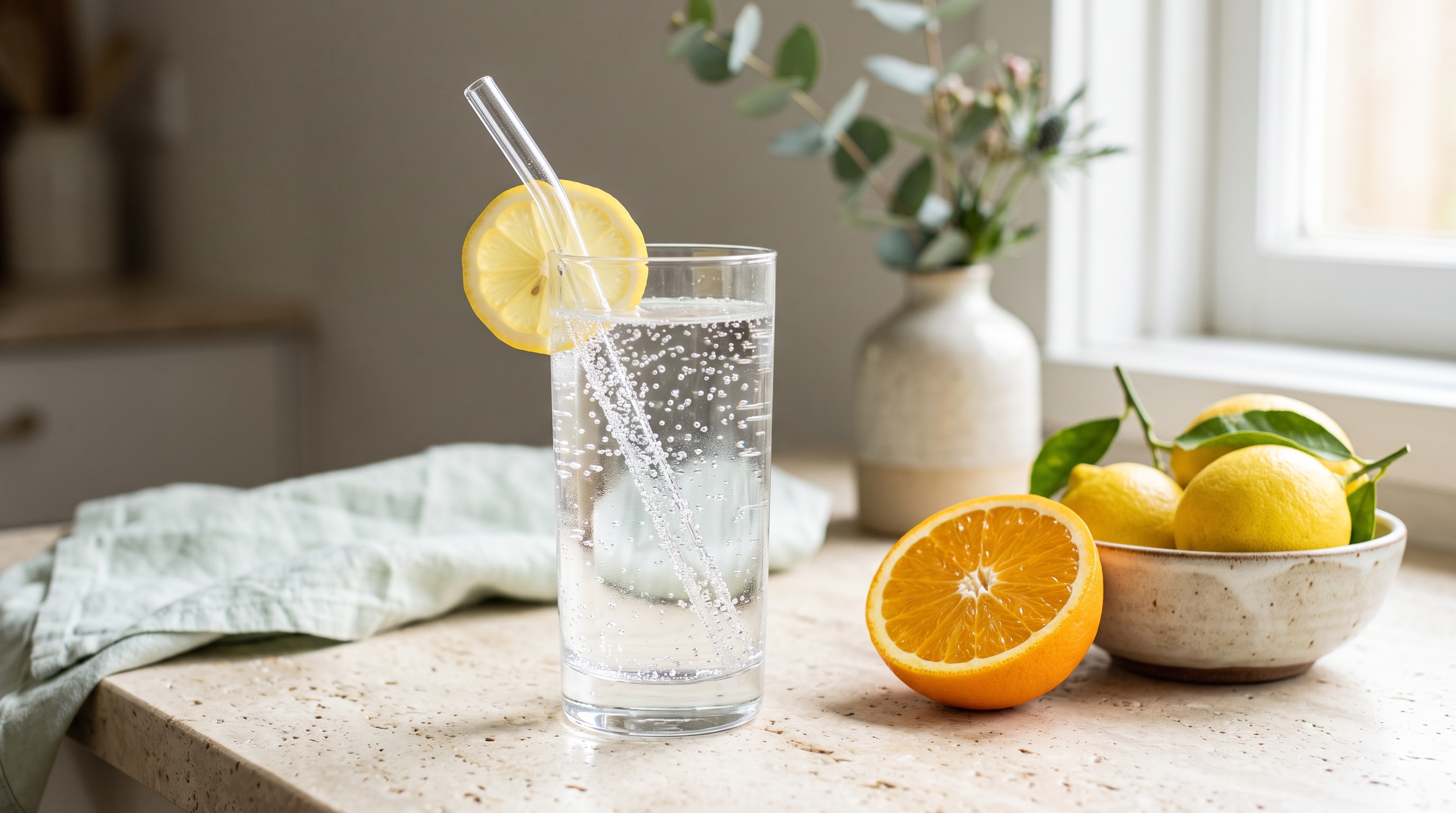
- Fruit juices, citrus fruit, and lemon water. Healthy in other ways, but acidic.
- Flavored sparkling water, especially citrus flavors. Plain sparkling water is only mildly acidic and a much smaller concern.
- Wine, white and red, particularly when sipped over a long evening.
- Vinegar, in dressings, pickles, and the vinegar drinks and shots sold as health tonics, plus kombucha.
- Sour candy, which is often coated in acid to create the sour taste, and chewable vitamin C.
From inside your body
- Acid reflux, or GERD (gastroesophageal reflux disease), where stomach acid rises into the throat and mouth. It can be "silent," with no obvious heartburn. A sour taste on waking, a hoarse voice, or a nagging cough are clues.
- Frequent vomiting, whether from an illness, a medical treatment, alcohol, or an eating disorder.
- Morning sickness in pregnancy, especially when it is severe or lasts for weeks. Our guide to dental care during pregnancy covers this in more detail.
Stomach acid is very strong, so even occasional episodes add up over time.
How you drink matters as much as what
The same drink can be much more or much less harmful depending on how it meets your teeth. Sipping one can of soda over three hours does far more damage than drinking it with lunch. Holding a drink in your mouth or swishing it around before swallowing bathes every surface. A bedtime drink is a particular problem, because saliva flow falls during sleep and the acid lingers.
Dry mouth raises the risk from everything on this list, because saliva is your natural buffer. Many common medications reduce saliva, and our guide on dry mouth and hydration explains what helps.
Signs of Acid Erosion to Look For
Erosion is easy to miss early, because it rarely hurts until quite a lot of enamel has gone. Things to watch for:
- See-through edges on your front teeth. The biting edges look grayish or glassy when you hold them against the light.
- Cupped chewing surfaces. Small, rounded dips appear on the tips of back teeth, where enamel has worn through to the softer layer beneath.
- Fillings that stand proud. A filling seems to sit slightly above the tooth around it, because the tooth has worn down and the filling has not.
- Yellowing. As enamel thins, more of the yellow dentin, the softer layer beneath, shows through. Whitening rarely helps much, because it is not a stain.
- A smooth, shiny, rounded look, with the natural texture and ridges of the teeth fading.
- Sensitivity to cold, heat, or sweet across several teeth, rather than one. Our guide to tooth sensitivity causes and relief covers the other causes.
- Chipping edges on front teeth that have become thin.
The location often hints at the source. Erosion from drinks tends to show first on the front surfaces of the upper front teeth. Erosion on the inner surfaces of the upper teeth, the side facing the tongue, points more toward stomach acid.
When to get checked promptly
Erosion itself is not an emergency, but see a dentist soon if sensitivity is getting worse quickly, if a tooth becomes painful on its own, or if edges are chipping. If you are vomiting frequently for any reason, or suspect reflux, tell both your doctor and your dentist. Dentists often notice the pattern of stomach acid erosion before anyone else does, and they raise it to help, not to judge.
Everyday Habits and Simple Swaps
You do not need to give up everything acidic. The aim is fewer contacts, shorter contacts, and a chance for saliva to recover in between.
| Habit or source | Risk to enamel | Simple swap |
|---|---|---|
| Sipping soda, regular or diet, through the afternoon | High, repeated contact with no recovery time | Have it with a meal, finish it, then drink water |
| Sports drinks during everyday workouts | High for regular users | Plain water for most exercise |
| Energy drinks at a desk | High | Water, or unsweetened tea or coffee |
| Lemon water sipped all morning | High, long exposure | Drink it with breakfast, then rinse with plain water |
| Sucking citrus wedges or sour candy | High, direct contact | Eat fruit with a meal, skip sour candy |
| Flavored sparkling water all day | Moderate | Plain sparkling or still water between meals |
| Vinegar drinks, shots, or kombucha | Moderate to high | Take with food, rinse with water after |
| Wine sipped over a long evening | Moderate | Drink it with food, water alongside |
| Holding or swishing drinks | Raises the risk of any acidic drink | Swallow promptly, use a straw |
| Brushing straight after acid | Wears the softened surface | Rinse with water and wait before brushing |
| Reflux, especially at night | High, and often unnoticed | See a doctor, avoid eating close to bedtime |
| Frequent vomiting | High | Rinse with water or baking soda solution, get medical support |
A few more habits help alongside those swaps:
- Finish with something neutral. A glass of water, a piece of cheese, or a glass of milk after acidic food helps bring your mouth back to normal.
- Chew sugar-free gum after meals to boost saliva.
- Use a straw for acidic drinks, placed toward the back of the mouth rather than resting against your front teeth.
- Keep acidic drinks away from bedtime.
Why You Should Wait Before Brushing
This is the habit that surprises people most. Straight after acid, the outer surface of the enamel is softened. Brushing at that moment can scrub away some of the softened layer that saliva would otherwise have helped to harden again.
So after something acidic, rinse with plain water and wait before you brush. Many dentists suggest at least 30 minutes, and some suggest an hour. If you brush in the morning and your breakfast includes juice or citrus, brush before breakfast instead.
After vomiting, do not brush straight away either. Rinse with water, or with a teaspoon of baking soda dissolved in a cup of water, which helps neutralize the acid, then brush later.
When you do brush, use a soft brush, light pressure, and a fluoride toothpaste. Spit out the excess but do not rinse it away, so the fluoride stays on the teeth longer. Some toothpastes, especially those with stannous fluoride, a form of fluoride with extra protective effects, are made with erosion in mind. Our guide on how to choose a toothpaste explains what to look for.
Treatment When Erosion Is Advanced
Lost enamel cannot be regrown, so treatment has two jobs: stop the process and protect or rebuild what is left.
Stopping it comes first. Any repair will wear too if the acid source is still there, so your dentist will want to understand the cause, and may suggest treating reflux with your doctor. They may take photographs or scans to track the wear over time.
Protecting what is left. Fluoride varnish painted on at the dental office, prescription strength fluoride toothpaste, and desensitizing treatments can strengthen the surface and calm sensitivity.
Rebuilding. Where enamel has worn through and dentin is exposed, the options include:
- Bonding, tooth-colored resin bonded over worn or sensitive areas, usually about $150 to $600 per tooth.
- Composite veneers, resin built up over the front of the tooth, about $250 to $1,500 per tooth.
- Porcelain veneers, thin porcelain shells, about $900 to $2,500 per tooth.
- Crowns or onlays for heavily worn back teeth, roughly $1,000 to $2,500 per crown depending on material.
These are ranges, not quotes. Where you live, the materials used, and how many teeth need work all move the final figure. When erosion is widespread, rebuilding may involve many teeth at once and sometimes raising the bite, which makes it a much larger project. That is the strongest argument for acting early.
Frequently Asked Questions
Can enamel grow back after acid erosion?
No. Enamel has no living cells, so once it is lost, the body cannot replace it. Fluoride and saliva can harden a surface that has only been softened, but they cannot rebuild enamel that has already gone.
Is sparkling water bad for my teeth?
Plain sparkling water is only mildly acidic and is a far smaller concern than soda, juice, or sports drinks. Flavored versions, especially citrus ones, are more acidic. If you drink a lot of it, have flavored ones with meals and keep plain water for sipping in between.
Is drinking through a straw really worth it?
It helps, as long as the straw sits toward the back of your mouth rather than pressing against your front teeth. It reduces how much acid washes over the front surfaces. It does not make an acidic drink harmless, so frequency still matters more.
Can acid reflux damage my teeth even if I don't get heartburn?
Yes. Some reflux is silent, with little or no heartburn, and teeth can still show the typical wear on their inner surfaces. If your dentist mentions this pattern, it is worth raising with your doctor.
Will whitening fix the yellow color from erosion?
Usually not. The yellow comes from dentin showing through thinner enamel, not from a surface stain. Whitening can also make eroded teeth more sensitive, so ask your dentist first.
What to Do Next
Look at your teeth in good light and check the edges of your front teeth for a see-through look, and your back teeth for small dips. Then think about the pattern of your day: what you sip, how often, and for how long.
Pick the one or two swaps from the table that fit your life, start waiting before brushing after acid, and switch to a soft brush and fluoride toothpaste if you have not already. If you have reflux or frequent vomiting, speak to your doctor, because protecting your teeth starts with treating the cause. And at your next checkup, ask your dentist directly whether they see any erosion, so it can be tracked while it is still a small problem.
This article is for general information only and is not a substitute for professional dental advice. Always consult your dentist about your individual needs.