Dry Socket: Signs, Prevention, and What Treatment Involves
How to tell dry socket from ordinary healing pain after an extraction, why it shows up around day three, what genuinely prevents it, and what the treatment visit is like.
You had a tooth out. Day one was sore but manageable, day two was better, and then on day three the pain came back worse than the day of the surgery, spreading up toward your ear, and the painkillers that were working are barely denying it.
That reversal is the signature of dry socket. It is not a sign that you did something catastrophic, it is not an infection in most cases, and it is not something you have to endure until it passes. The treatment takes a few minutes and the relief is usually close to immediate, which is the main reason to stop reading and call your dentist rather than waiting it out over a weekend.
Here is how to recognize it, what actually raises your risk, and what the appointment involves.
What Dry Socket Actually Is
The clinical name is alveolar osteitis, which translates as inflammation of the bony socket the tooth came out of.
After an extraction, blood fills the empty socket and forms a clot. That clot is not a scab you are waiting to shed. It is the scaffold: the tissue and eventually the bone that fill the hole grow through it, and while it is there it covers the bare bone and the nerve endings at the bottom of the socket.
In dry socket, the clot either never forms properly, breaks down early, or is physically dislodged. Bare bone is then exposed to air, saliva, food, and temperature, and bone has no protective covering of its own. The pain is severe because you have effectively left a nerve rich surface uncovered inside a mouth that never stops moving.
Nothing is rotting and nothing is falling apart. The socket still heals. It just heals slowly and painfully unless the exposed surface gets covered.
Why It Shows Up on Day Three to Five
Almost every case appears in that window, and the timing is one of the most reliable clues.
The reason is that a clot rarely disappears at the moment of surgery. It forms, holds for a day or two, and then breaks down or gets pulled out somewhere in the first seventy two hours, usually by suction, rinsing, smoking, or simple bad luck. The pain follows once the bone is genuinely uncovered.
That produces the pattern people describe: improving, improving, then a sharp reversal. Ordinary post extraction pain does the opposite. It is at its worst early and gets a little better every day. Any pain that reverses direction after day two deserves a phone call, whatever the cause.
Dry Socket or Normal Healing? The Honest Comparison
| Normal healing after an extraction | Dry socket | |
|---|---|---|
| When the pain peaks | First 24 to 48 hours, then eases daily | Suddenly worse on day 3 to 5, after improving |
| Direction of travel | Steadily better | Clearly worse than the day before |
| Type of pain | Aching, throbbing, tender, localized to the site | Deep, constant, often described as radiating |
| Where you feel it | The socket and the jaw nearby | The socket plus the ear, temple, eye, or neck on the same side |
| Response to painkillers | Over the counter medication takes the edge off well | Painkillers barely touch it |
| What the socket looks like | A dark red or brownish clot filling the hole | Looks empty, with whitish or gray bone visible at the bottom |
| Taste and smell | Metallic for a day or two, then normal | Persistently foul taste, bad odor that rinsing does not clear |
| Swelling | Peaks around day 2 to 3, then falls | Usually little or no extra swelling |
| Fever | None, or slightly raised in the first day or two | Usually none. A fever suggests infection instead |
| What helps | Time, ice then heat, rest | A dressing placed by your dentist |
The two rows to weigh most heavily are the direction of travel and the radiating pain. Almost everything hurts after an extraction. Very little else gets dramatically worse on day three and shoots toward your ear.
The Other Signs Worth Knowing
- Looking into the socket with a phone light and seeing an empty crater rather than a dark clot. Whitish or gray at the bottom is bone, not pus.
- A bad taste and a smell you cannot rinse away. Food debris collects in an unprotected socket.
- Pain that is worse in cold air, or when cold water passes over the site.
- Pain that is not accompanied by a fever or spreading swelling. If you do have a fever, facial swelling that keeps growing, pus, or difficulty swallowing, that is a different problem, an infection, and it needs same day attention. Our guide on tooth abscess warning signs covers those signals.
What Actually Raises Your Risk
Some of these you control and some you do not.
- Smoking and vaping. The largest controllable factor by a distance, through both the suction of inhaling and the effect of the chemicals on healing. Smoking in the first day or two is the classic story behind a day three phone call.
- Suction and pressure in the mouth. Straws, forceful spitting, vigorous swishing, and blowing up balloons or playing wind instruments.
- Lower wisdom teeth. Dry socket is considerably more common after lower back extractions than upper or front ones, partly because of the density of the bone and partly because gravity works against those sockets.
- A difficult or lengthy extraction. More surgical trauma means more disturbance to the bone.
- A previous dry socket. If you have had one, tell whoever is extracting the next tooth. It changes what they do preventively.
- Existing infection or poor hygiene at the time of extraction. Bacteria in the area interfere with clot stability.
- Hormonal factors. Estrogen appears to influence clot breakdown, which is why oral contraceptives are usually listed as a risk factor. Some surgeons schedule elective extractions accordingly.
Age, general health, and how well your blood clots all play smaller parts. Note that most people who get dry socket did nothing wrong at all. It is common enough that it is a recognized complication rather than evidence of a mistake, and it does not mean the extraction was done badly.
What Genuinely Prevents It
In rough order of how much difference each one makes:
- Do not smoke or vape. Ideally for a week, at absolute minimum for seventy two hours. If quitting entirely for the week is not realistic, ask your surgeon about nicotine patches or gum instead, and understand that the suction alone matters even if you switch to something with less smoke.
- No straws, no spitting, no forceful rinsing for the first 24 hours. Let saliva collect and dribble it into a tissue. After 24 hours, use gentle warm salt water, tilting your head to let it move rather than swishing.
- Bite firmly on the gauze, without lifting it to peek, for the time you were told. A stable clot in the first hour is a clot that survives.
- Skip alcohol and carbonated drinks for the first few days. Both disturb a fresh clot, and alcohol also interacts with pain medication.
- Keep the rest of your mouth clean. Brush your other teeth normally from the next day, avoiding the site, because a cleaner mouth heals more predictably.
- Avoid strenuous exercise for a few days. Raised blood pressure can dislodge a clot or restart bleeding.
- Eat soft, lukewarm food and chew on the other side. Nothing crunchy, seeded, or small enough to lodge in the socket.
- Use any rinse or gel you were prescribed exactly as instructed. Some practices apply an antibacterial rinse or a medicated dressing at the time of surgery for higher risk patients.
Our separate guide on tooth extraction aftercare goes through the whole first week in more detail. The list above is the subset that specifically protects the clot.
What the Treatment Appointment Involves
This is the reassuring part, and the reason not to tough it out.
Your dentist will look at the socket and confirm what is going on, which usually takes seconds because dry socket has a distinctive appearance. The site may be numbed, though often it is not needed. The socket is then gently irrigated with sterile saline or an antiseptic solution to flush out food and debris.
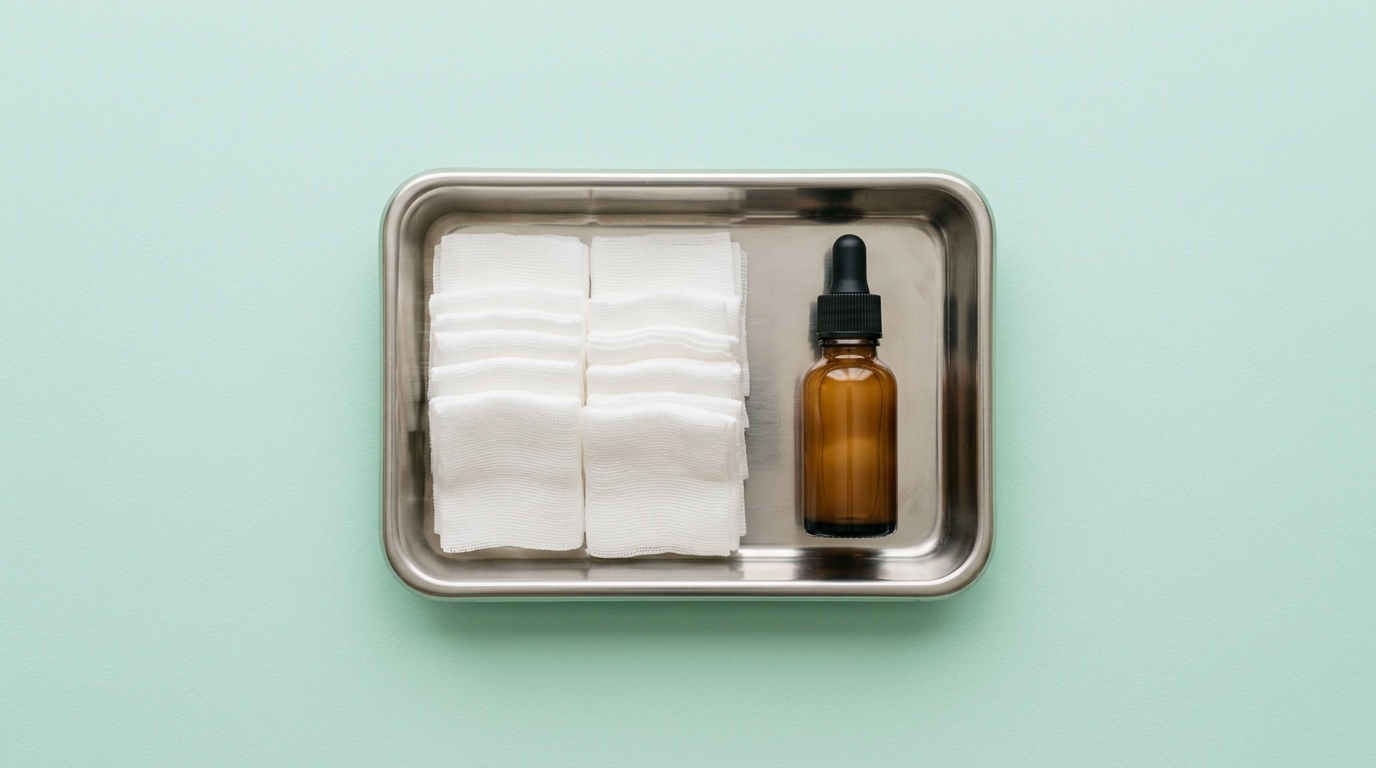
Then the key step: a medicated dressing is placed into the socket. This is a small piece of paste or ribbon gauze carrying a soothing and mildly numbing medication, commonly containing eugenol, the active component of clove oil. It covers the exposed bone and dulls the nerve endings. Most people feel substantial relief within minutes of it going in, and many describe the change as dramatic.
Expect to be told to come back every couple of days to have the dressing changed until the pain has settled, typically over the following several days to a week and a half. Some dressings dissolve on their own, others are removed. You may also be given stronger pain relief and advice on rinsing.
Antibiotics are not usually part of it, because dry socket is not primarily an infection. If your dentist does prescribe them, it is because there is an infection alongside it.
On cost, a dry socket visit and dressing is typically in the range of roughly $50 to $200 per appointment, and some practices include it in the original extraction fee as a complication follow up. Those are ranges rather than quotes, and your location, the practice, and whether it is out of hours all move them. Ask when you call, because plenty of offices do not charge for it at all.
What Not to Do at Home
Do not pack anything into the socket yourself. Not gauze, not a clove, not cotton soaked in oil. You risk pushing debris deeper, and packing material left in a socket becomes its own problem.
Do not poke at it with a tongue, a finger, a toothpick, or an irrigation syringe you were not told to use yet.
Do not just keep escalating painkillers. If ordinary doses are not touching it, that is diagnostic information, not a reason to exceed what the packet says.
Clove oil dabbed lightly on the gum outside the socket is a reasonable stopgap for a few hours if you genuinely cannot be seen. Used in quantity or poured into the socket it burns the soft tissue.
Frequently Asked Questions
How long does dry socket last if I do nothing?
It generally settles on its own over one to two weeks as tissue grows over the exposed bone, but that is a painful way to spend two weeks when a dressing gives relief the same day. Treatment does not speed up bone healing much. What it does is remove the pain while the healing happens.
Can I get dry socket after a simple extraction, not a wisdom tooth?
Yes. It is more common after lower wisdom teeth, but any extraction socket can develop it, including a straightforward upper tooth. The signs and the treatment are identical.
I looked in the mirror and my socket looks like a hole. Is that dry socket?
Not necessarily. Sockets look like holes for weeks, and the gum only closes over them across the third and fourth weeks. The question is what is in the hole. A dark clot is normal. Pale bone at the bottom, together with severe worsening pain, points to dry socket. Without the pain, an open looking socket is usually just normal healing.
Is dry socket an infection? Do I need antibiotics?
Usually not. It is exposed bone and inflammation rather than an active infection, so antibiotics are not the standard treatment. Fever, spreading swelling, or pus alongside the pain suggests an infection is also present, and that does change the plan.
When am I past the risk window?
Most cases appear between days three and five, and new cases after the first week are uncommon. Keep avoiding smoking, straws, and forceful spitting for at least seven days. By then the socket is filling with early healing tissue rather than relying on a fragile clot.
What to Do Next
If your pain is worse today than it was yesterday and you are past day two, call the practice that did the extraction and say the words "the pain got worse on day three and it is going into my ear." That description is recognized instantly and gets you a short appointment, usually the same day.
If you are still in the first 48 hours, the priority is the clot: no smoking, no straws, no spitting, no vigorous rinsing, soft lukewarm food, and gentle salt water only after the first day.
And if you are reading this before an upcoming extraction, tell your dentist about any previous dry socket and about smoking, honestly. Both change what they do to prevent it.
This article is for general information only and is not a substitute for professional dental advice. Always consult your dentist about your individual needs.