Teeth Grinding (Bruxism): Signs, Causes, and What Actually Helps
How to tell whether you grind your teeth, why awake clenching and sleep grinding are different problems, what the damage looks like, and which fixes are genuinely worth it.

You caught yourself with your back teeth pressed hard together while reading an email. Or your partner mentioned that the noise at night is unmistakable. Or your dentist looked at your molars and asked, in that carefully neutral way dentists ask things, whether you've noticed any clenching.
Bruxism is the clinical term for grinding or clenching your teeth outside of chewing. It is extremely common, it is not a disease in itself, and for plenty of people it never causes a problem worth treating. For others it flattens teeth, cracks fillings, and starts the day with a headache.
So the useful question isn't whether you do it. It's whether it's costing you anything, and if it is, what actually helps. Here's how to work that out.
How to Tell If You Grind Your Teeth
Most grinding happens when you aren't paying attention, which is why so many people learn about it from somebody else. The evidence shows up in three places.
What you notice yourself:
- Jaw muscles that feel tired or sore on waking, often easing over the first hour of the day
- A dull headache at your temples in the morning
- Teeth that ache or feel sensitive to cold without an obvious cavity
- Catching your teeth touching while concentrating, driving, or scrolling
- Tightness, clicking, or a feeling that your jaw doesn't open as easily as it used to
What someone else notices: a grinding or squeaking sound at night is the classic report, and it points to sleep grinding specifically. Silence proves nothing, though. Clenching makes no sound at all.
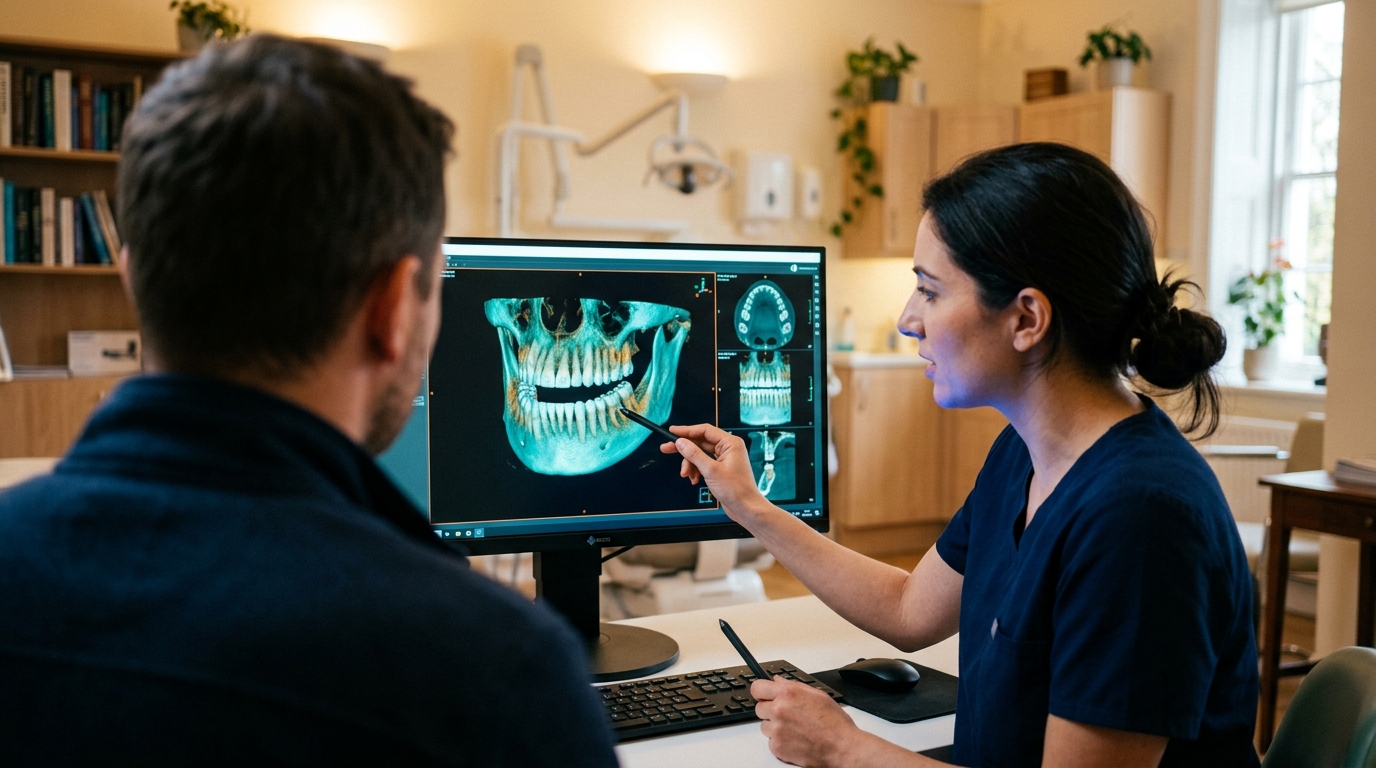
What your dentist sees: this is the most reliable evidence, because wear accumulates whether or not you remember causing it.
- Flattened biting edges, especially on canines and front teeth, often with shiny worn patches that line up when you slide your jaw sideways
- Small chips along the edges of front teeth
- Fillings and crown margins that keep failing on the same side
- Linea alba, a raised white ridge along the inside of your cheek at the level where your teeth meet, from cheek tissue being pressed against them
- A scalloped, wavy border along the sides of your tongue where it presses into your teeth
- Square, bulky muscle at the angle of the jaw, which enlarges with heavy use like any other muscle
No single finding proves anything. Together they build a picture. The closest thing to real proof is your dentist comparing photos, scans, or models taken a couple of years apart, which shows whether wear is actively progressing or whether it happened years ago and stopped.
Awake Clenching and Sleep Grinding Are Not the Same Thing
This distinction matters more than most people expect, because the two behaviors have different triggers and respond to different things. Plenty of people have both.
| Awake bruxism | Sleep bruxism | |
|---|---|---|
| What it looks like | Mostly sustained clenching, teeth held together | Rhythmic grinding and clenching, usually in bursts |
| Sound | Silent | Often audible to a partner |
| Typical triggers | Concentration, stress, deadlines, driving, physical effort | Clustered around brief arousals from sleep |
| Within your control | Partly. You can learn to catch and release it | No. It is not a habit you can decide to stop |
| Most useful responses | Habit awareness, workload and stress, jaw posture, physical therapy | Protecting the teeth, treating sleep problems, reviewing medication |
| What a guard does | Limited. It can't switch off daytime muscle activity | Protects teeth from wear and fracture while you sleep |
The single most common misunderstanding sits in that last row. A night guard does not stop you grinding. It's armor, not a cure. It takes the wear on a piece of acrylic instead of your enamel, and for most people that is exactly the right goal. For the detail on materials, fit, lifespan, and price, there's a separate guide on night guard types and cost.
What Grinding Does to Teeth, Fillings, and Crowns
Enamel doesn't grow back. Everything below follows from that one fact.
Attrition is the word for tooth surface worn away by tooth-on-tooth contact. It's slow, and because it happens evenly across both jaws, your bite still feels normal while your teeth get shorter. People are often surprised by old photographs.
Cracks are the more urgent problem. Repeated heavy loading can start a crack in a molar, and a cracked tooth classically hurts when you release a bite rather than when you press down. A crack caught early can often be covered with a crown. A crack that reaches into the nerve or splits the root can cost you the tooth.
Restorations take the worst of it. Fillings, crowns, veneers, and bridges are all built to handle normal chewing forces, and clenching produces forces well beyond that. Porcelain chips. Cemented crowns come loose. Bonded work debonds. If one side of your mouth keeps needing repairs, grinding is a reasonable suspect.
Implants deserve a specific mention. A natural tooth sits in a ligament that gives slightly and reports pressure back to your brain. An implant is fused directly to bone with no ligament and no cushioning, so overload tends to announce itself as a loosened screw or fractured porcelain rather than as pain. If you grind and you're planning implant work, say so before it's built.
Beyond the teeth, chronically overworked jaw muscles produce their own symptoms: morning soreness, temple headaches, and a jaw that feels stiff. That overlaps with jaw joint problems, which have their own article on this site covering clicking, locking, and what helps.
Why You Grind: Stress, Sleep, and Medication
There is no single cause, and honest answers here are lists of contributors rather than a diagnosis.
- Stress, anxiety, and sustained concentration. The strongest link is with awake clenching. Most people who clench at a screen are not aware of doing it until someone gives them a reason to check.
- Sleep arousals. Sleep grinding tends to happen alongside brief shifts toward lighter sleep. Anything that fragments your sleep can feed it.
- Sleep-disordered breathing. Snoring and obstructive sleep apnea are associated with sleep bruxism. If you grind, snore loudly, and wake up unrefreshed, that combination is worth raising with a doctor rather than treating as a purely dental issue.
- Reflux. Acid reaching the throat at night is another disturbance associated with grinding, and stomach acid separately erodes enamel, so the two kinds of damage can stack.
- Caffeine, alcohol, nicotine, and recreational stimulants. All are associated with more sleep grinding. Evening alcohol is the one people most often underestimate, because it makes you fall asleep faster and sleep worse.
- Some prescription medications. Certain antidepressants and stimulant medications are associated with clenching and grinding. This is worth a conversation with the prescriber if the timing fits, since dose adjustments and alternatives exist. Do not stop a prescribed medication on your own.
One cause you'll still hear about deserves a caveat: the idea that grinding is caused by a bite that's slightly "off" is a longstanding theory that modern evidence does not support well. That matters practically, because it's the reasoning used to sell irreversible bite treatment to people who grind.
What Actually Helps
Work through this roughly in order. The cheap and reversible things go first, and for most people they're enough.
Protect the teeth. A custom guard worn during sleep is the mainstay, not because it stops the behavior but because it's far cheaper to replace a guard than to rebuild worn or cracked teeth.
Train the awake habit. Your jaw's resting position is lips together, teeth slightly apart, tongue resting on the roof of your mouth. Teeth should only touch when you're eating. Pick something you encounter constantly, a phone notification, a certain doorway, your monitor, and use it as a cue to check and release. This is unglamorous and it works better than anything else for daytime clenching.
Deal with sleep. Get loud snoring and daytime sleepiness assessed. Move alcohol and caffeine earlier. Treat reflux if you have it.
Review medications and stimulants with whoever prescribed them, if the timing lines up with when the grinding started.
Look after the muscles. During a flare, heat over the jaw muscles, a softer diet for a week, and cutting out gum and chewy foods all reduce load. A physical therapist who treats jaw and neck problems can be genuinely useful for muscle pain that isn't settling.
Address stress properly. Talking therapies, particularly cognitive behavioral approaches, help with awake clenching, and exercise and sleep help everything else. Generic advice, but it's on the list because it's effective.
Botulinum toxin injections into the chewing muscles are used to reduce the force those muscles can generate. It is an off-label use for bruxism, the effect wears off over months and needs repeating, it costs several hundred dollars or more per round, and it can weaken chewing or change the shape of your face over time. It's a reasonable conversation for severe muscle pain that hasn't responded to anything else, not a first step.
Rebuilding worn teeth is a real option once the damage is significant, but the sequence matters: get the grinding managed and the teeth protected first, then restore, or you'll be paying to replace the same work repeatedly.
What to be skeptical about: having healthy tooth surfaces ground down to "balance" your bite, and orthodontics or full-mouth crowns sold as a cure for grinding. Those are irreversible, expensive, and aimed at a cause that probably isn't yours. Get a second opinion before agreeing to any of it.
When to Get Seen Sooner
- Pain when you release a bite, which suggests a cracked tooth
- A tooth that has suddenly become sensitive or painful to chew on
- A jaw that catches, locks, or won't open as wide as it used to
- Loud snoring, witnessed pauses in breathing, or heavy daytime sleepiness
- Front teeth that visibly look shorter than in photos from a few years ago
Frequently Asked Questions
Does everyone who grinds need a night guard?
No. If your dentist can't find meaningful wear, you have no pain, and your restorations are holding up, monitoring is a legitimate plan. Guards make sense when there's evidence of damage, symptoms, or expensive dental work worth protecting.
Can I actually stop grinding my teeth?
Awake clenching, often yes, with habit awareness and by dealing with what's driving it. Sleep grinding is not under your conscious control, so the realistic goal there is reducing what feeds it and protecting your teeth from the rest.
Is grinding always caused by stress?
Stress is a major contributor, especially for daytime clenching, but it isn't the whole story. Sleep disturbance, breathing problems during sleep, reflux, alcohol, caffeine, and some medications all play a part, which is why "just relax" is such unsatisfying advice.
My child grinds loudly at night. Should I worry?
Grinding is common in children and most outgrow it without any treatment or lasting damage. Mention it at a routine visit, and mention it sooner if your child also snores heavily, breathes through their mouth at night, or seems exhausted during the day.
Will a night guard fix my morning headaches?
Sometimes. If the headaches come from overworked jaw muscles, many people improve. A guard cannot fix headaches from another source, so if there's no change after a few weeks of consistent wear, it's worth looking further rather than buying a different guard.
Can worn-down teeth be built back up?
Yes, with bonding, crowns, or onlays depending on how much structure is left. It's ordinary restorative work rather than anything exotic, but it needs planning, and it should come after the grinding is under some kind of control.
What to Do Next
Book a routine appointment and ask directly: "Is there wear on my teeth, and is it getting worse?" Ask whether there are older photos or models to compare against. That answer decides everything else, because it separates people who need protection now from people who can safely keep an eye on it.
If you're waking with a sore jaw or temple headaches, start the daytime habit work today, teeth apart, lips together, and note whether it changes anything within a couple of weeks. And if grinding comes packaged with loud snoring and daytime exhaustion, raise the sleep question with a doctor as well. That combination is one your dentist can flag but cannot diagnose.
This article is for general information only and is not a substitute for professional dental advice. Always consult your dentist about your individual needs.