Crooked Teeth Options for Adults: What Actually Works
Straightening crooked teeth as an adult, compared honestly: aligners, metal and ceramic braces, veneers and bonding, with cost ranges, timelines and who each option suits.
Maybe your teeth were never straightened as a child, or they were, and the retainer went missing years ago. Either way, you now notice the overlap in photos, floss snags on the same crowded corner, and you are wondering whether it is too late to do anything about it.
It is not too late. Teeth move in response to gentle, steady pressure at any age, as long as the gums and bone holding them are healthy. Adults make up a large share of people in orthodontic treatment today, and the options have widened well beyond a mouthful of metal.
The harder question is which option fits your teeth, your budget and your patience. This guide walks through each route, what it can and cannot fix, and what it is likely to cost.
Why Teeth Get Crooked in Adulthood
Crooked teeth are not always a leftover from childhood. Teeth keep drifting slowly throughout life, and several things push them along:
- Relapse after earlier orthodontic treatment, which simply means teeth creeping back toward where they started once a retainer is no longer worn.
- Crowding of the lower front teeth with age, which is very common even in people whose teeth were straight at twenty.
- Tooth loss. When a back tooth is removed and not replaced, the neighbors tip into the gap and the teeth opposite can drift down or up.
- Gum disease, which weakens the bone support and lets teeth fan out or develop new gaps.
- Grinding and clenching, which can wear and shift teeth over years.
The cause matters, because it affects whether the result will stay put. If gum disease is behind the movement, that has to be treated first. Straightening teeth on unstable foundations is a recipe for disappointment.
Your Main Options at a Glance
There are two broad families of treatment. Orthodontics physically moves the teeth into better positions. Cosmetic camouflage, such as veneers or bonding, leaves the teeth where they are and changes their visible shape so they look straighter.
| Option | What it does | Typical US cost | Typical time | Best suited to |
|---|---|---|---|---|
| Comprehensive Invisalign | Moves teeth with a series of clear trays | $4,000 to $8,000 | 12 to 24 months for moderate to complex cases | Most crowding and spacing, many bite issues |
| Limited or express aligners | Short tray series for minor movement | $1,800 to $3,500 | 3 to 6 months | Mild crowding or relapse of front teeth |
| Mail-order aligners | Trays posted to you, remote check-ins | $1,200 to $2,500 | 4 to 6 months | Mild cosmetic crowding only |
| Traditional metal braces | Brackets and wires on the teeth | $3,000 to $7,000 | Usually a year or longer | Any case, including complex bites |
| Ceramic braces | Tooth-colored brackets | $4,000 to $8,000 | Similar to metal braces | Any case, less visible than metal |
| Porcelain veneers | Thin shells bonded over front teeth | $900 to $2,500 per tooth | A few weeks | Mild unevenness, plus color or shape changes |
These are ranges, not quotes. Your location, the complexity of your case, the materials used and what is included in the fee all move the final price. The dental cost calculator can give you a range that reflects the details of your own situation.
Clear Aligners: The Most Popular Adult Choice
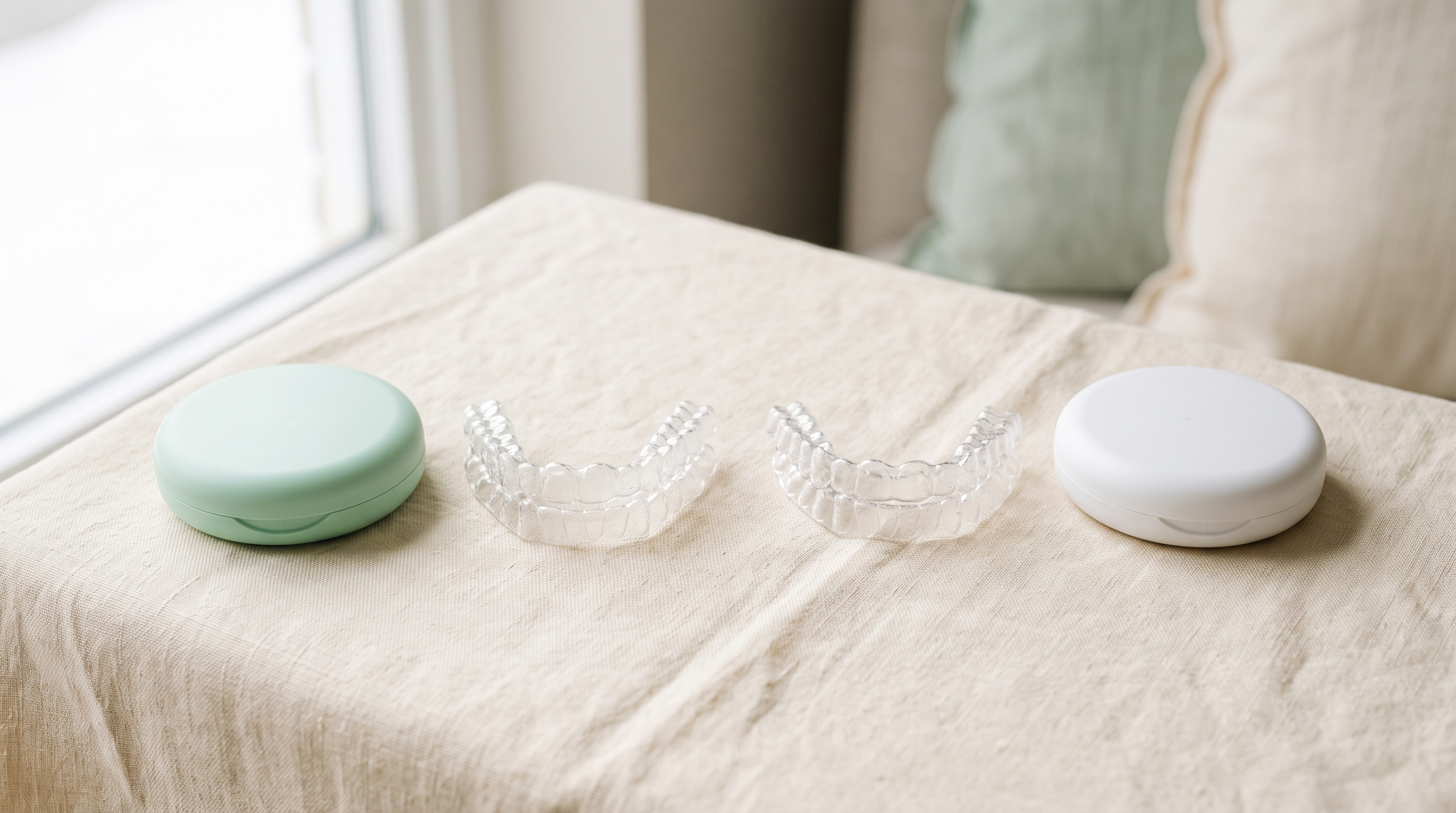
Clear aligners are thin, removable plastic trays made from a scan of your teeth. Each set nudges the teeth a small distance, and you switch to the next set every week or two. Small tooth-colored bumps called attachments, bonded onto some teeth, give the trays something to grip so they can rotate or lift a tooth.
Why adults like them:
- They are hard to spot in conversation.
- You take them out to eat, so there are no food restrictions.
- Brushing and flossing work as normal.
What they ask of you:
- Wearing them around 20 to 22 hours a day. Leave them out for long stretches and the teeth stop tracking with the trays.
- Removing them for everything except water, then brushing before putting them back.
- Discipline. Aligners only work while they are in your mouth.
For mild crowding of the front teeth, a limited plan is often enough. For larger movements or bite corrections, a comprehensive plan with in-person monitoring is the safer route. Our guide on how long Invisalign takes breaks down what stretches or shortens treatment.
A Word on Mail-Order Aligners
Mail-order aligners cost less because there are fewer in-person visits. That trade-off matters. Nobody examines your gums or takes x-rays in person before teeth start moving, and problems such as a tray that is not fitting may go unnoticed for weeks. They can suit a narrow group of people with mild, purely cosmetic crowding and healthy gums. They are not designed for bite problems, large rotations or anyone with active gum disease.
Braces: Still the Most Versatile Tool
Fixed braces remain the workhorse of orthodontics, and for good reason. Because they are attached all the time, there is no compliance problem, and the orthodontist has fine control over every tooth.
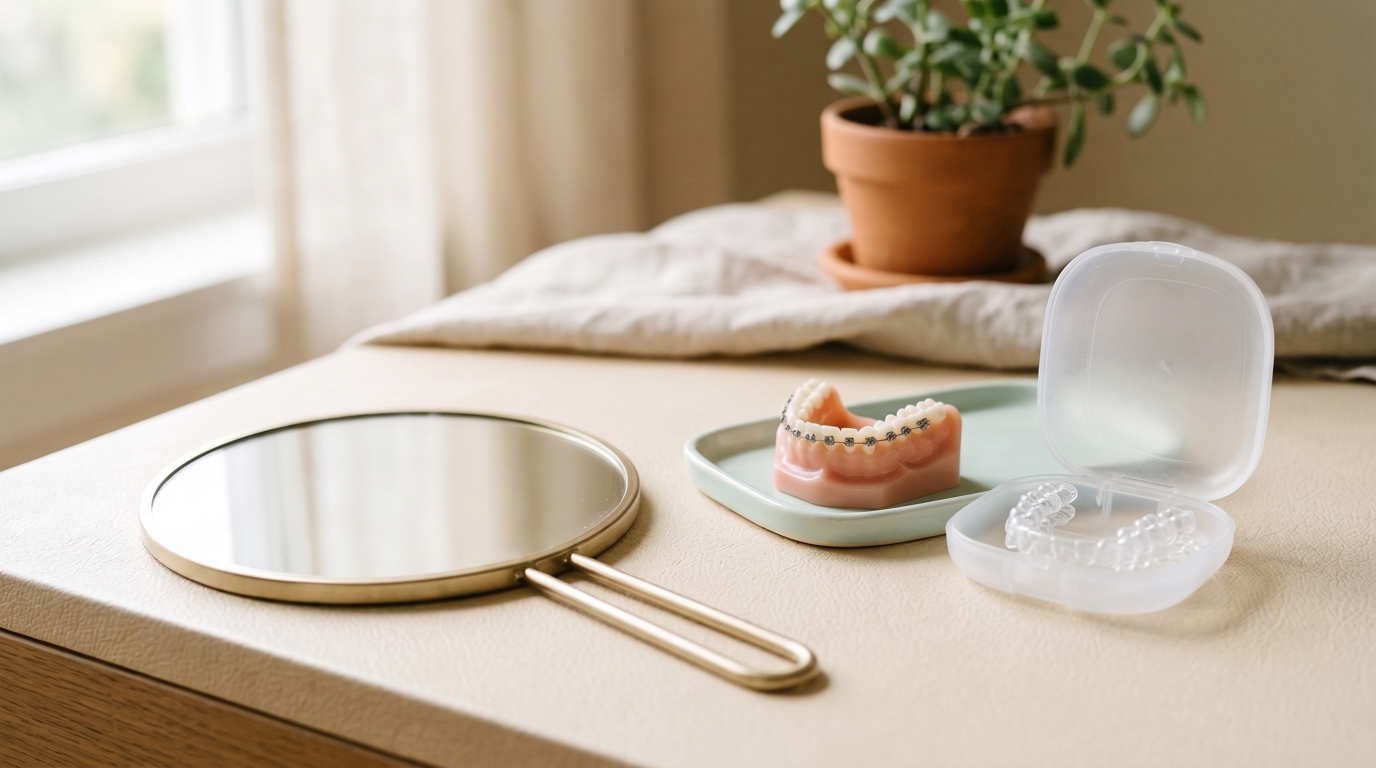
Metal braces are the least expensive in-person option and handle almost any case. Ceramic braces use clear or tooth-colored brackets, so they blend in better, though they can stain if you drink a lot of coffee or red wine and are a little more fragile.
Braces make more sense than aligners when:
- You have a significant bite problem, such as a deep overbite or crossbite.
- Teeth need large rotations or to be moved up or down significantly.
- You know you would struggle to wear removable trays all day.
The downsides are real but manageable. Brushing takes longer, sticky and very hard foods are off the menu, and the first few days after each adjustment can feel sore. If you are weighing the two side by side, our aligners vs braces comparison tool ranks the options against what matters most to you, whether that is cost, discretion or speed.
Veneers and Bonding: Looking Straight Without Moving Teeth
Veneers are thin shells, usually porcelain, bonded to the front of teeth. Bonding uses tooth-colored resin sculpted directly onto the tooth. Both can make slightly crooked teeth look straighter by building out a tooth that sits back, or evening up edges.
This is sometimes called instant orthodontics, and the name oversells it. Veneers are a good choice when teeth are only mildly out of line and you also want to change their color or shape. They are a poor choice for genuinely crowded teeth, because the dentist would need to remove a lot of enamel to make a tooth that sits forward look aligned. That enamel never grows back, and the veneers will need replacing over your lifetime.
Many dentists suggest a combination: a short course of aligners to move the teeth into a better position, then veneers or bonding on fewer teeth with less drilling. It costs more up front but protects the natural tooth structure.
Is There an Age Limit?
No. Healthy teeth can be moved at fifty, sixty or beyond. What matters more than age:
- Gum and bone health. Your dentist will want any gum disease under control first.
- Existing dental work. Crowns, bridges and implants affect the plan. Implants do not move at all, so teeth are moved around them.
- Your expectations. Adult treatment can take a little longer, and some cases aim for a healthy, comfortable bite rather than a perfect one.
How to Keep the Result
Every option that moves teeth needs a retainer afterward, a device that holds the teeth in their new position while the bone around them settles. Without one, relapse is likely. Removable retainers or a thin wire bonded behind the front teeth are both common, and most adults are advised to keep wearing some kind of retainer at night indefinitely. Budget for it: retainers usually run $100 to $500 for a set if they are not included in your original quote.
Questions to Ask at Your Consultation
A good consultation should leave you with a clear picture, not a sales pitch. Ask:
- What is causing my teeth to be crooked, and is anything else going on with my gums or bite?
- Which options would work for me, and which would not?
- How long will treatment take, and how many visits are involved?
- What is included in the fee: retainers, refinement trays, emergency visits?
- What happens if the result is not what we planned?
If you are shown only one option, it is worth asking why the others were ruled out.
Frequently Asked Questions
Am I too old to straighten my teeth? There is no upper age limit for orthodontic treatment. If your gums and the bone supporting your teeth are healthy, teeth can be moved at any age. Your dentist will check gum health before starting.
What is the cheapest way to fix crooked teeth as an adult? For mild crowding, limited aligners or mail-order aligners usually have the lowest price tags, and metal braces tend to be the least expensive option for more complex cases. The cheapest option is not always the best value if it cannot fully correct your teeth and you end up paying for treatment twice.
Can veneers fix crooked teeth instead of braces? Veneers can disguise mild unevenness, but they do not move the teeth. For significant crowding they require removing a lot of healthy enamel, so straightening first is often the kinder long-term choice. Ask your dentist to explain both routes.
Do adult braces hurt? Expect a few days of tenderness after braces go on and after each adjustment, and similar pressure when you switch to new aligner trays. Over-the-counter pain relief and soft foods usually manage it. Sharp, lasting pain is not normal and is worth reporting.
Will my teeth move back after treatment? They can if you stop wearing a retainer. Teeth tend to drift throughout life, so most people are advised to wear a retainer at night for the long term to protect the result.
What to Do Next
Start by booking a consultation with a dentist or orthodontist and asking for an exam that includes your gums and bite, not just a look at the front teeth. Before you go, run your details through the aligners vs braces comparison tool so you arrive with a sense of which options fit your priorities and roughly what they cost. Bring your questions, ask what is included in every quote, and take time to compare at least two treatment plans before committing.
This article is for general information only and is not a substitute for professional dental advice. Always consult your dentist about your individual needs.